Cart
0
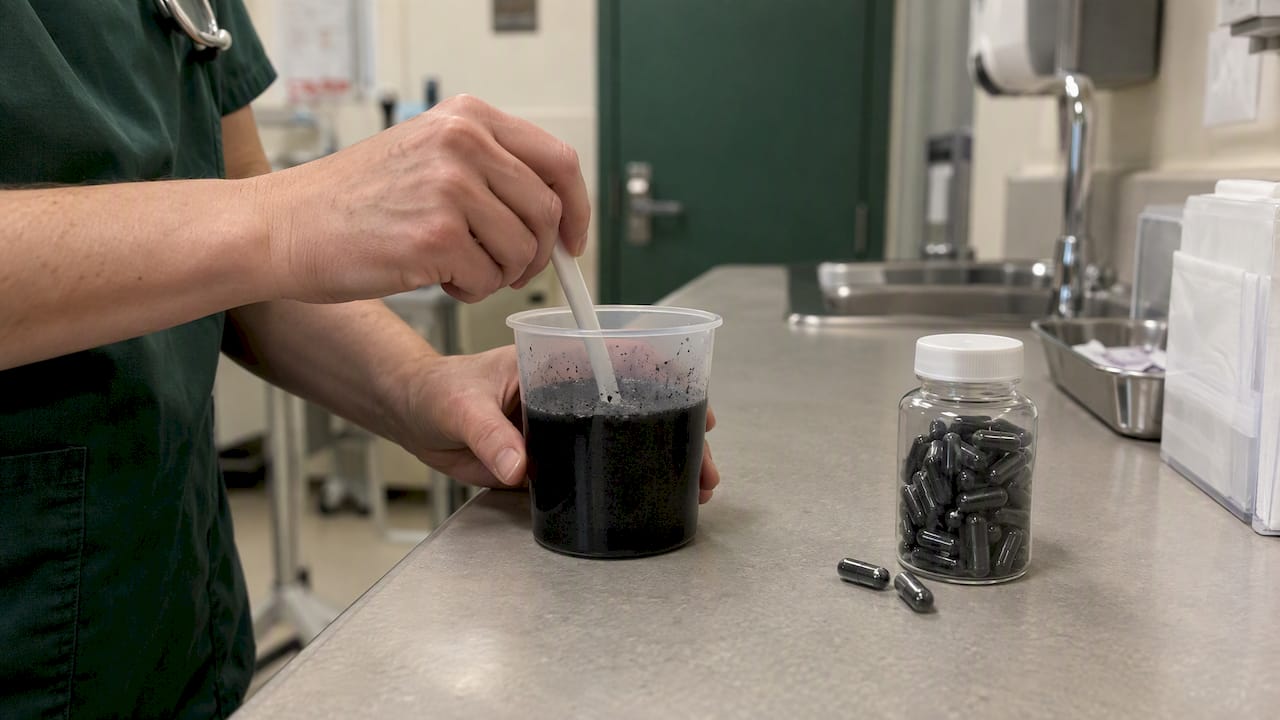
Natural toxin binders are gut-acting substances, like activated charcoal or bentonite clay, that trap certain compounds in the digestive tract before they get absorbed. They have a genuine, narrow role in acute poisoning care under medical supervision, but there is no solid human evidence that taking one daily “detoxes” a healthy body. Used casually, they can also bind medications and nutrients, so the smart approach is targeted, not habitual.
TL;DR:
- Natural toxin binders like activated charcoal are effective only in acute poisoning cases when used in high doses under medical supervision; their everyday use for detox in healthy people lacks strong evidence.
- These binders work by trapping toxins in the gut through adsorption but do not affect circulating substances in the blood, liver, or kidneys, which are responsible for detoxification.
- Safety concerns include interference with medications, nutrient loss, constipation, and the risk of contaminated or adulterated products, especially when used regularly without medical guidance.
- Evidence supporting the routine daily use of natural binders for detoxification in healthy individuals remains weak, and animal or in vitro data do not prove benefits in humans.
- Targeted use in emergency scenarios or documented high-risk exposures is where binders are most appropriate; general wellness claims should be approached with skepticism.
Table of Contents
- What Are Natural Toxin Binders and How Do They Work?
- Common Natural Binders and What Each One Actually Does
- Does the Science Actually Support Toxin Binders?
- What Safety Risks Come With Toxin Binders?
- When Does a Binder Actually Make Sense?
- How to Use Natural Binders More Safely
- Where Pureblue Fits Into a Safety-First Approach
- An Editorial Take on the Detox Binder Trend
- A Measured Option If You Decide a Supplement Fits Your Routine
- Sources
- FAQ
What Are Natural Toxin Binders and How Do They Work?
Adsorption is the mechanism doing the actual work, and it’s easy to confuse with absorption. Absorption pulls a substance into the bloodstream; adsorption is when molecules stick to a surface, the way lint clings to tape. Activated charcoal, clays, and similar binders are riddled with microscopic pores that create enormous surface area, so certain toxins latch onto them in the gut instead of crossing into circulation.

That distinction explains both the appeal and the limit of these substances. Trapping something in the intestines before it gets absorbed can genuinely reduce exposure. What it cannot do is reach into the liver, kidneys, or bloodstream and scrub out compounds already circulating there. Your liver and kidneys handle that job through enzymatic and filtration pathways that no oral binder touches.
The dose gap matters too. Emergency medicine uses activated charcoal in the range of 50 to 100 grams for a suspected poisoning, administered and monitored by clinical staff. Consumer capsules typically contain 500 milligrams to a few grams. That’s not a minor difference in strength. It’s the difference between a targeted medical intervention and a wellness habit that borrows the same word without the same effect.
- Adsorption traps a substance on a surface; absorption moves it into the body.
- Binders act locally in the GI tract, not systemically in blood or organs.
- Clinical charcoal doses run 50 to 100 grams; supplement doses are a fraction of that.
Common Natural Binders and What Each One Actually Does
Not every binder does the same job, and lumping them together is where a lot of marketing overreaches. Here’s a rundown of the ones you’ll see most often on supplement labels.
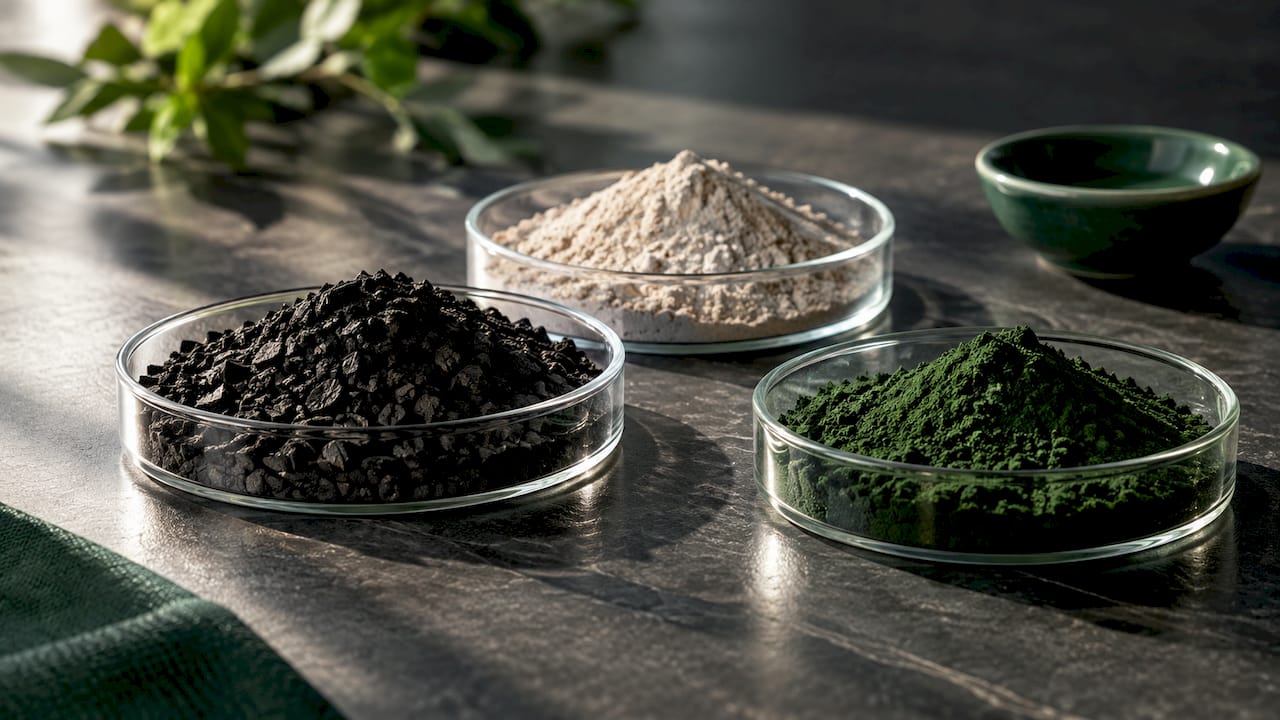
Activated charcoal is the best studied of the group. It’s recognized for adsorbing many types of swallowed poison in the gut, which is why it sits in emergency departments. Its biggest limitation is that it isn’t selective. It grabs medications, nutrients, and toxins with roughly equal enthusiasm.
Bentonite and other clays carry a mineral, negatively charged structure that can bind heavy metals and certain mycotoxins in lab settings. The same nonselective binding applies here: clays can also pull in minerals your body needs.
Chlorella, a freshwater algae, gets marketed heavily as a heavy metal binder. The claims outpace the human evidence, which is thin and largely limited to small or preliminary studies.
Humic and fulvic acids, zeolite, modified citrus pectin, and fruit pectin round out the category, each promoted for binding specific toxins or supporting elimination. Evidence for these tends to be even more limited than for charcoal or clay, often resting on cell studies or animal models rather than controlled human trials.
One figure worth sitting with: mycotoxin binder research on agricultural feed found that efficacy varies significantly by binder type and by toxin, with some combinations working well and others barely adsorbing anything. There’s no single “best” binder across the board. What works for one compound may do almost nothing for another.
- Activated charcoal: broad but nonselective adsorption, strongest evidence base.
- Bentonite/clay: mineral-binding potential, risk of stripping nutrients.
- Chlorella: popular claim, weak human data.
- Humic/fulvic acids, zeolite, pectin: targeted claims, mostly preclinical support.
Does the Science Actually Support Toxin Binders?
The honest answer splits cleanly into two categories: strong evidence for narrow, clinical uses, and weak or absent evidence for daily wellness use.
Activated charcoal has decades of documented use in poison treatment, and the FDA’s OTC monograph M023 spells out labeling, dosing, and warning requirements for products sold under that use. That’s a real, regulated indication, not a marketing claim.
Mycotoxin research tells a more nuanced story. Reviews of feed studies confirm that certain binders measurably reduce mycotoxin bioavailability in livestock, which is why the practice is standard in agriculture. Translating that into a human wellness supplement is a bigger leap than most product labels admit. Animal feed studies answer a different question than “does this help a healthy person feel better.”
That gap is exactly what independent reviewers have flagged.
Scientific consensus points out that binders like bentonite clay, chlorella, zeolite, and humic or fulvic acids are not substitutes for the liver and kidneys, and there is no rigorous human clinical evidence supporting their routine daily use for systemic detox in healthy people.
That critique, from McGill University’s Office for Science and Society, lands on the exact distinction this whole topic hinges on: in vitro and animal data show promise, but promise isn’t proof in humans.
- Activated charcoal: strong emergency-care evidence, regulated dosing.
- Mycotoxin binders: solid animal/feed data, weak human translation.
- Daily “detox” claims: consistently unsupported by rigorous human trials.
What Safety Risks Come With Toxin Binders?
Binders don’t discriminate well, and that’s the root of most safety concerns. Anything nonselective enough to trap a toxin is also nonselective enough to trap your birth control pill, your antidepressant, or your iron supplement.
- Medication interactions. Clinicians recommend a 1 to 2 hour separation window between taking a binder and taking any medication, including antidepressants, oral contraceptives, and blood thinners.
- Nutrient loss and constipation. In vitro mycotoxin studies show binders can adsorb vitamins and amino acids alongside toxins, and repeated use can slow gut motility enough to cause constipation.
- Contaminated or adulterated products. The FDA has flagged botanical supplements marketed for detox containing toxic adulterants, including yellow oleander, a reminder that “natural” is not automatically “safe.”
- When to stop. Persistent nausea, severe constipation, or any sign of an allergic reaction warrants stopping immediately and calling a doctor.
Pro Tip: If you suspect an actual poisoning, don’t reach for a supplement bottle. Call Poison Control or go to the emergency room. Binder dosing for real toxic exposures is a clinical decision, not a DIY one.
When Does a Binder Actually Make Sense?
Binders earn their place in two narrow scenarios: acute poisoning managed by medical professionals, and targeted exposure to a known, high-risk contaminant, such as documented mold or mycotoxin contamination in a specific environment. Even then, context and clinical guidance matter more than the product itself.
For the far more common motivation, general wellness or vague worry about “toxins,” a binder is usually the wrong tool. Most of what people call detox is better addressed through:
- Reducing exposure at the source (throwing out moldy food, improving ventilation, filtering water).
- Supporting your body’s own elimination pathways with adequate fiber, hydration, and sleep.
- Getting an actual clinical evaluation if you suspect a specific exposure, rather than guessing.
A binder without a clear target is a supplement with no job to do.
How to Use Natural Binders More Safely
If you’ve weighed the evidence and decided a binder fits your situation, a few precautions cut the risk substantially.
- Talk to a pharmacist or physician first, especially if you’re pregnant, managing a chronic condition, or taking any regular medication.
- Keep the 1 to 2 hour separation from medications and other supplements, every time, not just when you remember.
- Start short and limited. Use a binder for a defined period under guidance rather than as an ongoing daily habit.
- Check the label for third-party testing, a transparent ingredient list, and batch or lot testing. Skip anything marketed as a vague “detox cocktail” with no disclosed dosing.
- Escalate fast if you notice persistent GI symptoms or anything that feels like a severe reaction. Suspected poisoning is a Poison Control or ER call, not a wait-and-see situation.
Pro Tip: Set a phone reminder for your medication times and binder times separately. The interaction risk isn’t theoretical, and a two-hour gap is easy to blow through when you’re busy.
Where Pureblue Fits Into a Safety-First Approach
Pureblue built Quantum Vitality NAD+ Booster+ Detox around the same principle this article keeps coming back to: a supplement should support your body’s own processes, not promise a shortcut.
That doesn’t make it a cure for toxic exposure or a replacement for medical care. Think of it as an adjunct: something that fits alongside good sleep, real food, and exposure reduction, not something that substitutes for a doctor when you suspect a genuine poisoning. Customer ratings may reflect satisfaction with the product experience rather than clinical claims about detox outcomes.
An Editorial Take on the Detox Binder Trend
The wellness industry sells toxin binders as a shortcut to feeling less “toxic,” and that framing is the problem. Your liver and kidneys already run a detox system that works continuously without a supplement’s help. Where binders genuinely help is narrow: acute poisoning, or a documented, specific contaminant exposure.
Outside those cases, the burden of proof sits with the product, not the skeptic. Before adding any binder to a routine, it’s worth asking what specific compound you’re trying to remove and whether there’s real evidence that binder removes it. Quality still matters. A well-tested, transparently formulated supplement beats an unregulated “detox cocktail” every time, but neither one replaces a conversation with a clinician about what your body actually needs.
— Organic
A Measured Option If You Decide a Supplement Fits Your Routine
Most detox supplements ask you to trust a label. Pureblue’s approach is to test every batch and tell you what’s actually in it, which matters more than any single ingredient claim once you’ve read this far.

Quantum Vitality NAD+ Booster+ Detox is formulated with 100% organic ingredients, third-party tested for purity, and made in an FDA-registered facility, positioned as a daily support formula rather than a poison-emergency product. If you’d rather try before committing, the (Free) Quantum Vitality NAD+ Booster+ Detox offer is a lower-friction way to start. For a broader look at Pureblue’s full lineup, including Blue Bear Gummies for him and her or the WAP formula for her, the frontpage collection lays out current bundles and shipping protection options. Whatever you choose, talk to your physician first if you’re on medication or managing a health condition, and check the supplement fit guide if you’re still deciding whether a supplement belongs in your routine at all.
Sources
- Activated charcoal is effective in adsorbing many types of poison in the gut — Poison Control (Utah)
- You don’t need a binder in your detox kit — Office for Science and Society, McGill University
- The efficacy of mycotoxin binders to control mycotoxins in feeds and the potential risk of interactions with nutrient: a review - PMC
- U.S. FDA Over-the-Counter Monograph M023: Poison treatment drug products
- FDA issues warning about certain products containing toxic yellow oleander
If you suspect an actual poisoning, contact Poison Control or go to the nearest emergency room immediately rather than relying on any of the guidance above.
FAQ
What foods act as binders for detox?
Fiber-rich foods like psyllium husk, oats, and apples contain pectin, which has mild binding properties in the gut. They’re not a substitute for medical binders in a poisoning scenario, but they support regular elimination as part of a broader diet.
What draws toxins out of the body naturally?
Your liver and kidneys handle the bulk of toxin processing and elimination through enzymatic breakdown and filtration, not through any supplement. Adequate hydration, fiber, and sleep support those organs, while gut binders like activated charcoal only prevent absorption of substances still in the digestive tract.
What are the best natural toxin binders for specific situations?
Activated charcoal has the strongest evidence base and regulatory backing for emergency poison treatment. For targeted mycotoxin exposure, clay-based binders show measurable adsorption in feed and livestock research, though human data remains limited. There is no single best option for general wellness use.
What are some examples of natural binders?
Common examples include activated charcoal, bentonite and other clays, chlorella, zeolite, modified citrus pectin, and humic or fulvic acids. Each binds a different range of compounds with varying degrees of human evidence behind the claims.
Does Pureblue make a toxin-binding supplement?
Pureblue’s Quantum Vitality NAD+ Booster+ Detox is formulated as a daily detox-support product, organic and third-party tested, rather than an emergency poison treatment. Current pricing is available on the product page.