Cart
0

Panax ginseng generally works better for daytime energy and mental stamina, while ashwagandha tends to be the stronger pick for calming stress and supporting sleep. Individual response varies a lot, and both herbs carry safety and medication considerations worth checking first. Combining them is possible for some people, but it works best with careful timing and a clinician’s input rather than guesswork.
TL;DR:
- Ginseng is best taken in the morning for energy and mental performance, while ashwagandha is more suitable in the evening to help with stress and sleep.
- Both herbs work as adaptogens on the hypothalamic-pituitary-adrenal axis but have different active compounds that influence alertness versus calmness.
- Effectiveness depends heavily on standardized extracts and proper dosing, with research supporting higher doses of ashwagandha (600 mg daily) for sleep improvements over at least eight weeks.
- Ginseng should be cycled periodically rather than used continuously due to uncertain long-term safety and potential for sleep disruption or blood sugar effects.
- Combining the herbs is possible but should be done cautiously and with clinician guidance, especially if taking medications for blood sugar, blood clotting, or thyroid issues.
Table of Contents
- Ashwagandha vs Ginseng at a Glance
- How Ashwagandha and Ginseng Work in the Body
- What the Research Says About Each Herb’s Benefits
- Dosing, Timing, and Cycling for Safer Use
- Side Effects and Drug Interactions to Watch For
- Can You Take Ashwagandha and Ginseng Together?
- How to Choose a Quality Ashwagandha or Ginseng Supplement
- What Real Supplement Quality Looks Like
- Where Ashwagandha and Ginseng Come From
- Panax Ginseng vs American Ginseng: Not the Same Plant
- Other Health Conditions That Warrant Caution
- A Practical Take on Choosing Between Them
- Where Pure Blue Fits Into Your Adaptogen Routine
- Sources
- FAQ
Ashwagandha vs Ginseng at a Glance
Before digging into mechanisms and trial data, here is how the two herbs typically stack up for the goals people search for most.
- Ashwagandha: calming, associated with lower cortisol, commonly used for stress management and sleep support; can cause drowsiness and may interact with thyroid or diabetes medications.
- Ginseng (Panax): energizing, studied for fatigue and cognitive performance; can disrupt sleep if taken late, may affect blood sugar, and can interact with blood thinners.
- Timing: ginseng in the morning to support daytime alertness, ashwagandha in the evening to support wind-down, though some people split doses.
- Trial approach: test one herb at a time before combining, so you know what each one actually does for your body.
The quickest way to decide which one to try first is to name your primary complaint. If it is fatigue or brain fog during the day, ginseng is the more logical starting point. If it is a racing mind at bedtime or a stress response that will not quiet down, ashwagandha fits the traditional use case better. Either way, the label matters as much as the herb: dose, extract standardization, and third-party testing all affect whether you get anything close to what a clinical trial measured.
How Ashwagandha and Ginseng Work in the Body
Both herbs are classified as adaptogens, a term that describes plants believed to help the body handle physical and mental stress more efficiently rather than acting like a stimulant or a sedative outright. The mechanism most often cited for both involves the hypothalamic-pituitary-adrenal (HPA) axis, the signaling loop that governs cortisol release in response to stress. When that axis runs hot for too long, sleep, mood, and energy all suffer, and adaptogens are thought to help regulate that loop rather than override it.
Ashwagandha’s activity is largely attributed to compounds called withanolides, which have been studied for links to GABAergic and serotonergic pathways, the same neurotransmitter systems targeted by many calming medications. This lines up with why ashwagandha shows up most often in stress and sleep research rather than energy research.
Ginseng’s active compounds, called ginsenosides, appear to work differently, with effects on the central nervous system and on cellular energy production that align more with alertness and stamina than with sedation. That difference in mechanism is the biochemical reason one herb tends to wind people down while the other tends to wake them up.
One common point of confusion: ashwagandha is sometimes labeled “Indian ginseng” on product packaging, but it is not related to true ginseng at all. Ashwagandha belongs to the nightshade family, while Panax ginseng belongs to the Araliaceae family. They are different plants with different chemistry, and the naming overlap is a marketing artifact rather than a botanical fact worth relying on when comparing effects.
What the Research Says About Each Herb’s Benefits
The clearest evidence for ashwagandha centers on sleep and stress. A meta-analysis published in PLOS ONE found that ashwagandha extract produced a small but statistically significant improvement in overall sleep quality, with stronger effects showing up at doses of 600 milligrams per day or higher and treatment periods lasting eight weeks or longer. Shorter courses and lower doses showed weaker results, which matters when judging whether a product is likely to work.
A small but significant sleep improvement was tied to higher-dose, longer-duration ashwagandha use in a 2021 PLOS ONE meta-analysis. That timeline is a useful benchmark: a week of use is unlikely to tell you much either way.
The NCCIH’s fact page on ashwagandha notes that some preparations may improve sleep and reduce cortisol, while also cautioning that long-term safety data remain limited. That combination, promising short-term signals paired with an incomplete long-term picture, is a fair summary of where the science currently stands.
Ginseng’s evidence base looks different. The NCCIH page on Asian ginseng describes it as commonly used for fatigue and cognitive function, with short-term use appearing safe for most people, though evidence quality varies and long-term safety is uncertain. A PubMed-indexed review of ginseng and fatigue or cognition found a small beneficial effect on general fatigue and some cognitive measures, but the results shifted depending on the ginseng species, the preparation method, and the quality of the individual study.
That variability is the main limitation across both herbs. Extracts are not standardized the same way from brand to brand, trial durations differ, and most studies run for weeks rather than years. Anyone comparing a supplement bottle to a clinical trial should check whether the extract is standardized to a specific withanolide or ginsenoside percentage, since that is the detail most likely to determine whether real-world results resemble the research.
Dosing, Timing, and Cycling for Safer Use
Clinical trials give a reasonable starting map, even though individual products vary in strength and formulation.
- Ashwagandha: most trials use 250 to 600 milligrams per day, with the stronger sleep results tied to doses at the higher end taken for eight weeks or more.
- Ginseng: dosing varies by species and extract type, so following the manufacturer’s standardized-extract instructions matters more than chasing a single milligram number.
- Timing: ginseng works best earlier in the day given its energizing profile, while ashwagandha is often taken in the evening to support wind-down, though some people split a dose morning and night.
- Cycling: traditional use of ginseng often follows a pattern of several weeks on followed by a break, rather than continuous year-round use.
Give either herb at least a few weeks before deciding whether it is working, since neither one acts like a fast-onset stimulant or sedative.
Pro Tip: Start at the low end of the dosing range, keep a simple daily log of sleep, energy, and mood, and loop in a clinician before adding either herb if you take prescription medication.
Side Effects and Drug Interactions to Watch For
Both herbs are generally well tolerated in short-term use, but neither is risk-free, and “natural” does not mean automatically safe for everyone.
- Ashwagandha: can cause drowsiness and gastrointestinal upset, and its cortisol-lowering effect means it may interact with thyroid medications or diabetes medications that also affect blood sugar regulation.
- Ginseng: can cause insomnia if taken too late in the day, and rare allergic or liver-related reactions have been reported.
- Interaction risk: the NCCIH’s guidance on herb-drug interactions notes that ginseng can interact with calcium channel blockers, statins, and warfarin, and may affect blood sugar and blood clotting.
- Special populations: both herbs are generally not advised during pregnancy or breastfeeding, and anyone with an autoimmune condition, thyroid disorder, or liver condition should check with a clinician before starting either one.
Ginseng’s documented interaction list includes calcium channel blockers, statins, and warfarin, according to NCCIH’s herb-drug interaction guidance. That makes a medication review a genuinely useful step rather than a formality, especially for anyone on blood thinners or diabetes medication.
Practical safety steps worth taking before starting either herb: review your current medications with a pharmacist or physician, ask about lab monitoring if you have a thyroid or liver condition, stop use at least two weeks before any planned surgery, and choose products that carry third-party testing to confirm what is actually in the bottle.
Can You Take Ashwagandha and Ginseng Together?
Direct clinical evidence on combining the two herbs is limited, but the theoretical logic is straightforward: ginseng’s energizing profile and ashwagandha’s calming profile could, in principle, balance each other across a day. That reasoning is common in traditional herbal practice, though it has not been rigorously tested in controlled trials the way each herb has been studied individually.
If you want to try combining them, a cautious sequence works better than starting both at once.
- Trial ashwagandha alone for at least two to four weeks and note its effect on stress and sleep.
- Separately trial ginseng alone in the morning for a similar period and note its effect on energy and focus.
- If both feel beneficial, introduce them together with ginseng in the morning and ashwagandha in the evening.
- Watch for oversedation, digestive upset, or sleep disruption, and stop one if problems appear.
- Check with a clinician first if you take medication for blood sugar, blood clotting, thyroid function, or blood pressure.
Combining is generally inadvisable during pregnancy, alongside interacting medications, or with an active autoimmune condition, since both herbs can influence immune and endocrine activity in ways that are not fully mapped out.
How to Choose a Quality Ashwagandha or Ginseng Supplement
Picking the right herb is only half the decision. The product itself needs to resemble what was actually used in the trials that support it.
- Match the herb to the goal: ginseng for daytime energy and mental performance, ashwagandha for stress and sleep, and only combine or alternate the two with a clinician’s guidance.
- Check for standardization: a label stating withanolide percentage (ashwagandha) or ginsenoside percentage (ginseng) tells you the extract was measured, not just included.
- Look for third-party testing: a seal or statement confirming independent verification of purity and potency is one of the more reliable quality signals available to a shopper.
- Read the dosing instructions: they should be specific and align reasonably with trial ranges rather than vague serving suggestions.
- Check sourcing and fillers: transparent sourcing information and a short, recognizable ingredient list without unnecessary fillers are both good signs.
Worth asking a clinician directly: whether either herb interacts with your current prescriptions, what dose makes sense given your health history, and whether any lab monitoring is warranted while you use it. The NCCIH’s overview of dietary and herbal supplements makes the point plainly: natural does not mean risk-free, and label accuracy varies enough that third-party testing is worth prioritizing over marketing claims.
What Real Supplement Quality Looks Like
Third-party testing, transparent sourcing, and manufacturing in an FDA-registered facility are the practical markers that separate a supplement built to match its label from one that is not. These checks matter because supplement labels are not independently verified before a product reaches shelves, which is exactly the gap third-party testing is meant to close.

Pure Blue’s Quantum Vitality NAD+ Booster+ Detox is one example of a product built around that standard: organic ingredients, no artificial fillers, and manufacturing in an FDA-registered facility, paired with third-party testing for purity and potency. Those are the same checkboxes worth running through the ingredient list of any ashwagandha or ginseng product before buying it, whatever brand you land on. More on Pure Blue’s approach to formulation and testing is outlined in its overview of performance and wellness positioning.
Where Ashwagandha and Ginseng Come From
Ashwagandha has a long history in Ayurvedic medicine, where it has traditionally been used as a general tonic for vitality and resilience to stress, often categorized as a rasayana, a term used for substances believed to support overall rejuvenation. Its use in that tradition predates modern clinical research by centuries, and the calming, restorative reputation it carries today traces directly back to that traditional role.
Panax ginseng comes out of a different tradition, rooted in traditional Chinese medicine, where it has historically been used to restore energy and support recovery from illness or exhaustion. The name “Panax” itself comes from the Greek word for “all-healing,” reflecting the broad range of traditional uses the root was historically assigned, from stamina to immune support.
Both herbs made their way into Western supplement markets well after their traditional use was established, and both are now studied with modern clinical trial methods that look very different from the traditional frameworks that first identified them as useful. That gap between traditional use and modern evidence is part of why the research summarized earlier shows modest, variable effects rather than the sweeping claims sometimes attached to either herb in marketing copy.
Panax Ginseng vs American Ginseng: Not the Same Plant
“Ginseng” is not a single ingredient, and mixing up the varieties is a common source of confusion when comparing products or research. Panax ginseng, sometimes called Asian or Korean ginseng, is the type most associated with an energizing, stimulating effect and is the species behind most of the fatigue and cognition research referenced earlier.
American ginseng (Panax quinquefolius) is a related but distinct species that traditional use and some research describe as more cooling and less stimulating than its Asian counterpart, according to a review of ginseng species and their active compounds. Processing method adds another layer of variation: red ginseng, which is steamed and dried, has a different ginsenoside profile than white ginseng, which is simply dried, and that processing step can shift the effect profile even within the same species.

The practical takeaway is that a bottle labeled simply “ginseng” without a species name is not giving you enough information to know what you are actually getting. Checking for “Panax ginseng” specifically is the more reliable move if the energizing effect described throughout this article is what you are after, since American ginseng’s milder, cooling profile will not necessarily deliver the same result.
Other Health Conditions That Warrant Caution
Beyond pregnancy and autoimmune disease, a few other conditions deserve a closer look before starting either herb. Ginseng’s potential to affect blood pressure and blood sugar means anyone managing hypertension should discuss it with a clinician first, since the stimulating effect some people experience could compound existing cardiovascular strain.
Mental health conditions add another layer of nuance. Ginseng’s energizing, sometimes stimulating effect could theoretically aggravate anxiety or agitation in someone already prone to those states, while ashwagandha’s sedating tendency could interact with medications used for depression or anxiety in ways that have not been thoroughly studied. Anyone on a prescribed psychiatric medication should treat that combination as a conversation for a prescriber rather than a guess.
Upcoming surgery is another practical flag. Because both herbs can influence blood clotting and blood sugar regulation, most guidance points toward stopping either one at least two weeks before a scheduled procedure to avoid unpredictable interactions with anesthesia or bleeding risk. None of this means either herb is inherently dangerous for these groups, but it does mean the “natural equals harmless” assumption breaks down exactly in the cases where a medical condition or medication is already part of the picture.
A Practical Take on Choosing Between Them
The honest answer is that neither herb is universally better, and most of the marketing built around “which adaptogen wins” misses the point. What matters more is naming your actual problem, whether it is daytime fatigue or nighttime stress, and trialing one thing at a time long enough to know if it helps. Supplements are a supporting piece, not a substitute for sleep, movement, and a decent diet, and no amount of ginsenosides or withanolides will fix a schedule that never allows for rest.
— Organic
Where Pure Blue Fits Into Your Adaptogen Routine
If the checklist above (standardized extracts, third-party testing, transparent sourcing, no unnecessary fillers) is what you are shopping for, some product lineups are built around those same standards. The Quantum Vitality NAD+ Booster+ Detox is formulated as a 3-in-1 organic formula aimed at energy, mental clarity, and detox support, manufactured in an FDA-registered facility and third-party tested for purity and potency.
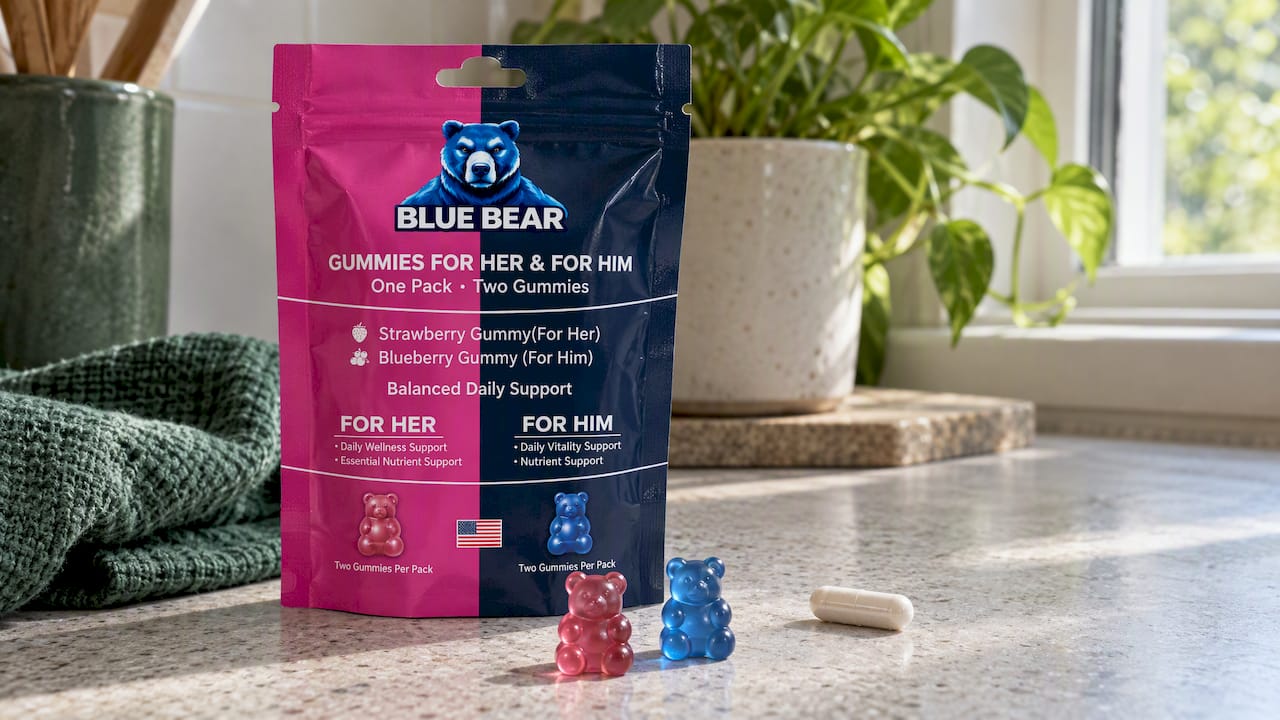
For those who prefer a simpler daily format, Blue Bear Gummies For Her & Him offer the same quality standards in a more convenient delivery method for everyday wellness support. If you are ready to see which fits your routine, you can browse the full Quantum Vitality lineup and compare formats before ordering.
Sources
- Ashwagandha: Usefulness and Safety | NCCIH
- Effects of Ashwagandha extract on sleep: systematic review and meta-analysis | PLOS ONE
FAQ
Can you take ashwagandha and ginseng together?
Some people combine them, typically ginseng in the morning and ashwagandha in the evening, though direct clinical evidence on the combination is limited. Trial each herb separately first, and check with a clinician if you take medication for blood sugar, blood pressure, or blood clotting.
Why should you be careful with ashwagandha?
Ashwagandha can cause drowsiness and gastrointestinal upset, and it may interact with thyroid or diabetes medications because of its effect on cortisol and blood sugar regulation. The NCCIH notes that long-term safety data are still limited, so short, monitored use is the more cautious approach.
Which is better, ginseng or ashwagandha?
Neither is universally better since they target different goals: ginseng tends to support daytime energy and cognitive performance, while ashwagandha tends to support stress reduction and sleep. The right choice depends on which problem you are actually trying to solve.
Why can’t you take ginseng every day indefinitely?
Traditional use often follows a cycle of several weeks on followed by a break, rather than continuous year-round use, partly because long-term safety data remain uncertain. Ginseng can also cause insomnia or affect blood sugar and blood clotting, which is part of why the NCCIH flags interaction risks with medications like warfarin and statins for ongoing use.