Cart
0
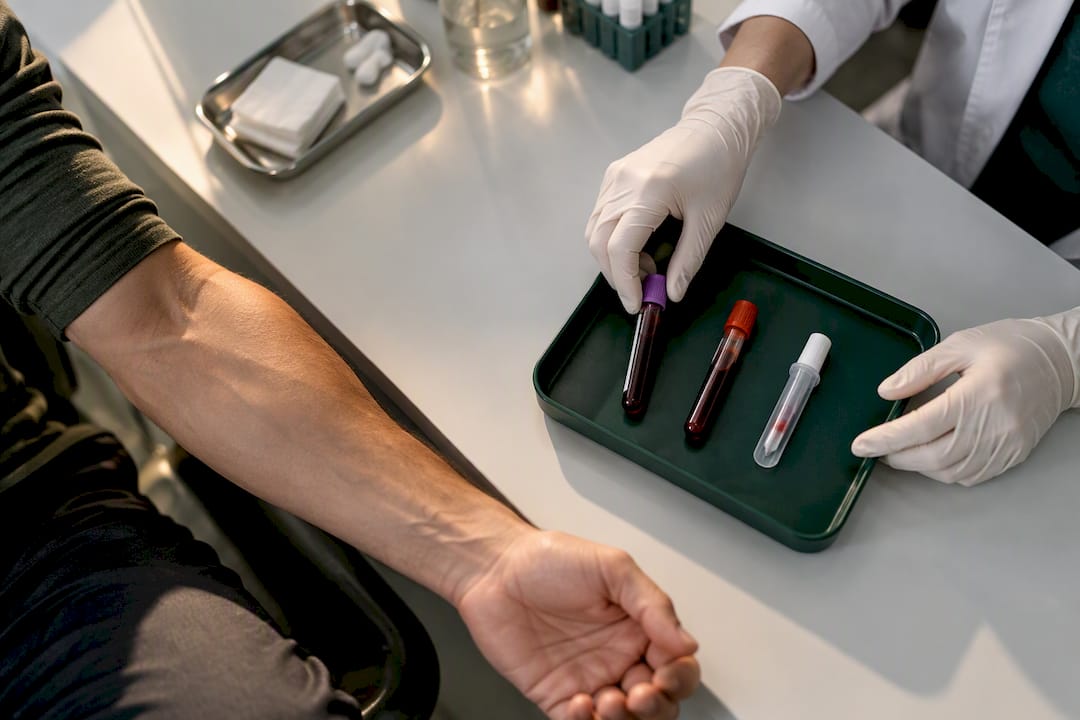
Yes, consumer NAD tests exist, but a single number is rarely decisive: trends and method matter more than any one result. The most credible options rely on dried blood spot (DBS) sampling or venous LC-MS analysis, and any brand worth considering, including Pure Blue, should be able to point to third-party testing behind its formulas. If you are trying to decide whether to supplement, a test can inform that decision, but it should not be the only input.
TL;DR:
- Consumer NAD tests vary significantly in accuracy depending on the sample type and analysis method used, with venous LC-MS being the most precise.
- Proper handling, storage, and full-spot extraction are critical to prevent sample degradation and ensure reliable results.
- A single NAD level test often remains stable across age and lifestyle, making it unreliable as a sole indicator of deficiency or need for supplementation.
- Testing is most useful for tracking trends, establishing a baseline, or monitoring a regimen over time rather than making one-off purchase decisions.
- NAD testing costs range from affordable mail-in kits to several hundred dollars for lab analysis, with results typically available within days to weeks.
Table of Contents
- What a consumer NAD test actually measures
- How handling and storage can quietly ruin your result
- What your result does and doesn’t tell you
- When testing actually helps your supplement decision
- What ordering a test actually looks like
- Limitations and situations where testing isn’t the right call
- Where NAD testing fits in a bigger metabolic picture
- How we think about testing versus trialing a supplement
- Trying Quantum Vitality after you’ve done your homework
- Sources
- FAQ
What a consumer NAD test actually measures
Not all NAD tests measure the same thing, and the sample type changes what the number means. Whole blood and red-blood-cell-rich samples carry far more measurable NAD+ than plasma, so a plasma-only test is likely to understate your actual NAD status. Understanding the collection method matters as much as the result itself:
- Fingerstick or DBS kits: some capillary and dried blood spot methods can measure NAD+ from as little as 5 microliters of capillary blood, which is why they work for mail-in or at-home kits.
- Venous LC-MS: liquid chromatography mass spectrometry is considered the analytical gold standard for NAD quantification because it avoids the auto-oxidation and interference problems that limit simpler assays, but it requires a clinic draw and lab processing.
- Colorimetric or enzymatic kits: these are the cheapest option and the least specific, more prone to interference from other blood compounds.
If a vendor cannot tell you whether they measure whole blood, plasma, or a DBS extract, that is a reason to ask before you buy.
How handling and storage can quietly ruin your result
NAD+ is chemically unstable, which means what happens to your sample between collection and analysis can matter as much as the test itself. Validated DBS cards, such as DMPK-B or QIAcard formats, are designed to address this: one validated DBS method preserved NAD+ stability at 85% or better for two weeks at 4°C, and at least one week at room temperature, when whole-spot extraction was used.
For anyone using an at-home kit, a few practical habits reduce the odds of a wasted sample:
- Fill the collection spot completely rather than applying blood in thin layers or partial drops.
- Let the spot air-dry fully before sealing, since residual moisture speeds degradation.
- Use the moisture barrier pouch provided and add a desiccant packet if one is included.
- Ship promptly, and choose cold or expedited transit if the kit offers it.
- Confirm the lab uses validated extraction and either LC-MS or a properly calibrated sensor method.
Hematocrit levels and punch size can also bias DBS readings when a lab only extracts a small disc from the spot rather than the whole thing. Whole-spot extraction, the approach used in the validated DMPK-B study above, sidesteps some of that bias, so it is worth asking your provider which method they use.
Pro Tip: Before ordering a kit, ask the company directly whether they use whole-spot DBS extraction or a partial punch, since that single detail affects how much you should trust the number you get back.
What your result does and doesn’t tell you
A single NAD reading is easy to overinterpret, and the evidence suggests you should resist that urge. A large cohort analysis found that whole-blood NAD+ levels remain relatively stable across age and many lifestyle factors, with median baseline levels stable across age in large cohorts, and no clear decline tied to aging or the interventions studied.
That stability cuts both ways for interpretation. It means natural variation between people is common, so one low or high reading does not automatically flag a problem, and it also means you should not expect supplementation to move the number dramatically overnight.
A few interpretive rules keep a single test from leading you astray:
- Treat a one-off value as a data point, not a diagnosis, especially since it may not reflect what is happening at the tissue level.
- Pair any NAD number with how you actually feel: energy, recovery, sleep, and other labs your clinician might already track.
- If you retest after starting a supplement, use the same lab, same sample type, and same assay each time, since small differences between methods can be larger than any real biological change.
- Give it time. Short-term shifts in blood NAD+ after supplementation have been documented in trials of NAD+ precursors, but those studies vary in size and duration, and physiological benefit is not the same as a moved number.
When testing actually helps your supplement decision
Testing earns its cost in specific situations, and it is not automatically useful just because it is available. It makes sense if you are tracking your own trends over months, establishing a baseline before a monitored regimen, or simply curious and willing to retest with the same method later.
It makes less sense as a one-time purchase meant to “prove” you need a supplement, especially if you ignore the differences between assay types or never retest to see if anything changed.
- Good reasons to test: longitudinal self-tracking, a baseline ahead of a monitored trial, or research-style curiosity paired with a retest plan.
- Weak reasons to test: buying a single kit to justify a purchase decision, then never checking again.
- A practical alternative: a short, monitored supplement trial with basic safety labs and symptom tracking often tells you more about how your body responds than a single NAD reading, and it usually costs less than repeated lab draws.
What ordering a test actually looks like
Your options generally fall into three categories: a mail-order DBS kit, an in-clinic fingerstick test, or a venous draw sent out for LC-MS analysis. Turnaround ranges from a few days for simpler kits to about two weeks for lab-processed venous samples.
- Choose your method based on convenience versus precision: DBS kits are easiest, venous LC-MS is the most rigorous.
- Expect costs to span from modest at-home kits to several hundred dollars for clinic-based LC-MS testing, which is typically paid out of pocket.
- Before ordering, ask the vendor which assay they use, what sample type it requires, what stability guarantees apply during shipping, and whether results are normalized against a reference method.
Limitations and situations where testing isn’t the right call
No consumer NAD test gives you a complete picture, and a few limitations are worth knowing before you spend money on one. Results reflect a snapshot of blood, not intracellular or tissue-level NAD+, so a normal blood reading does not rule out localized deficits, and an abnormal one does not confirm them either.
Testing also is not a substitute for medical evaluation if you have symptoms that concern you, such as persistent fatigue, unexplained weight change, or cognitive changes. Those warrant a conversation with a clinician rather than an at-home kit. People with certain blood disorders or anemia may also get skewed DBS results, since hematocrit affects how much blood a fixed-size spot actually contains.
Finally, there is no single accepted reference range that tells you what your number should be, and the science on how blood levels relate to symptoms or aging is still developing. Treat any test as one input among several, not a verdict, and be skeptical of any provider that claims otherwise.

Where NAD testing fits in a bigger metabolic picture
NAD+ sits at the center of cellular energy production, but it is only one piece of a larger metabolic and mitochondrial puzzle. A blood NAD+ reading does not directly measure mitochondrial density, oxidative capacity, or how efficiently your cells convert fuel into energy, all of which contribute to how you actually feel day to day.

If you are already tracking markers like fasting glucose, lipid panels, or inflammatory markers, an NAD reading can add context, particularly if you retest consistently. But it works best as one data point in a broader pattern rather than a stand-alone metric, similar to how a single cholesterol reading means more alongside blood pressure and family history than it does alone. Readers weighing supplement choices as part of a broader wellness routine may find it useful to look at evidence-based supplement guidance that covers nutrition fundamentals alongside targeted products.
How we think about testing versus trialing a supplement
Pure Blue’s take is straightforward: testing has a place, but it is not a prerequisite for trying a well-formulated supplement, and it is not a substitute for paying attention to how you actually feel. We see the most value in longitudinal tracking, using the same method over time, paired with basic labs and honest symptom notes, rather than a single reading treated as a verdict.
Our own products are built on organic ingredients, third-party testing for purity and potency, and manufacturing in an FDA-registered facility. Those are quality signals, not a substitute for your own data.
If you are on the fence, ask questions, read the assay details on any test you consider, and think about a short, evidence-based trial with monitoring rather than a single test result driving the decision.
— Organic
Trying Quantum Vitality after you’ve done your homework
If your testing and tracking point toward giving an NAD+ booster a real trial, Quantum Vitality NAD+ Booster+ Detox is built as a 3-in-1 organic formula combining NAD+ support with detox ingredients, third-party tested for purity and potency.

A few things to know before you start:
- It fits naturally into a monitored trial: start it after a baseline test, or alongside longitudinal tracking, so you have something to compare against.
- You can try the free Quantum Vitality sample before committing to a full purchase.
- The full-size product is available as a one-time purchase or subscription, so you can decide how often you want it delivered.
Whichever path you take, pair it with attention to how you actually feel, not just a single lab number.
Sources
- Fingerstick blood assay maps real-world NAD+ disparity across gender and age - PubMed
- Human whole-blood NAD+ levels do not vary with age or lifestyle interventions - PubMed
- Stabilization and quantitative measurement of nicotinamide adenine dinucleotide in human whole blood using dried blood spot sampling - PubMed
- NADomics: Measuring NAD+ and related metabolites using liquid chromatography mass spectrometry - PubMed
FAQ
Can you actually test your NAD+ levels at home?
Yes, some kits use dried blood spot or fingerstick collection that you can complete at home and mail to a lab. Methods validated for whole-spot extraction, like those using DMPK-B or QIAcard formats, tend to preserve sample quality better than less rigorous kits.
What is the most accurate way to test NAD+ levels?
Venous blood analyzed by liquid chromatography mass spectrometry, or LC-MS, is considered the gold standard for NAD quantification because it offers more specificity than colorimetric or enzymatic kits. Validated DBS methods can approach that reliability when whole-spot extraction and proper storage are used.
Does a low NAD+ test result mean I need a supplement?
Not necessarily. Research shows whole-blood NAD+ levels tend to stay fairly stable across age and lifestyle for many people, so a single low reading may reflect normal variation rather than a deficiency that requires supplementation.
How much does a consumer NAD test cost and how long does it take?
Costs range from modest at-home kits to several hundred dollars for clinic-based LC-MS testing, with turnaround from a few days up to about two weeks depending on the method. Venous draws sent for LC-MS analysis generally take longer and cost more than mail-in fingerstick kits.
Is Quantum Vitality a good option if I decide to supplement?
Quantum Vitality is Pure Blue’s 3-in-1 NAD+ booster and detox formula, made with organic ingredients and third-party tested for purity and potency. It works best as part of a monitored trial, ideally alongside baseline testing or symptom tracking so you can judge whether it makes a difference for you.