Cart
0

NAD+ is the cell’s essential electron carrier, and without it your mitochondria cannot turn food into usable energy. Raising NAD+ through diet, exercise, or supplements does show real benefits in some clinical trials, particularly for fatigue tied to chronic illness, but the evidence is mixed and the gains take weeks, not days. If fatigue has lasted more than a few weeks, see a clinician before assuming NAD+ is the missing piece.
TL;DR:
- NAD+ levels decline with age and chronic inflammation, primarily due to increased activity of enzymes like CD38 and PARP that consume the molecule.
- Supplementing with precursors like nicotinamide riboside shows modest benefits for fatigue and energy in people with diagnosed conditions, but evidence in healthy adults is limited.
- Most trial participants tolerate NAD+ precursors well, but concerns remain about potential cancer support, pregnancy safety, and the balance of NAD+ and NADH.
- Lifestyle interventions, including regular exercise, vitamin B3 intake, adequate sleep, stress management, and moderate alcohol consumption, are the most reliable ways to support NAD+ levels.
- Choosing supplements with third-party testing and transparent formulation is essential, and medical consultation is advised before starting NAD+ boosters, especially if on medication or managing illness.
Table of Contents
- How NAD+ Powers Cellular Energy
- Why NAD+ Declines and Who Notices It Most
- What Human Trials Show About NAD+ Supplements
- Safety, Side Effects, and Who Should Be Cautious
- Practical Ways to Support NAD+ Before Reaching for a Supplement
- Where Quantum Vitality NAD+ Booster+ Detox Fits the Evidence
- A Balanced Take on Whether to Try NAD+ Boosting
- Try Quantum Vitality If You’ve Done the Groundwork First
- Sources
- FAQ
How NAD+ Powers Cellular Energy
Every cell runs on a coenzyme most people have never heard of until they start losing energy. NAD+, short for nicotinamide adenine dinucleotide, acts as an electron shuttle. It picks up electrons during metabolism and becomes NADH, then drops those electrons off at the mitochondrial electron transport chain, where the cell manufactures ATP, its basic fuel currency. No NAD+, no electron transfer, no ATP. That’s the whole transaction, repeated billions of times a second across your body.
This cycling shows up at three checkpoints most biology classes skips over:
- Glycolysis, where glucose breaks down and NAD+ grabs the first electrons released
- The TCA cycle (also called the Krebs cycle), which strips more electrons from nutrients and hands them to NAD+
- Oxidative phosphorylation, where NADH finally delivers its electron cargo to the mitochondrial membrane and ATP gets produced in bulk
The PMC review on NAD+ metabolism confirms this cycling underpins ATP production across all three stages, and that age-related decline in NAD+ tracks with reduced mitochondrial efficiency and slower cellular repair.
NAD+ does more than shuttle electrons, though. It also fuels a class of proteins called sirtuins, which regulate gene expression tied to aging and metabolic health, and PARPs, which repair damaged DNA. Both enzyme families consume NAD+ to do their jobs. That’s the catch: the same molecule that generates your energy also gets spent on repair and signaling, which means demand for NAD+ rises the moment your body is under stress, whether from a poor night’s sleep, an infection, or simple aging.
Quick fact: A comprehensive review of NAD+ biology found that its role extends well beyond energy metabolism into signaling pathways that affect inflammation, DNA repair, and circadian rhythm, which is part of why low NAD+ shows up as more than just tiredness.
Why NAD+ Declines and Who Notices It Most
NAD+ levels don’t fall for one simple reason. Aging is the most consistent driver, and it’s not just about production slowing down. Enzymes like CD38 and PARP, which consume NAD+ for immune signaling and DNA repair, become more active as we get older, pulling from the same limited pool your mitochondria need for ATP.
Several other factors accelerate that drain:
- Chronic inflammation ramps up NAD±consuming enzymes even in younger adults, effectively taxing the same energy budget aging does
- Viral infection and post-viral syndromes, including long COVID, appear to disrupt NAD+ metabolism and mitochondrial function in ways researchers are still mapping
- Metabolic stress, from poor diet to chronic sleep loss, adds ongoing demand without giving the body time to replenish NAD+ through normal biosynthesis
- Mitochondrial dysfunction itself, whether from genetic mitochondrial myopathies or general cellular wear, compounds the problem because damaged mitochondria are both less efficient and more likely to trigger repair pathways that burn more NAD+
The clinical populations where researchers have looked closest at NAD+ disturbances include people with myalgic encephalomyelitis/chronic fatigue syndrome (ME/CFS) and those with diagnosed mitochondrial myopathies. In both groups, fatigue isn’t just a symptom, it’s a measurable energy production problem, and NAD+ status is one of the biomarkers researchers track. That’s a meaningfully different situation than everyday tiredness from a bad week at work, which is worth remembering before assuming a supplement will fix persistent exhaustion.
What Human Trials Show About NAD+ Supplements
The most encouraging data on NAD for energy comes from a specific patient group, not the general population. An 8-week randomized trial gave 73 people with chronic fatigue syndrome a combination of CoQ10 (200 mg per day) and NADH (20 mg per day). The result: significant reductions in fatigue impact scores and measurable improvements in ATP and NAD+ levels inside blood mononuclear cells, compared to a placebo group, with statistically significant results reported at p<0.05.

That’s a real, biochemically confirmed effect in a defined patient population. It is not proof that NAD+ supplementation cures general tiredness in healthy adults, and researchers running the trial were careful to keep that distinction clear.
A separate, larger signal comes from nicotinamide riboside (NR), one of the most studied NAD+ precursors. A 2025 trial testing high-dose NR found that participants who stuck with it for at least 10 weeks reported improvements in fatigue, sleep, and mood in exploratory analyses, though the overall group differences were limited. Translation: some people did notably better, but averaged across everyone in the study, the effect was modest. Duration mattered. Ten weeks is longer than most people expect to wait before judging whether a supplement works.
Statistic to remember: In the CoQ10 plus NADH trial, both fatigue scores and cellular ATP/NAD+ levels improved together, which is one of the few studies where a subjective symptom and an objective biomarker moved in the same direction.
Not all NAD+ boosting strategies are equal, and the differences matter more than marketing suggests:
- NR (nicotinamide riboside) has the strongest trial backing described above, particularly for fatigue tied to chronic conditions
- NMN (nicotinamide mononucleotide) follows a distinct metabolic conversion pathway from NR, and tissue uptake and bioavailability vary between the two, so results from one precursor don’t automatically apply to the other
- Oral NADH was the form used alongside CoQ10 in the chronic fatigue syndrome trial, suggesting it may work best in combination rather than alone
- IV or injection-based NAD+ therapies are popular in wellness clinics but carry far less randomized trial support than oral precursors, and regulatory scrutiny around compounded IV products is increasing
The honest takeaway from the human data: NAD+ precursors show real promise for people with diagnosed fatigue conditions, modest but present benefits for people who stick with them past the two-month mark, and very little rigorous evidence yet for otherwise healthy people looking for a general energy boost.
Safety, Side Effects, and Who Should Be Cautious
Most trial participants tolerate NAD+ precursors well. Reported side effects in the CoQ10/NADH and NR trials were generally mild, ranging from digestive discomfort to headache, and dropout rates for side effects specifically were low. That tolerability profile is one reason researchers keep testing these compounds in vulnerable populations.
Still, there are real caveats worth taking seriously before starting any NAD+ boosting approach:
- Theoretical cancer risk is the most cited concern among scientists. Raising NAD+ availability could, in principle, support the growth of existing cancer cells by increasing their metabolic capacity, and researchers currently treat this as an informed caution rather than a settled finding. Anyone with a personal or recent history of cancer should talk to an oncologist before starting NAD+ supplementation.
- Pregnancy and major active illness are situations where supplement safety data is simply too thin to make confident calls, so a conversation with a physician comes first.
- Redox balance shifts are a subtler risk. Some researchers note that boosting NAD+ can raise NADH or produce inhibitory byproducts, meaning the goal isn’t simply “more NAD+” but a favorable ratio, which is harder to self-assess than most supplement labels suggest.
- Regulatory gaps matter here too. Oral supplements fall under looser oversight than drugs, and the FDA has flagged compounding and IV therapy risks specifically, which is part of why oral precursors with trial data are a more transparent starting point than an IV drip at a wellness lounge.
Pro Tip: If you’re on any medication for a chronic condition, ask your pharmacist about NAD+ precursor interactions specifically. Interaction data is still thin, and a five-minute conversation costs nothing compared to guessing.
Practical Ways to Support NAD+ Before Reaching for a Supplement
Lifestyle changes remain the foundation, and they’re not a consolation prize while you wait for a “real” fix. The Cleveland Clinic’s guidance on NAD+ is explicit that exercise, a nutrient-dense diet, and restful sleep are the primary levers, with supplements positioned as adjunctive, not first-line.
- Move regularly, mixing aerobic and resistance work. Moderate aerobic exercise, three to five sessions a week, stimulates NAD+ biosynthesis pathways in muscle tissue, and resistance training adds a second stimulus by increasing mitochondrial density over time. Neither has to be extreme. Consistency beats intensity here.
- Eat enough vitamin B3 precursors and tryptophan-rich protein. Niacin (vitamin B3) is a direct dietary precursor to NAD+, found in poultry, fish, peanuts, and fortified grains. Tryptophan, abundant in eggs, dairy, and turkey, converts to NAD+ through a separate pathway. Extreme caloric restriction undercuts both, so crash diets work against you here even as they’re marketed as “detox” solutions.
- Protect sleep and manage chronic stress. Poor sleep and unresolved chronic stress both raise inflammatory signaling, which increases activity of the CD38 and PARP enzymes that consume NAD+ for repair rather than energy production. Seven to nine hours of consistent sleep isn’t a wellness cliché in this context, it’s a direct lever on the same biochemical pathway a supplement targets.
- Moderate alcohol intake. Alcohol metabolism competes directly for NAD+ in the liver, which is part of why heavy drinking correlates with low energy independent of sleep quality or diet.
Pro Tip: Track energy changes against sleep and exercise consistency for two weeks before adding any supplement. If lifestyle adjustments alone move the needle, you’ll know a precursor supplement is solving a smaller problem than you thought.
Where Quantum Vitality NAD+ Booster+ Detox Fits the Evidence
A precursor supplement is only as good as what’s actually in it and how it’s verified.
A few things worth knowing about how the product is positioned:
- Third-party testing for purity and potency backs every batch, which matters given how unregulated the wider supplement category can be
- Organic, non-GMO sourcing aligns with the same B3 precursor and detox-support logic covered in the trial evidence above, rather than an unrelated ingredient stack
- A reported 4.9 out of 5 user rating reflects real-world satisfaction, though it’s not a substitute for clinical trial data
- Formulated for everyday use, positioning it closer to a lifestyle-support product than a clinical intervention
None of this replaces a medical workup for persistent fatigue. It does mean that if you’ve already talked to a clinician and decided a precursor supplement is worth trying, formulation transparency and third-party testing are the two things worth checking, regardless of brand. You can read more about Pure Blue’s approach to formulation directly.
A Balanced Take on Whether to Try NAD+ Boosting
The trial data here is genuinely encouraging for defined fatigue conditions and genuinely unproven for the general “I’m just tired” complaint most people have. That distinction should guide your decision more than any product page will.
If fatigue has lasted weeks, start with a medical evaluation, not a supplement order. Rule out thyroid issues, anemia, sleep disorders, and depression first, since all of them mimic low energy convincingly. From there, lifestyle changes are the lowest-risk, best-evidenced lever you have. A considered trial of an NAD+ precursor, taken with your clinician’s awareness, is a reasonable third step for people who’ve already covered the first two and still want to explore further.
— Organic
Try Quantum Vitality If You’ve Done the Groundwork First
If you’ve already tightened up sleep, movement, and diet and you’re still curious about precursor support, Pure Blue’s Quantum Vitality NAD+ Booster+ Detox is formulated around the same organic, third-party-tested standard the trial evidence points toward, not an unverified proprietary blend.
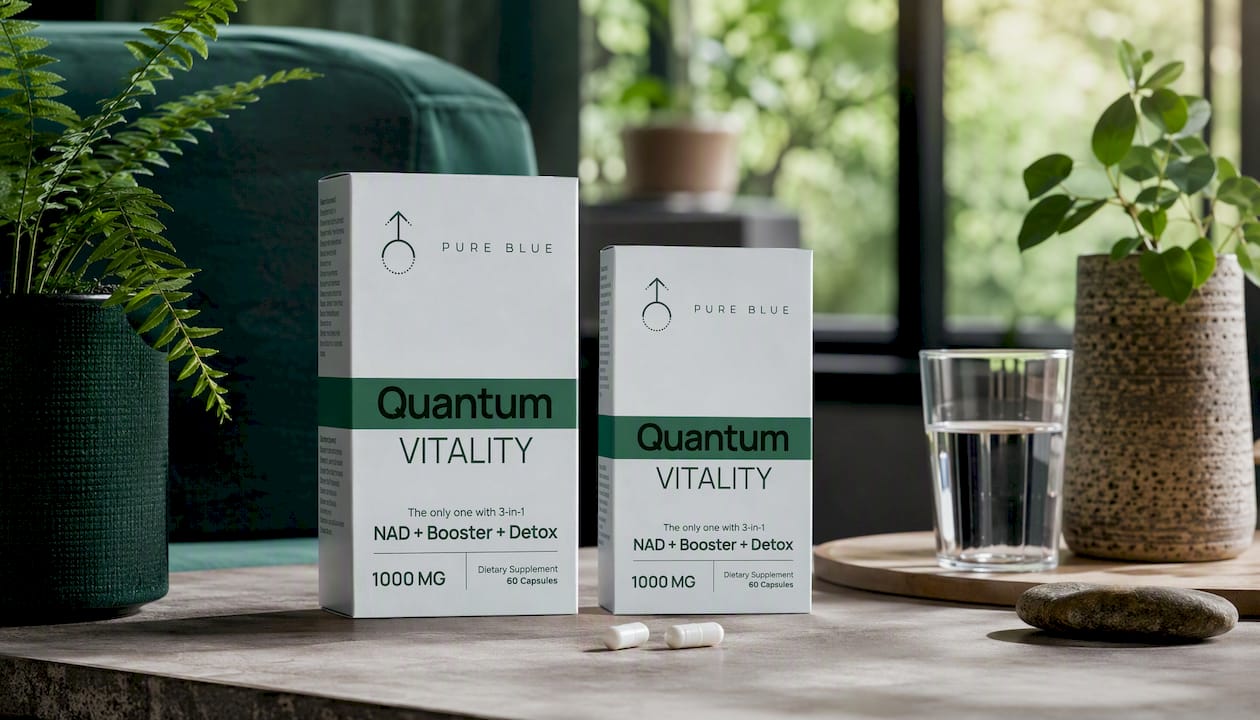
The Quantum Vitality NAD+ Booster+ Detox product page lists the full ingredient panel and current pricing for a one-time purchase, so you can see exactly what you’re getting before ordering. First-time buyers can also check the free Quantum Vitality offer to try the formula at low risk. Pure Blue also carries additional energy and vitality gummies for him and for her, if you’re looking for a broader wellness routine beyond NAD+ specifically.
If you’re on medication, pregnant, or managing a chronic illness, talk to your doctor before starting, and treat this as one transparent option among several, not a replacement for medical care.
Sources
- PMCID: PMC7973386
- PubMed: CoQ10 + NADH trial (PMID 25386668)
- ScienceDaily summary of NR trial (2025)
FAQ
Does NAD+ Give You Energy?
NAD+ itself doesn’t provide energy directly, it enables the process. It acts as the electron carrier your mitochondria need to produce ATP through cellular respiration, so adequate NAD+ levels support the machinery your cells use to generate usable energy.
Does NAD Help With Fatigue?
For specific conditions like chronic fatigue syndrome, yes: an 8-week trial combining CoQ10 and NADH produced significant fatigue score improvements versus placebo. For general tiredness in otherwise healthy adults, the evidence is much thinner, and lifestyle factors typically matter more.
What Is the Downside of NAD+ Supplementation?
The main theoretical concern is that raising NAD+ availability could, in principle, support the metabolic activity of existing cancer cells, which is why people with a cancer history should consult a physician first. Mild digestive discomfort and headache are the most commonly reported side effects in trials, and long-term safety data is still limited.
Is NAD+ Like Adderall?
No. Adderall is a stimulant that acts on brain chemistry to increase alertness and focus almost immediately. NAD+ precursors work on a completely different, slower mechanism, supporting mitochondrial energy production over weeks, and they carry none of the stimulant properties or controlled-substance status Adderall has.