Cart
0
Yes, for most healthy adults chasing energy, recovery, or antioxidant support, pairing NAD+ precursors with glutathione support makes biochemical sense because one fuels the other’s recycling system. The catch: benefits are strongest when you test first, dose conservatively, and loop in a clinician, especially if you are considering injectable forms or have an existing health condition. Skip the guesswork and you get a stack with real mechanistic logic behind it.
TL;DR:
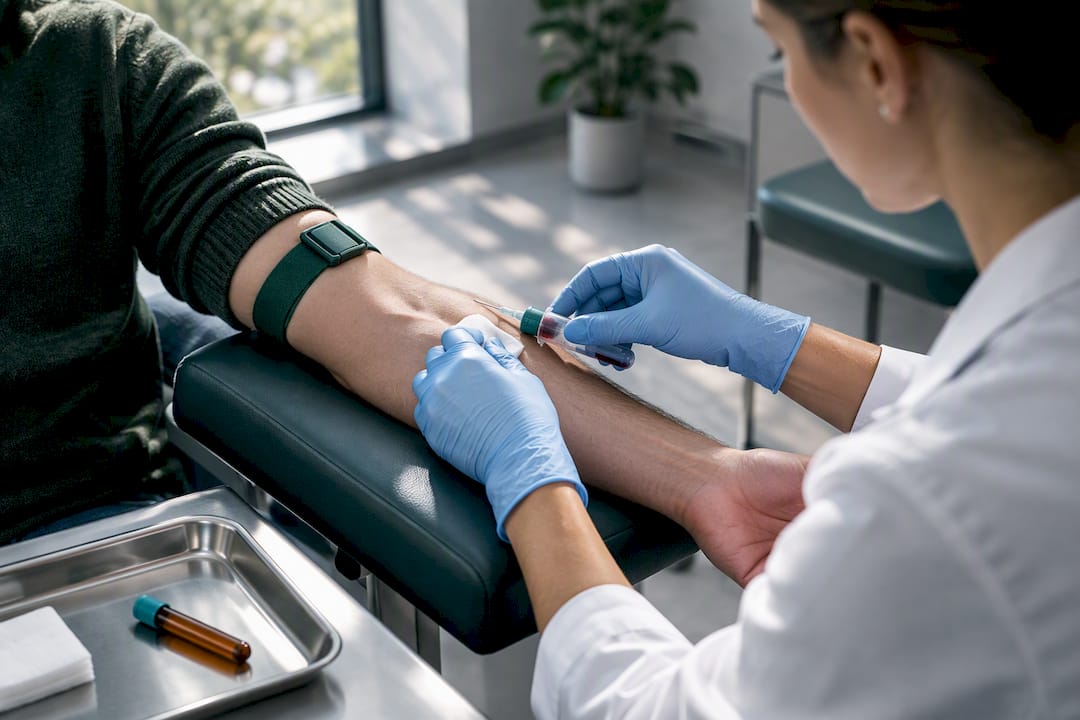
- Combining NAD+ precursors with glutathione support is most effective when blood tests confirm deficiency or oxidative stress levels are high, especially before starting injectable forms.
- Oral micellar or liposomal glutathione significantly improves absorption compared to traditional capsules, providing about two to three times higher systemic exposure.
- NAD+ helps regenerate glutathione through NADPH, making dual support more synergistic, especially in clinical settings for COVID-19 recovery and aging markers.
- Clinical evidence suggests stacking NAD+ precursors with cysteine, serine, and L-carnitine shortens recovery time in disease and improves mitochondrial and inflammation markers in older adults.
- Start with well-studied oral precursors, test first, and avoid injectable NAD+ or glutathione outside licensed medical settings to reduce safety risks.
Table of Contents
- Glutathione and NAD: What NAD+ Actually Does in the Body
- What Glutathione Does for Detox and Cellular Health
- How Do NAD+ and Glutathione Work Together?
- Forms and Delivery: IV, Oral, Micellar, and Precursor Options
- Safety, Interactions, and When to Get Labs Checked
- How to Build a Practical NAD and Glutathione Stack
- Why the Simplified “Just Take Both” Advice Falls Short
- Pureblue’s Approach to Combined NAD+ and Detox Support
- Sources
- FAQ
Glutathione and NAD: What NAD+ Actually Does in the Body
NAD+ (nicotinamide adenine dinucleotide) is a coenzyme your mitochondria can’t run without. It shuttles electrons during ATP production, activates sirtuin enzymes tied to DNA repair and cellular aging, and declines measurably as people get older. That decline is the reason NAD booster supplements have become such a crowded category.
Most products on the market don’t contain NAD+ directly, since the molecule is unstable and poorly absorbed. Instead, they supply precursors your body converts into NAD+:
- Nicotinamide riboside (NR) — well-studied, reliably raises blood NAD+ metabolites.
- Nicotinamide mononucleotide (NMN) — a step closer to NAD+ in the conversion pathway.
- Nicotinamide (NAM) — the simplest, most bioavailable precursor form.
- RiaGev, a nicotinamide and D-ribose combination, increased the NAD+ metabolome by raising NADP+ 27% over seven days in healthy middle-aged adults, alongside better fatigue and concentration scores.
The honest summary: precursors consistently raise NAD+ related metabolites in trials. A review of NAD+ precursor research found the safety data solid but the functional outcome data mixed, largely because trials vary widely in dose, duration, and who’s being studied. Raising the number on a metabolomics panel and feeling meaningfully better aren’t always the same thing.
What Glutathione Does for Detox and Cellular Health
Glutathione is your cells’ primary internal antioxidant, cycling between its active reduced form (GSH) and its oxidized form (GSSG) to neutralize free radicals and support liver detoxification. The GSH to GSSG ratio, not just total glutathione levels in the body, is what actually reflects how well your redox system is functioning. That distinction trips up a lot of at home testing claims.
Getting glutathione levels up isn’t as simple as swallowing a capsule, because oral glutathione historically has poor absorption. Two approaches have changed that picture:
- GlyNAC (glycine plus N-acetylcysteine) restored glutathione deficiency in older adults over 16 weeks, improving oxidative stress, mitochondrial function, insulin sensitivity, and physical performance, with a strong safety profile.
- Micellar and liposomal glutathione formulations use lipid or micelle carriers to push more of the molecule past digestion intact.
- A 2021 trial found 1,000 mg of oral glutathione daily for three weeks raised muscle glutathione by roughly 19% and improved insulin sensitivity in obese men, though systemic oxidative stress markers didn’t move much.
The precursor route (GlyNAC) and the direct route (better absorbed GSH) aren’t competing strategies. They’re solving different parts of the same supply problem.
How Do NAD+ and Glutathione Work Together?
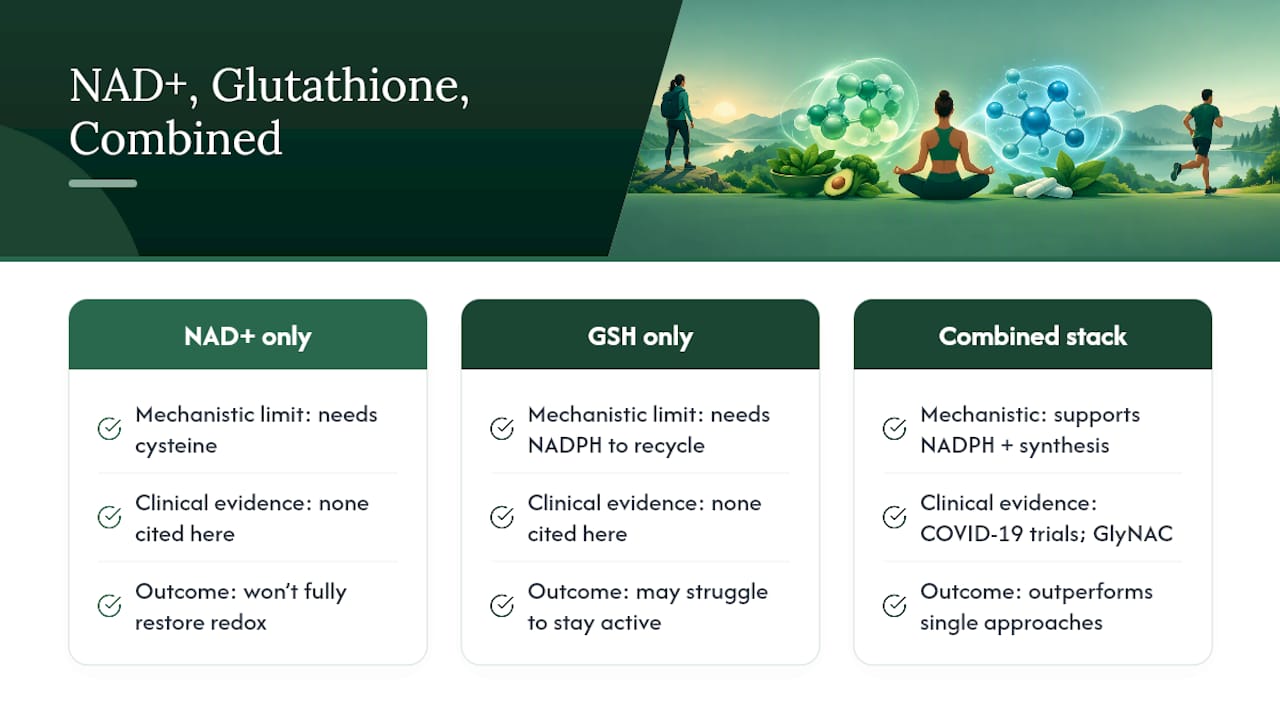
Here’s the mechanism that ties this whole topic together, and it’s the piece most supplement marketing skips entirely. NAD+ doesn’t just power mitochondria. It also feeds NADP+, which becomes NADPH, and NADPH is the fuel that glutathione reductase needs to convert spent, oxidized glutathione (GSSG) back into its active, reduced form (GSH).
Reviews of cellular redox biology describe NAD+ and glutathione as interdependent partners: adequate NAD+ status supports the NADPH supply that glutathione recycling depends on, linking energy metabolism directly to antioxidant capacity.
That’s not a minor technical footnote. It means a supplement that only adds glutathione, without addressing NAD+ or NADPH availability, may struggle to keep that glutathione in its active form once your cells put it to work. The reverse is also true: pushing NAD+ higher while cysteine (the rate-limiting building block of glutathione synthesis) is deficient won’t fully restore redox balance either. Mechanistic reviews on the NAD+ and glutathione relationship frame this as a supply chain problem: NAD+ status and glutathione synthesis need to be addressed together, not as two unrelated antioxidant boxes to check.
The clinical evidence for combined support isn’t purely theoretical, either. In trials on ambulatory COVID-19 patients, combined metabolic activators that paired NAD+ precursors with cysteine, serine, and L-carnitine shortened symptom-free recovery time compared with placebo, with one phase 3 trial reporting notably shorter recovery time compared with placebo. Separately, the GlyNAC trials in older adults improved multiple aging-related markers at once, from mitochondrial function to inflammation, rather than moving a single isolated number. Both examples point the same direction: stacking the NAD+ side with the glutathione side tends to outperform pushing either lever alone.
Forms and Delivery: IV, Oral, Micellar, and Precursor Options
Delivery method changes what you can realistically expect, and it’s where a lot of marketing overstates the science.
IV glutathione produces the fastest circulating increase, but it requires clinic administration and carries real quality risks if the product isn’t medical-grade. The FDA has specifically warned compounders against using dietary supplement-grade glutathione in injectable preparations, citing contamination and dosing hazards. Never source an injectable from anywhere other than a licensed clinic using pharmaceutical-grade material.
Micellar and liposomal oral glutathione narrows the gap with IV. A 2026 randomized crossover trial found a micellar glutathione formulation produced roughly 2.49 times higher systemic exposure and 2.43 times higher peak blood response than a standard oral formulation at equivalent doses, with no significant safety issues over 30 days.
- IV: fastest onset, highest oversight burden, real quality-control risk if sourced improperly.
- Micellar/liposomal oral: meaningfully better absorption than plain capsules, self-administered.
- GlyNAC: builds glutathione from raw materials rather than delivering it directly, best evidence base in older adults.
- NAD+ precursors (NR, NMN, RiaGev): reliable metabolite increases, functional outcomes still being mapped.
For most people starting out, oral precursor and micellar combinations offer the better risk-to-benefit ratio than jumping straight to IV therapy.
Safety, Interactions, and When to Get Labs Checked
Combining NAD+ and glutathione support is generally well tolerated in trial settings, but a few groups need real caution: pregnant or breastfeeding women, anyone in active cancer treatment, people with severe liver disease, and anyone on medications metabolized through glutathione-dependent pathways. If NAD+ precursors are part of a metabolic health plan, monitor blood glucose, since some trial populations showed shifts in insulin sensitivity worth tracking.
A practical monitoring approach looks like this:
- Baseline labs: liver panel (ALT/AST), kidney function markers, and fasting glucose.
- Recheck at 4 to 8 weeks, watching for symptom changes alongside the numbers.
- Reassess at 12 weeks to decide whether to continue, adjust dose, or stop.
- Stop and consult a clinician immediately for unexplained fatigue, jaundice, or abdominal pain.
Pro Tip: Never accept an injectable NAD+ or glutathione product from anyone outside a licensed medical setting. The FDA’s compounding warnings exist because supplement-grade material isn’t sterile-manufacture certified for injection.
How to Build a Practical NAD and Glutathione Stack
- Define the goal. Energy, recovery, or lab-confirmed oxidative stress each call for a different emphasis and a 6 to 12 week evaluation window.
- Fix the fundamentals first. Sleep, protein intake, and exercise move redox markers before any supplement does.
- Start with oral, well-studied precursors. NAD+ precursors or GlyNAC before considering IV or high-dose stacking.
- Go conservative. Introduce one variable at a time so you can tell what’s actually working.
- Track real outcomes. Use a simple fatigue scale, a functional test you can repeat, and follow-up labs where relevant.
Why the Simplified “Just Take Both” Advice Falls Short
Most coverage of this topic treats NAD+ and glutathione as two separate wellness trends that happen to get bundled into the same bottle. That framing misses the actual biochemistry. The interesting part isn’t that they’re both antioxidant-adjacent. It’s that one recycles the other, and marketing rarely explains that connection because it takes more than a sentence to land.
Pureblue built its flagship Quantum Vitality NAD+ Booster+ Detox formula around that coupling rather than treating NAD+ support and detox support as separate purchases. Each batch is third-party tested for purity and potency and produced in an FDA-registered facility, with a stated customer rating of 4.9 out of 5. None of that replaces the lab work and clinical guidance covered above. It’s a formulation choice that fits a test-guided plan, not a substitute for one.
— Organic
Pureblue’s Approach to Combined NAD+ and Detox Support
Most single-ingredient NAD+ boosters leave the glutathione side of the equation untouched, which, given the metabolic coupling explained above, is half a strategy. Quantum Vitality NAD+ Booster+ Detox is formulated as a 3-in-1 organic blend built specifically to support both sides at once, rather than asking you to buy and coordinate two separate products.
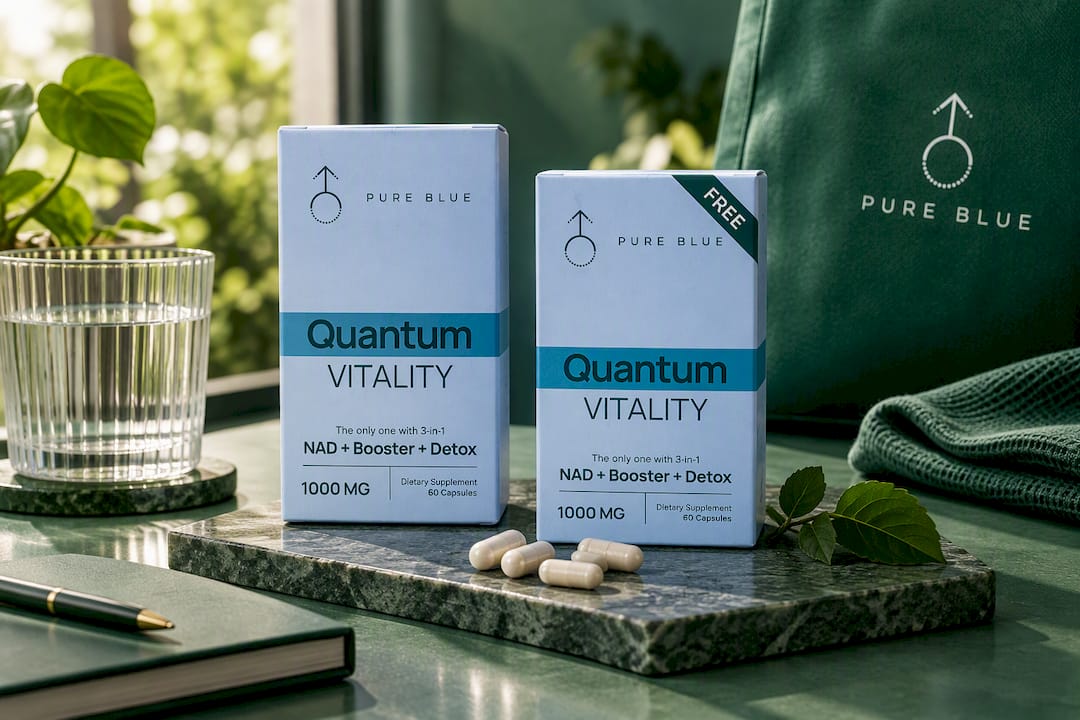
Every batch is third-party tested for purity and potency and manufactured in an FDA-registered facility, with no artificial fillers in the formula. If you’d rather test the formula before committing, Pureblue also offers a free trial version of Quantum Vitality. For anyone building a broader routine, the full product collection covers bundling options, and Pureblue also carries gummies formulated for men and a dedicated line for women that complement the core formula. As with any NAD+ or glutathione strategy, run your labs first and check in with a clinician, especially if you’re on medication or managing a chronic condition, then decide if Quantum Vitality fits the plan you’ve built.
FAQ
Can I Take Glutathione and NAD+ Together?
Yes, most healthy adults can take them together, and the underlying biochemistry supports it since NAD+ helps regenerate active glutathione through the NADPH pathway. Check with a clinician first if you’re pregnant, in cancer treatment, or managing liver disease.
Is It Worth Taking NAD and Glutathione Together?
For people targeting energy, recovery, or oxidative stress, it’s often worth it because the two systems are metabolically linked rather than redundant. The GlyNAC trial in older adults and the RiaGev pilot trial both showed measurable improvements when precursor support was involved, though results vary by age and baseline health.
What Supplements Should Not Be Taken With NAD+?
There’s no universal “never combine” list, but caution matters with high-dose niacin, certain diabetes medications given glucose-sensitivity shifts seen in some trials, and any unregulated injectable product. Always disclose current medications to a clinician before starting an NAD+ precursor.
Is NAD Like Ozempic?
No. Ozempic is a prescription GLP-1 medication regulated for specific metabolic conditions, while NAD+ precursors are dietary supplements that support cellular energy production and redox balance. They work through entirely different mechanisms and aren’t interchangeable for weight management or blood sugar control.
What Does Quantum Vitality NAD+ Booster+ Detox Cost?
Quantum Vitality NAD+ Booster+ Detox is priced at $69.99 as a one-time purchase. A free trial version is also available for readers who want to test the formula first.