Cart
0
Choose acetyl-L-carnitine (ALCAR) when your priority is cognition, nerve pain, or mood support, because the acetyl group helps it cross the blood-brain barrier. Choose plain L-carnitine, or the tartrate form (LCLT), when your priority is heart recovery, exercise performance, or fertility. Both raise blood carnitine levels, but the trial evidence mainly supports those lines, and the dosing and safety sections below show exactly how to act on that.
TL;DR:
- Acetyl-L-carnitine (ALCAR) is most effective for cognitive, nerve pain, and mood support because it crosses the blood-brain barrier more efficiently than plain L-carnitine.
- Plain L-carnitine or L-carnitine tartrate (LCLT) are better suited for heart recovery, exercise performance, and fertility, with trial doses typically ranging from 2 to 6 grams daily.
- Both forms raise blood carnitine levels, but evidence shows ALCAR uniquely reduces brain oxidative stress markers despite similar plasma levels, emphasizing mechanism over concentration.
- Long-term improvements in neuropathy and cognitive functions generally appear after 8 to 12 weeks of consistent supplementation at prescribed doses.
- Quality sourcing, third-party testing, and matching dose to research are critical to achieving desired outcomes, especially in clinical protocols.
Table of Contents
- L-Carnitine Explained: What It Does and Where the Evidence Is Strongest
- Acetyl-L-Carnitine Explained: Why the Acetyl Group Changes Everything
- ALCAR vs L-Carnitine: The Side-by-Side Breakdown
- Where the Two Overlap
- Which Form Fits Your Goal, and What to Ask Your Doctor First
- Dosing Ranges, Side Effects, and When to Check In With a Doctor
- What Quality Actually Looks Like in a Carnitine Supplement
- The Goal-First Framework Most Supplement Guides Skip
- Get a Carnitine Supplement Built for the Dose You Actually Need
- Sources
- FAQ
L-Carnitine Explained: What It Does and Where the Evidence Is Strongest
L-carnitine’s main job is shuttling long-chain fatty acids into mitochondria, where they get burned for energy. That transport role is why it shows up so often in heart and exercise research: cardiac muscle and working skeletal muscle both depend heavily on fat oxidation for fuel.
Two formulations dominate the trial literature. Plain L-carnitine is the base molecule, while L-carnitine L-tartrate (LCLT) pairs it with tartaric acid, a combination researchers favor for exercise studies because it absorbs quickly and has a track record in recovery protocols. The trial base includes:
- Post-heart-attack studies where L-carnitine dosing in the range of 2 to 6 grams a day appeared in cardiac recovery trial literature
- Exercise-recovery trials using LCLT, generally at lower daily doses than the cardiac protocols
- Fertility research examining L-carnitine’s role in sperm motility and energy metabolism
Side effects tend to be mild: nausea, stomach cramping, diarrhea, and a fishy body odor at higher doses. One more nuanced issue worth flagging early: gut bacteria can convert L-carnitine into a compound called TMAO, which has been linked to cardiovascular risk markers in some research. That gets unpacked further down, because it’s not a simple red flag.
Acetyl-L-Carnitine Explained: Why the Acetyl Group Changes Everything
Add an acetyl group to L-carnitine and you get a molecule with a different job description. ALCAR still moves fatty acids around, but the acetyl group also feeds into acetyl-CoA and acetylcholine synthesis, both central to how neurons produce energy and communicate.
That structural tweak is also why ALCAR reaches the brain more efficiently than plain L-carnitine. Reviews of carnitine pharmacology consistently point to ALCAR’s advantage in blood-brain barrier penetration, and it’s the reason cognitive and nerve-related research almost always uses ALCAR instead of the plain form. A related dictionary reference confirms ALCAR’s identity as a distinct carnitine form used across several clinical contexts, not just as a rebranded version of L-carnitine.
The trial evidence for ALCAR clusters around:
- Diabetic peripheral neuropathy, where symptom improvement has been documented over 8 to 12 weeks
- Mild cognitive impairment, using daily doses in the 1.5 to 3 gram range
- Adjunct use in mood-related research, though this evidence is thinner and less consistent
Reported adverse events in these trials are generally mild: gastrointestinal upset, restlessness, and occasional headache. Nothing in the trial record suggests ALCAR carries a materially different risk profile than plain L-carnitine at comparable doses.
ALCAR vs L-Carnitine: The Side-by-Side Breakdown
Here’s where the two forms actually diverge, and why picking the wrong one wastes money without fixing the problem you started with.
Blood-brain barrier access is the single biggest structural difference. Rodent research directly comparing the two forms found that after four weeks of supplementation, ALCAR reduced oxidative damage markers in aged rat brain tissue while plain L-carnitine did not, even though both raised plasma and brain carnitine levels equally. That’s a meaningful distinction: getting carnitine into the blood isn’t the same as getting a neuroprotective effect out of it.
Bioavailability and formulation matter too. LCLT was engineered for exercise research because tartaric acid improves absorption speed, which matters when you’re timing a dose around a workout. ALCAR’s acetylation, by contrast, wasn’t designed for muscle performance. It happens to unlock CNS access as a side effect of a different chemical modification.
Mapping indication to form looks like this:
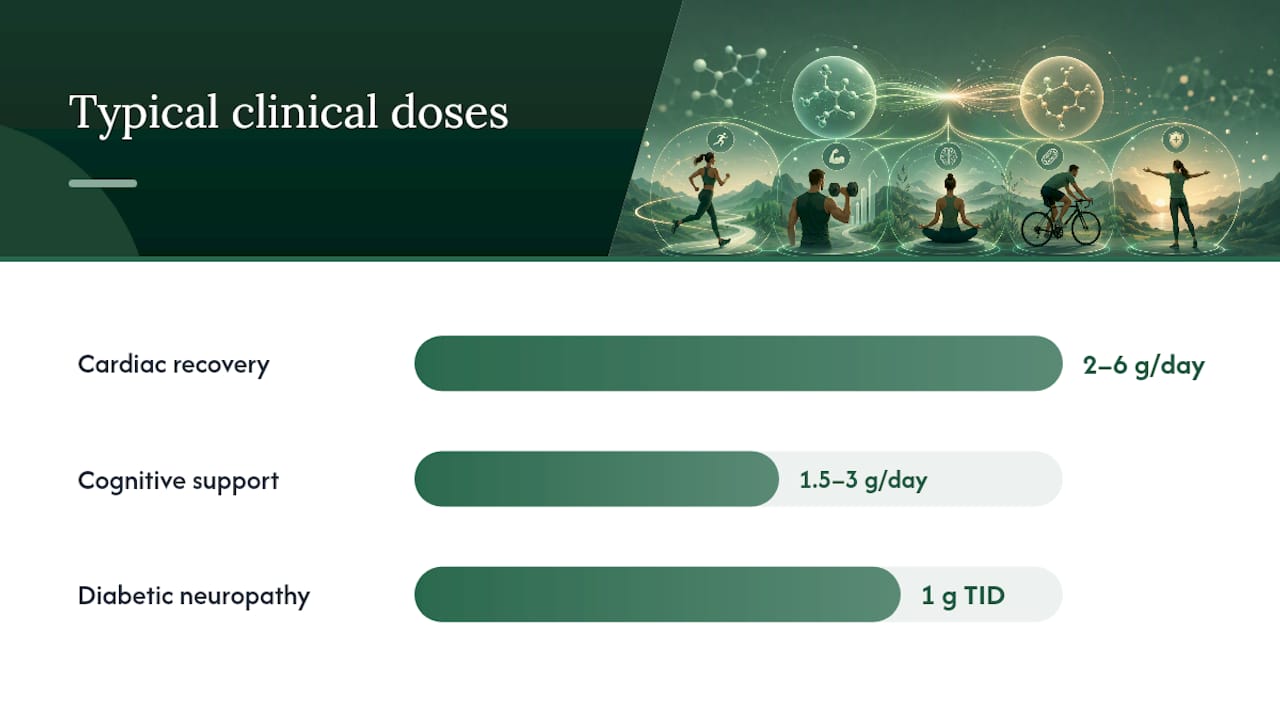
- Cardiac recovery — plain L-carnitine, with trial doses historically running 2 to 6 grams daily under clinical supervision
- Exercise performance and recovery — LCLT, typically dosed lower than cardiac protocols
- Male fertility support — plain L-carnitine, sometimes combined with ALCAR in clinician-supervised protocols
- Cognitive support and mild impairment — ALCAR, generally 1.5 to 3 grams daily
- Diabetic neuropathy — ALCAR, often dosed at 1 gram three times daily
A statistic worth sitting with: in that four-week rodent trial, both forms raised brain carnitine to similar levels, yet only ALCAR moved the oxidative-stress markers. That’s the clearest experimental evidence that CNS benefit isn’t just about carnitine concentration. It’s about which form actually does something once it gets there.
The TMAO question deserves a fair hearing rather than a dismissal. Observational research first raised concern that gut microbes metabolize L-carnitine into TMAO, a compound associated with cardiovascular risk markers in some studies. Causality is still unsettled, and randomized trials showing cardiac benefit from L-carnitine haven’t been overturned by the TMAO signal. It’s a factor to raise with a doctor, particularly for anyone with existing cardiovascular disease, not a reason to abandon the compound outright.
Where the Two Overlap
Both forms raise plasma carnitine and support the same basic mitochondrial fatty-acid transport system. That overlap matters most in one specific scenario: fertility protocols, where some clinicians combine L-carnitine and ALCAR under supervision rather than choosing one exclusively.
Outside of that, doubling up rarely makes sense. If your goal is neuropathy relief, adding plain L-carnitine on top of ALCAR doesn’t add CNS benefit. If your goal is cardiac support, ALCAR doesn’t outperform the plain form in that context, since the trial base for heart recovery was built on L-carnitine, not the acetylated version. Tolerability is similar across both. Mild GI upset is the most common complaint either way.
Which Form Fits Your Goal, and What to Ask Your Doctor First
Match the form to the outcome you’re actually trying to change, not to whichever one shows up first in a supplement aisle.
- Brain fog, mild cognitive concerns, or nerve pain from diabetes → ALCAR, generally 1.5 to 3 grams daily, with neuropathy protocols sometimes reaching 3 grams split across three doses
- Recovering from a cardiac event or supporting heart health under medical guidance → plain L-carnitine, dosed within trial-established ranges and only with a physician involved
- Exercise recovery or reducing muscle soreness → LCLT, generally the better-studied choice for performance contexts
- Fertility support → plain L-carnitine as the primary choice, with ALCAR added only as part of a supervised combination protocol
Expect a lag before you notice anything. Cognitive and neuropathy trials generally ran 8 to 12 weeks before showing measurable symptom change, so a two-week trial run tells you almost nothing.
Pro Tip: Track a specific symptom, not a vague sense of “feeling better.” Neuropathy patients did best rating a concrete marker like tingling frequency or pain intensity week to week, since that’s closer to what the actual trials measured.
Before starting either form, ask a clinician about interaction risk with any existing thyroid medication, anticoagulants, or seizure medication, and flag pregnancy, severe kidney disease, or diagnosed cardiovascular disease specifically. Those are the categories where dosing decisions shouldn’t be made from a supplement label alone.
Dosing Ranges, Side Effects, and When to Check In With a Doctor
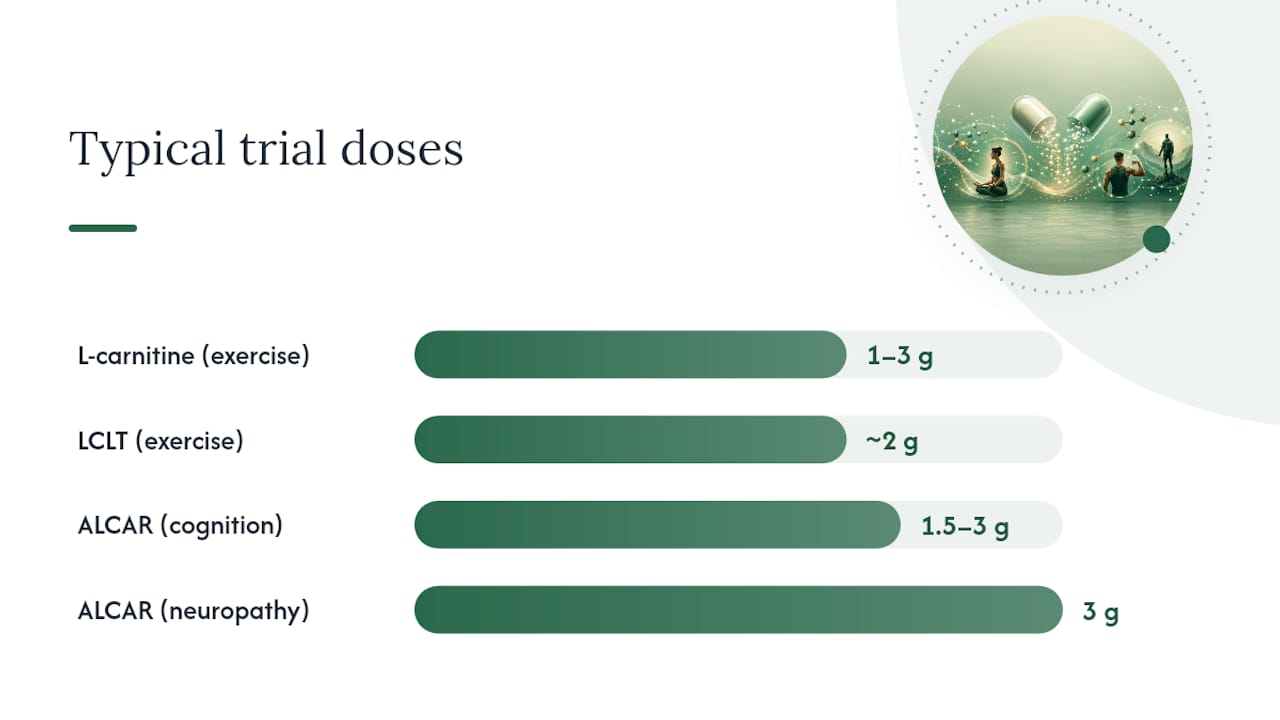
Trial-based dosing gives you a real target instead of a guess. For plain L-carnitine, exercise and general repletion research generally lands in the 1 to 3 grams daily range, while LCLT protocols for exercise typically use around 2 grams daily. Cardiac trials have used considerably higher doses under supervision. For ALCAR, cognitive support trials generally used 1.5 to 3 grams daily, while diabetic neuropathy trials commonly used 1 gram three times a day, for a total of 3 grams.
Common side effects across both forms:
- Nausea or stomach upset, especially when taken without food
- A fishy body odor at higher doses, more noticeable with plain L-carnitine
- Mild headache or restlessness, reported occasionally with ALCAR
The one number worth remembering: most positive trial results for cognitive and neuropathy outcomes took 8 to 12 weeks to show up. Anyone stopping after two or three weeks because “nothing happened” is quitting before the trial window that actually produced results.
Skip both forms, or get a doctor’s sign-off first, if you’re pregnant, have severe kidney disease, or have a major cardiovascular diagnosis. The NIH Office of Dietary Supplements factsheet on carnitine also notes that weight-loss claims tied to carnitine supplementation outrun the actual evidence, so treat that as a secondary benefit at best, not a reason to supplement.
What Quality Actually Looks Like in a Carnitine Supplement
Trial dosing only matters if what’s in the bottle matches the label. Some supplement lines use organic formulations with no artificial fillers, and some products go through third-party testing for purity and potency before reaching shoppers.
That approach matters more with carnitine than with most supplements, because dosing precision is exactly what the neuropathy and cognitive trials depended on. A product manufactured in a facility registered with relevant authorities and tested by an outside lab rather than self-certified may better ensure the dose matches research specifications.
Readers exploring this category on Pureblue’s site will find a few relevant options:
- Quantum Vitality NAD+ Booster+ Detox, a 3-in-1 formula built around organic ingredients and third-party verification
- Blue Bear Male Gummies, formulated for male vitality support
- Blue Bear Gummies For Her & Him, a shared-format option for couples or households
- WAP FOR HER ONLY, designed specifically for women’s balance and support needs
- Pure Blue, the brand’s core formulation
The Goal-First Framework Most Supplement Guides Skip
Most comparisons between these two compounds treat the question as a binary: which one is “better.” That framing misses the point entirely. ALCAR and L-carnitine aren’t competing for the same job. Asking which one wins is a little like asking whether a wrench beats a screwdriver.
The conventional advice tends to stop at “they’re both carnitine, so either works.” That’s technically true for raising blood carnitine levels and practically false for almost everything else. The rodent data showing ALCAR reduced oxidative markers while plain L-carnitine didn’t, despite equal carnitine levels in the brain, is the clearest evidence that mechanism matters more than raw concentration.
What actually deserves more attention than it gets: the 8 to 12 week timeline. Supplement shoppers routinely give a product two weeks and move on, which guarantees they never see the effect the trials actually measured. The other underrated point is sourcing quality. A neuropathy protocol built around 3 grams of ALCAR daily only replicates trial conditions if the product delivers that dose consistently and cleanly, which is exactly where third-party testing earns its place in the decision, not as a marketing checkbox.
— Organic
Get a Carnitine Supplement Built for the Dose You Actually Need
Trial-based dosing only helps if the product in your hand matches what the research used, and that’s the gap Pureblue was built to close. Every formula is organic, free of artificial fillers, and third-party tested for purity and potency, manufactured in an FDA-registered facility so the label reflects what’s actually inside the capsule or gummy.

If your goal is broad energy and cellular support alongside a carnitine-style protocol, the Quantum Vitality NAD+ Booster+ Detox combines a 3-in-1 NAD+ booster and detox formula with the same organic, tested standard behind every Pureblue product. Men focused on vitality can check out the Blue Bear Male Gummies, while couples or households looking for a shared daily option can browse Blue Bear Gummies For Her & Him. Visit the Pureblue front page to compare the full lineup and pick the formula that matches the goal you just mapped out above.
This article is general information, not a substitute for advice from a qualified doctor. Consult a qualified healthcare professional about your own circumstances before acting on anything here.
FAQ
Should I take acetyl-L-carnitine or plain L-carnitine?
Take ALCAR if your goal is cognitive support or nerve pain relief, since it crosses the blood-brain barrier more effectively. Take plain L-carnitine, or LCLT, for heart recovery, exercise performance, or fertility support, where the trial evidence is built around those forms specifically.
Does ALCAR actually work?
ALCAR has real trial support for diabetic neuropathy and mild cognitive impairment, with most studies using 1.5 to 3 grams daily over 8 to 12 weeks before showing measurable improvement. It’s not a fast-acting supplement, and results reported in short trials of a few weeks are far less reliable than the longer studies.
Does ALCAR help you lose weight?
Evidence for weight loss from carnitine supplementation, including ALCAR, is limited according to the NIH Office of Dietary Supplements. Its real trial strength lies in cognitive and neuropathy outcomes, not fat loss, so treat any weight-loss marketing claim with skepticism.
Who should avoid acetyl-L-carnitine?
Anyone who is pregnant, has severe kidney disease, or has a major cardiovascular diagnosis should talk to a doctor before starting ALCAR or L-carnitine. People on thyroid medication, anticoagulants, or seizure medications should also check for interactions first, since both carnitine forms can affect how those drugs behave.
What’s the difference between ALCAR and L-carnitine in how they’re absorbed?
The acetyl group on ALCAR changes how the molecule moves through the body, giving it easier access to the brain than plain L-carnitine. L-carnitine L-tartrate (LCLT) was specifically formulated for faster absorption in exercise contexts, which is why it dominates performance research over the plain form.