Cart
0

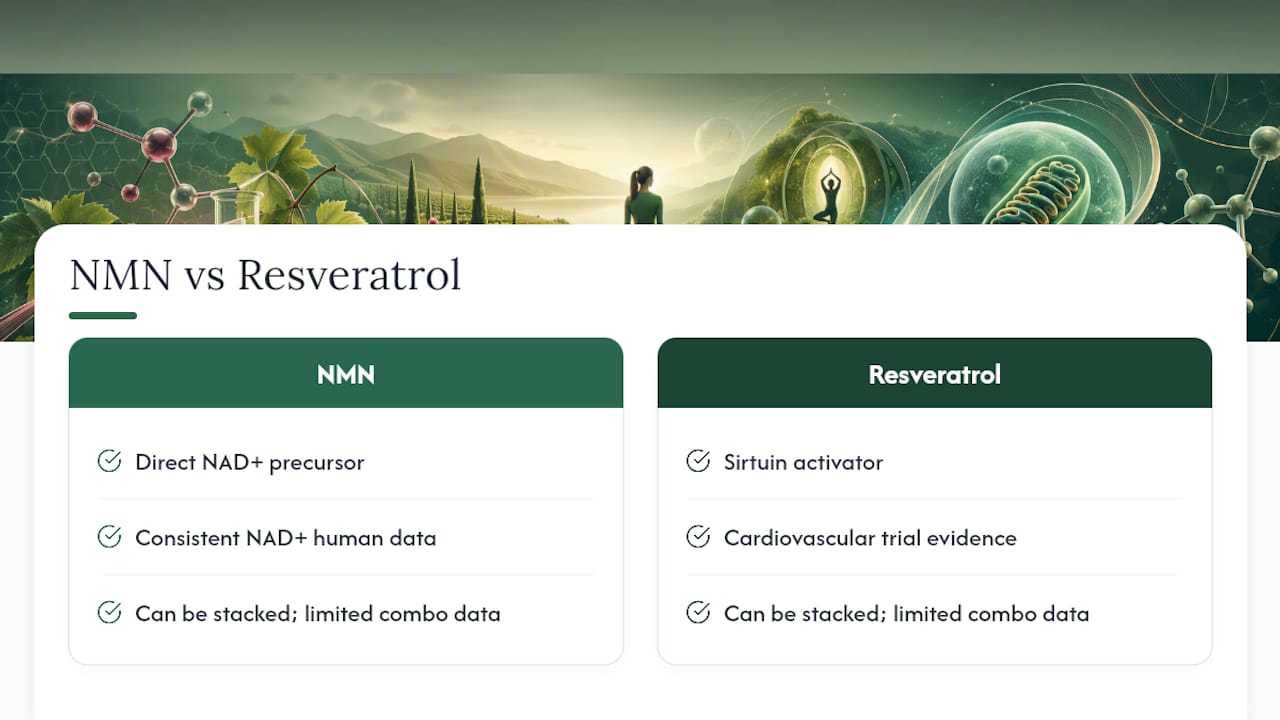
NMN is a direct NAD+ precursor, and resveratrol is a polyphenol that works mostly by activating sirtuin enzymes and calming oxidative stress. If you want measurable NAD+ increases, NMN has the more consistent human data. If you’re after cardiovascular and metabolic support, resveratrol has the longer track record. Neither has shown proven lifespan extension in people.
- NMN: reliably raises blood NAD+ in human trials, though most studies are relatively short term.
- Resveratrol: mixed human results overall, but some meta-analyses show real blood pressure benefits in people with diabetes.
- Stacking: biologically plausible and commonly done, but human data on the combination specifically is still thin.
Want the mechanisms and the actual trial numbers behind that verdict? Keep reading.
Key Takeaways
NMN reliably raises NAD+ biomarkers in humans, resveratrol shows the strongest human evidence for cardiovascular markers, and neither has proven lifespan extension in people.
| Point | Details |
|---|---|
| Different mechanisms | NMN raises NAD+ directly; resveratrol activates sirtuins and works as an antioxidant. |
| Human evidence gap | NMN trials rarely exceed 12 weeks; resveratrol’s strongest data is for blood pressure, not lifespan. |
| Bioavailability matters | Resveratrol absorbs but metabolizes fast; NMN delivery form affects how much reaches cells. |
| Stacking is plausible, not proven | Animal data supports combining them; human trials on the combination are still limited. |
| Practical NAD+ option | Pureblue’s Quantum Vitality NAD+ Booster+ Detox combines organic, third-party tested ingredients in one formula for readers wanting an NAD+ support product. |
Table of Contents
- Resveratrol vs NMN at a Glance
- Resveratrol: What It Is and How It Works
- NMN: What It Is and How It Works
- Preclinical Promise vs What Human Trials Actually Show
- Can You Stack NMN and Resveratrol?
- Dosing, Side Effects, and Who Should Be Cautious
- Who Should Choose Which Supplement?
- Why We Cover Resveratrol and NMN the Way We Do
- A Practical NAD+ Option Worth Knowing About
- Frequently Asked Questions
- Sources
Resveratrol vs NMN at a Glance
Before choosing one or combining both, it helps to see how they stack up side by side.
- Mechanism: NMN feeds the NAD+ pool directly. Resveratrol activates SIRT1 and related pathways that depend on NAD+ to function.
- Human evidence: NMN trials show consistent NAD+ biomarker jumps but rarely track hard outcomes like disease risk. Resveratrol has hundreds of clinical trials behind it, with the clearest wins in blood pressure and inflammatory markers.
- Bioavailability: Resveratrol absorbs well in the gut but gets metabolized fast, so plasma levels stay low. NMN’s bigger question is which delivery form actually gets it into cells intact.
- Practical fit: If your priority is a lab-measurable NAD+ signal, NMN is the more direct lever. If you’re targeting blood pressure or vascular inflammation, resveratrol has more supporting research to point to.
Neither compound has a human trial showing it extends lifespan, so treat both as tools for specific biomarkers, not a guarantee of “slower aging.”
Resveratrol: What It Is and How It Works
Resveratrol is a polyphenolic stilbene found in red grape skins, peanuts, and some berries. It doesn’t boost NAD+ directly. Instead, it nudges several signaling pathways at once: it modulates SIRT1, AMPK, and NF-κB, the trio most linked to inflammation control and metabolic regulation, while also acting as a direct antioxidant.
The strongest human results cluster around cardiovascular markers, with some evidence of reductions in systolic blood pressure among people with diabetes and improvements in inflammatory markers. Results vary a lot by dose, formulation, and trial length, which is why reviews calling for larger, longer trials keep showing up in the literature.
The catch is bioavailability. Your gut absorbs resveratrol reasonably well, but your liver metabolizes it so fast that very little reaches systemic circulation intact. That’s pushed manufacturers toward micronized and nanoparticle formulations, including SRT501, aimed at improving plasma concentrations.
- Look for micronized or lipid-based formulations if bioavailability is your main concern.
- Pair resveratrol with a meal, not an empty stomach.
- Start conservative and track how you feel over several weeks rather than expecting an immediate effect.
Pro Tip: Take resveratrol with a meal that includes some healthy fat, like olive oil, yogurt, or avocado. Fat improves how much of the compound your body actually absorbs, since resveratrol is fat soluble.
NMN: What It Is and How It Works
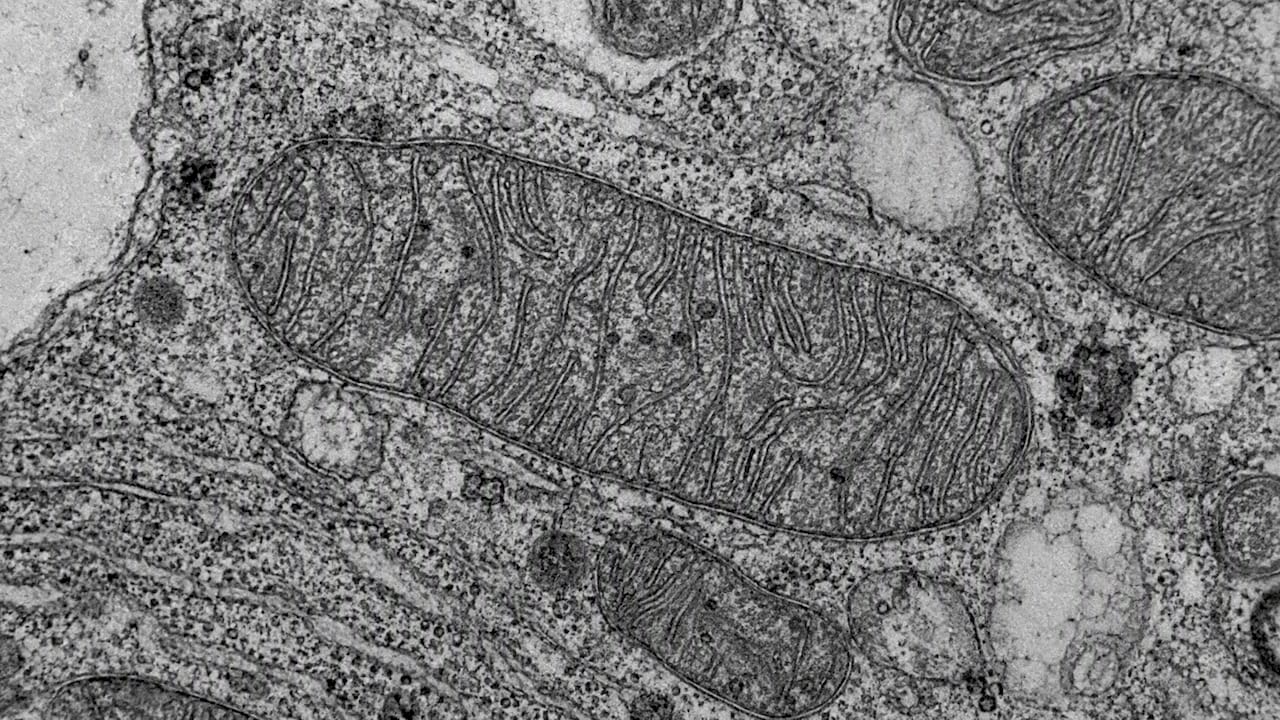
Nicotinamide mononucleotide (NMN) is a direct precursor your cells convert into NAD+, the coenzyme that powers energy metabolism, DNA repair, and sirtuin activity. Unlike resveratrol, which works on existing NAD+ pools, NMN’s whole job is to raise the amount of NAD+ your cells have to work with.
Human trials back that mechanism up consistently. Supplementing with NMN reliably raises blood NAD+ levels, and that finding replicates across multiple small studies. The limitation is duration and scope: most published trials run for weeks to a few months and measure biomarkers, not hard endpoints like disease risk or lifespan.
Formulation matters more with NMN than most people realize. Standard oral capsules have to survive stomach acid and first-pass liver metabolism before reaching cells, which is why sublingual and liposomal versions have gained traction as ways to improve delivery.
- Commonly studied doses range from a few hundred milligrams to 1 gram daily, depending on the trial.
- Sublingual or liposomal forms are marketed to bypass digestive breakdown, though head-to-head human comparisons remain limited.
- NMN is most plausibly aimed at cellular energy support and metabolic markers, not a specific disease outcome.
Preclinical Promise vs What Human Trials Actually Show
Here’s the honest state of the science: NMN reliably raises NAD+ in human blood, and resveratrol shows real but inconsistent benefits, mostly around cardiovascular markers. No human trial for either compound has demonstrated lifespan extension, full stop.
Animal and cell studies paint a much rosier picture for both compounds, showing improved energy metabolism and, in some rodent models, extended lifespan. That evidence doesn’t reliably translate to humans, and the biology explains why: mice have different metabolic rates, shorter lifespans, and controlled diets that don’t map onto human variability.
The strongest human data point available right now: the longest published NMN trials run about 12 weeks, and some resveratrol meta-analyses report meaningful systolic blood pressure reductions in people with diabetes, described as high-certainty evidence for that specific outcome.
A few things worth keeping in mind when you read supplement marketing:
- A biomarker increase (like higher blood NAD+) is not the same as a proven clinical outcome (like reduced disease risk or longer life).
- Small sample sizes and short trial durations mean confidence intervals are wide, even for well-replicated findings.
- Formulation heterogeneity across studies (capsule vs liposomal, different resveratrol delivery systems) makes cross-trial comparisons messy.
- When a company markets “slows aging,” ask what specific outcome that claim is actually based on. Usually it’s a biomarker, not a lifespan study.
Can You Stack NMN and Resveratrol?
The mechanistic case for combining them is genuinely solid. NMN raises the NAD+ substrate pool, and resveratrol activates the sirtuin enzymes that consume NAD+ to do their job. In theory, one supplies the fuel and the other opens the throttle.
Animal studies support that logic, showing increased tissue NAD+ and improved endurance markers when the two are combined. Human data isolating the combined effect from either compound alone is still limited. Most existing human trials study these compounds separately, so the “synergy” claim rests more on plausible biochemistry than confirmed clinical trials.
- If you’re taking both, timing them together with a meal containing fat may help resveratrol absorption without interfering with NMN.
- Prioritize one compound alone if you have a specific target (blood pressure favors resveratrol, NAD+ biomarkers favor NMN) and want to isolate what’s actually working for you.
Pro Tip: If you’re new to both, try one for four to six weeks before adding the second. It’s the only way to notice which one, if either, is doing something for you.
Dosing, Side Effects, and Who Should Be Cautious
Commonly studied NMN doses range from roughly 250 mg to 1 gram daily, and resveratrol trials typically use anywhere from 150 mg up to several grams, though side effects climb noticeably above 1 gram per day, mostly gastrointestinal: nausea, diarrhea, and stomach discomfort.
Both compounds are generally well tolerated at studied doses, but a few groups need extra caution:
- Pregnant or breastfeeding individuals should avoid both without direct clinician guidance, since safety data in these groups is essentially absent.
- People with active illness or those on medications that affect NAD+ metabolism should talk to a doctor before starting either.
- Anyone on anticoagulants like warfarin should flag resveratrol specifically, since polyphenols can interact with clotting pathways and cytochrome-mediated drug metabolism.
Timing-wise, many people take NMN in the morning since it’s associated with cellular energy support, and resveratrol with a meal to improve absorption and reduce GI irritation. If you’re managing a chronic condition or taking prescription medication, run your plan by a clinician before you start, especially if you’re combining both compounds.
Who Should Choose Which Supplement?
Match the compound to your actual goal rather than the hype:
- Metabolic energy focus: NMN is the more direct lever since it’s raising the substrate your cells use for energy production.
- Cardiovascular or inflammation focus: Resveratrol has more human trials pointing toward blood pressure and inflammatory benefits.
- Cautious planner who wants strong proof: Wait and watch. Neither compound has clinical endpoint data yet, so a conservative approach is defensible.
- Combining both: Reasonable if you want broad coverage and tolerate supplements well, but don’t expect the combination to be proven superior to either alone in humans.
Whatever you choose, treat these as biomarker-support tools, not guaranteed longevity fixes, and loop in your doctor if you’re on medication.
Why We Cover Resveratrol and NMN the Way We Do
We write about resveratrol and NMN because our readers keep asking practical questions about them, not because either compound is a settled science story. Pureblue sells NAD+ support products, but our editorial stance stays evidence first: we’d rather tell you what trials actually measured than oversell what a bottle can promise.
A Practical NAD+ Option Worth Knowing About
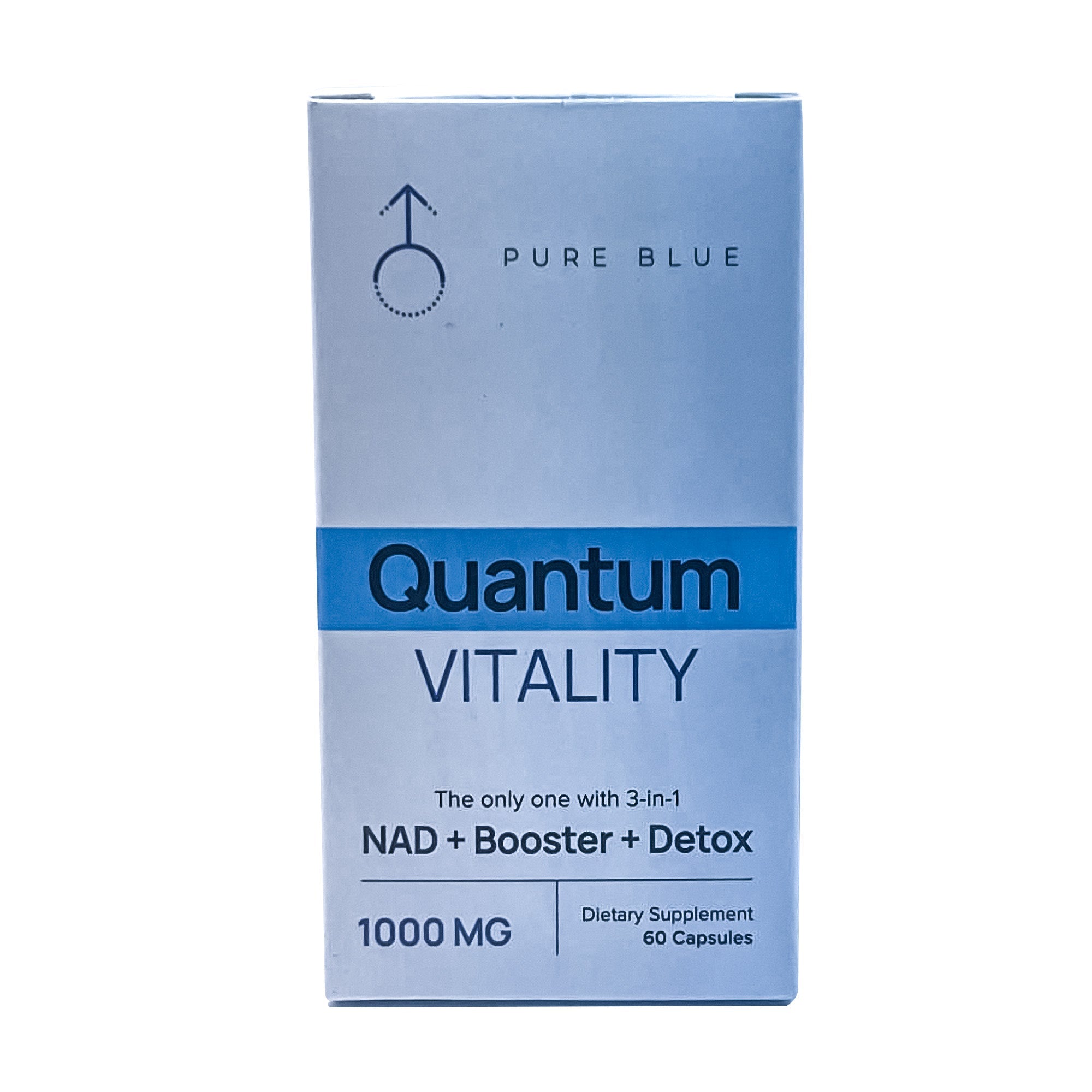
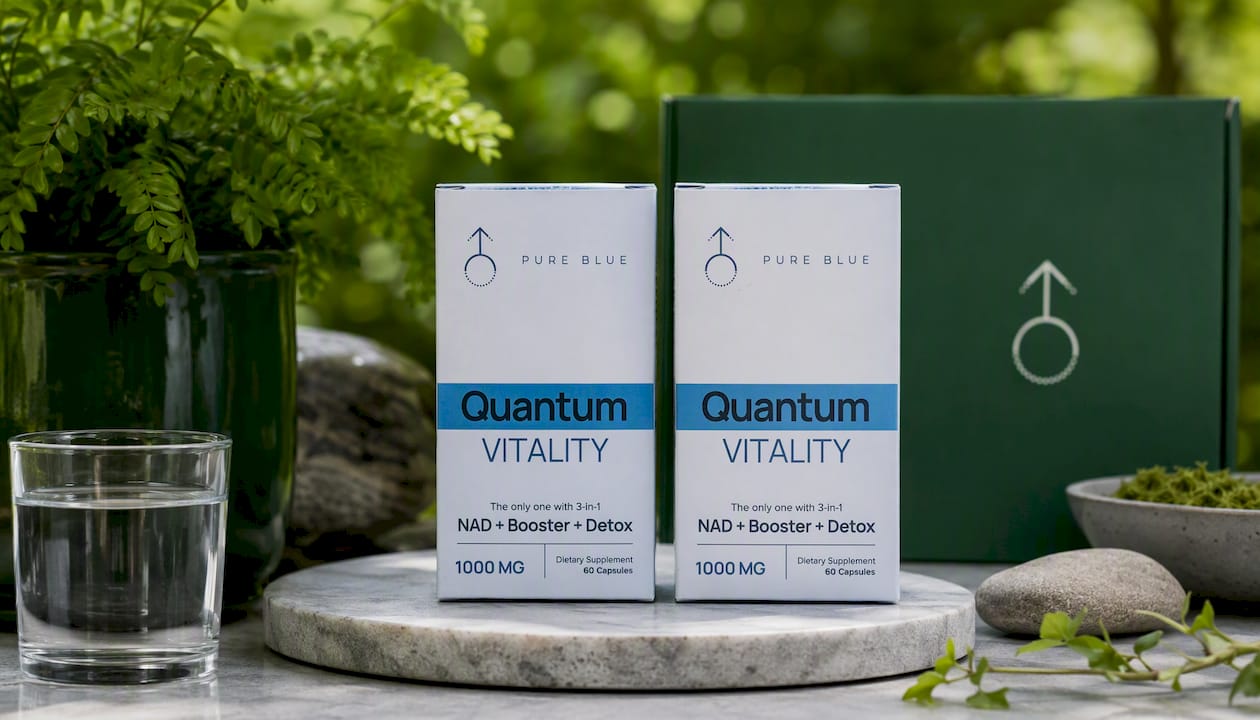
If you’ve read this far and want an NAD+ boosting option without piecing together multiple bottles, Pureblue’s Quantum Vitality NAD+ Booster+ Detox is built as a 3-in-1 formula rather than a single-ingredient capsule.
A few specifics worth knowing:
- Every ingredient is organic, with no artificial fillers added to the formula.
- It’s manufactured in an FDA-registered facility and third-party tested for purity and potency.
- It combines NAD+ support with detox ingredients in one product, instead of requiring separate supplements.
As with anything covered in this article, talk to your doctor first if you’re pregnant, managing an active health condition, or taking medication. If you want to try it before committing, Pureblue also offers a free trial of Quantum Vitality so you can see how it fits your routine before ordering the full-size version.
Frequently Asked Questions
Is NMN better than resveratrol? Neither is universally “better.” NMN has more consistent human data for raising NAD+, while resveratrol has more trials showing cardiovascular benefits. The right choice depends on which biomarker or outcome you’re targeting.
Can you take resveratrol and NMN together? Yes, and the mechanistic rationale is solid: NMN supplies NAD+, resveratrol helps activate sirtuins that use it. Human data isolating the combined effect is still limited, so treat stacking as reasonable, not proven superior.
Is NMN FDA approved? NMN is sold as a dietary supplement, not an FDA-approved drug, and supplement status means it hasn’t gone through the FDA drug approval process. Manufacturing in an FDA-registered facility, which some brands including Pureblue use, refers to facility oversight, not product approval.
Is NMN banned anywhere? Regulatory status for NMN varies by country and has shifted in some markets, including changes to its supplement classification in the United States in recent years. Check current rules in your country before ordering, since this status can change.
What’s a typical resveratrol dosage? Studied doses range widely, from 150 mg up to several grams daily, but gastrointestinal side effects become more common above roughly 1 gram per day. Most people start lower and adjust based on tolerance.
Does resveratrol raise NAD+ like NMN does? Not directly. Resveratrol activates sirtuin enzymes that depend on NAD+ to function, but it doesn’t add to your NAD+ pool the way NMN does as a direct precursor.
This article is general information, not a substitute for advice from a qualified doctor. Consult a qualified healthcare professional about your own circumstances before acting on anything here.
Sources
- Resveratrol and NMN human evidence summary — Springer (2026-04-15)
- Effects and mechanisms of resveratrol on aging and age-related diseases — Frontiers in Nutrition (2024-06-12)
- Can supplements containing NMN, NAD+ and resveratrol really slow ageing? — The Conversation (2026-05-20)
- Clinical evidence and pharmacokinetics of resveratrol — Wiley (journal article)