Cart
0

Neither NR nor NMN wins decisively for raising blood NAD+ in humans. The most direct comparison to date, a 2026 randomized crossover trial of 65 healthy adults, found both precursors produced roughly the same twofold increase in blood NAD+ over the study period. Nicotinamide mononucleotide (NMN) sits one enzymatic step closer to NAD+ on paper, but that biochemical shortcut has not translated into a measurable human advantage.
If the biomarker effect is a tie, the real decision comes down to three things:
- Regulatory footing. NR has a longer track record, including an FDA GRAS notice for NR chloride, while NMN’s regulatory status has shifted more over the past few years.
- Dose-matching. Pick a product dosed at levels actually tested in trials rather than an arbitrary “more is better” amount.
- Product quality. Third-party testing and a real certificate of analysis matter more than which molecule is on the label.
Quick take: the newest head-to-head pharmacokinetic data suggests NR and NMN are closer to interchangeable for raising circulating NAD+ than most marketing implies. What separates a good purchase from a wasted one is purity, dose, and how the ingredient was tested, not the letter in the acronym.
Key Takeaways
Both NR and NMN raise human blood NAD+ by a similar margin, so product quality, dose-matching, and regulatory clarity matter more than the molecule itself.
| Point | Details |
|---|---|
| Biomarker effect is roughly tied | The 2026 crossover trial found both NR and NMN produced about a twofold blood NAD+ increase. |
| NMN’s shortcut hasn’t proven superior | NMN needs one less conversion step but hasn’t shown a clinical advantage over NR in human trials. |
| Absorption biology is more complex than expected | Gut and enterohepatic processing may matter more than which enzyme converts the compound first. |
| Safety data is reassuring but short-term | Mild side effects only at trial doses; no long-term human safety data exists for either compound. |
| Regulatory footing favors NR slightly | NR chloride holds an FDA GRAS notice; NMN’s regulatory classification has shifted more over time. |
| Choose based on verified quality | Pure Blue’s Quantum Vitality NAD+ Booster+ Detox is third-party tested and made in an FDA-registered facility, matching the buyer checklist this article recommends. |
Table of Contents
- NR vs NMN Comparison: What the Human Trials Found
- How Do NR and NMN Compare in Pharmacokinetics?
- Why Do NR and NMN Take Different Paths to NAD+?
- What Other Human Trials Show, and Where Animal Data Falls Short
- Are NR and NMN Safe? What the Trials Report
- How to Choose Between NR and NMN: A Practical Framework
- What We Still Don’t Know About NR and NMN
- How to Vet an NAD+ Supplement Before You Buy
- Can You Take NR or NMN With Other Medications?
- What Do NR and NMN Cost, and Where Can You Buy Them?
- A Practical Verdict on Choosing Between NR and NMN
- A Transparent Option If You Want a Vetted NAD+ Product
- Primary Sources and Further Reading
- Sources
NR vs NMN Comparison: What the Human Trials Found
Human evidence for NAD+ precursors has grown considerably, but the pool of controlled trials is still smaller than the marketing noise around them suggests. Here is what the pivotal studies actually measured.
- Head-to-head PK crossover (2026): 65 healthy adults, crossover design comparing NR and NMN at matched doses, found both raised blood NAD+ by roughly twofold over the dosing period, with no statistically decisive difference between arms.
- Yoshino et al. NMN trial: a controlled human study in postmenopausal women with prediabetes tested oral NMN and reported improvements in muscle insulin sensitivity, one of the few NMN trials with a metabolic endpoint beyond blood biomarkers.
- Multiple NR randomized trials: several placebo-controlled studies have shown dose-dependent increases in whole-blood NAD+, with good tolerability at doses tested up to and including gram-scale ranges in some protocols.
- NR trials in disease populations: studies in people with conditions ranging from mild cognitive concerns to metabolic dysfunction have tested NR for tolerability and biomarker change, generally confirming safety without establishing disease-modifying outcomes.
The pattern across these trials is consistent: NAD+ goes up, reliably, in blood. What happens beyond that measurement, muscle function, cognition, disease progression, is still thin. Sample sizes in the strongest trials run from several dozen to roughly a hundred participants, and most endpoints are biomarker changes rather than hard clinical outcomes. That is not a knock on the researchers. It reflects where this field actually is: strong biomarker consistency, weak-to-moderate evidence on anything downstream.
One number worth remembering: the twofold blood NAD+ increase seen in the 2026 crossover trial has now been observed for both compounds under matched conditions, the closest thing to an apples-to-apples answer this field has produced.
How Do NR and NMN Compare in Pharmacokinetics?
The 2026 crossover trial is the study everyone researching NR vs NMN should read first, because it is the first controlled attempt to answer the question directly instead of comparing separate NR and NMN studies run years apart with different populations and assay methods.
The design pairs 65 healthy adults across two dosing arms, giving each participant both NR and NMN at matched, trial-relevant doses with a washout period between. Researchers tracked blood NAD+ at multiple timepoints rather than a single before-and-after snapshot, which matters because NAD+ metabolite levels shift over hours, not just days. Both arms showed a roughly twofold rise in blood NAD+ relative to baseline, with overlapping time courses. Neither precursor pulled ahead in peak concentration or in the overall area under the curve, the standard measure of total drug exposure over time.
That result surprised some observers, because NMN’s shorter biochemical path to NAD+ (it skips the conversion step NR requires) suggested it should act faster or accumulate higher blood levels. It didn’t, at least not in this trial. Part of the explanation may lie in what happens before either compound ever reaches systemic circulation: metabolic tracing work shows a substantial portion of orally dosed NR and NMN gets processed through enterohepatic circulation, meaning gut and liver handling, not the raw enzymatic distance to NAD+, may be the bigger bottleneck for both molecules.
Here is how the measured outcomes compare:
| Metric | NR | NMN |
|---|---|---|
| Peak blood NAD+ increase | comparable increase | comparable increase |
| Time to measurable rise | Hours to days | Hours to days |
| Area under the curve (AUC) | Comparable to NMN | Comparable to NR |
| Tissue proxy markers (e.g., NAAD) | Tracked, rises with dose | Tracked, rises with dose |
| Trial duration | Short-term (days to weeks) | Short-term (days to weeks) |
The limitations matter as much as the results. This trial, like nearly every NAD+ precursor study to date, measured blood biomarkers over a short window, not months or years, and not clinical endpoints like disease risk or cognitive performance. A rise in circulating NAD+ or a proxy metabolite like NAAD tells you the compound got absorbed and processed. It does not tell you whether that translates into better mitochondrial function in muscle, better memory, or a longer healthspan. The population tested was healthy adults, which also limits how confidently these numbers generalize to older adults, people with metabolic disease, or anyone taking multiple medications.
Pro Tip: If a product’s marketing cites “NAD+ increase” without specifying whether that’s blood, muscle, or brain tissue, ask which one. Blood NAD+ is the easiest to measure and the one most trials report, but it’s a proxy, not proof the compound is doing anything in the tissue you actually care about.
None of this means the pharmacokinetic data is meaningless. It means the honest interpretation is narrower than most product pages suggest: both NR and NMN get absorbed, both raise circulating NAD+ metabolites on a similar timeline, and the trial simply doesn’t reach far enough to declare either one the winner for anything beyond that blood measurement.
Why Do NR and NMN Take Different Paths to NAD+?
NR and NMN enter the NAD+ salvage pathway at different points, and that difference is the entire basis of the “NMN is more direct” argument you’ll see on nearly every supplement page.
Nicotinamide riboside gets converted by the enzymes NRK1 and NRK2 (nicotinamide riboside kinases) directly into NMN inside the cell. NMN, in turn, gets converted into NAD+ by NMNAT enzymes. NMN supplements, by contrast, are already at that intermediate stage, so in theory they need one less conversion step once they’re inside a cell. That is the mechanistic case for NMN’s supposed edge, and it’s a real biochemical fact.

Where the argument gets murkier is getting NMN into the cell in the first place. NMN is a larger, charged molecule, and for years it wasn’t clear it could cross cell membranes intact. A specific transporter, Slc12a8, was proposed as a dedicated NMN transporter in the gut, but that finding has been contested, and there’s a competing model: NMN may often get dephosphorylated back to NR in the extracellular space (by an enzyme called CD73) before entering cells, meaning a meaningful share of oral NMN might functionally become NR before it’s ever absorbed. NR, meanwhile, is a smaller, neutral molecule generally accepted to cross cell membranes and the gut wall more readily via established transport routes, then gets phosphorylated back up to NMN once inside via NRK1/2.
NAMPT is the other major enzyme in this system, converting nicotinamide (NAM), a downstream breakdown product of NAD+, back into NMN. This is the pathway your body already relies on constantly, precursor supplementation is essentially trying to feed more raw material into a cycle that’s already running.
Then there’s CD38, an enzyme that consumes NAD+ as we age, and one of the more debated angles in this comparison:
- Some research has floated the idea that NR may have a modulating relationship with CD38 activity, though this claim is far less settled in human data than the absorption and PK comparisons above.
- NMN research has not produced a comparable CD38-specific claim, mostly because the mechanistic focus for NMN has centered on direct conversion efficiency, not enzyme inhibition.
- Neither claim has strong, replicated human trial support, and readers should treat the CD38 angle as an active research question, not a settled selling point for either compound.
The bigger-picture lesson from the comparative mechanistic reviews is that a one-step biochemical shortcut doesn’t automatically mean a better clinical result. Tissue distribution data, how much of an ingested precursor actually shows up in muscle, brain, or liver rather than just blood, remains sparse for both compounds in humans. Blood is the easiest compartment to sample, so it’s the one nearly every trial reports. Muscle and brain tissue changes are inferred more than measured directly.
What Other Human Trials Show, and Where Animal Data Falls Short
Beyond the head-to-head crossover trial, each precursor has its own body of independent human research, and the gap between what mice show and what humans confirm is wider than most coverage admits.
NR’s trial history includes multiple randomized, placebo-controlled studies testing doses ranging from a few hundred milligrams up to gram-scale amounts in some protocols, generally in healthy or moderately at-risk adult populations. These trials consistently show dose-dependent whole-blood NAD+ increases with good tolerability, and a few have looked at secondary markers like blood lipids or mild cognitive measures, with mixed but generally modest results.
NMN’s clinical footprint is smaller but growing. The most cited trial, led by Yoshino and colleagues, tested oral NMN in postmenopausal women with prediabetes and found improved muscle insulin sensitivity, a genuinely interesting signal because it’s a functional outcome, not just a blood marker. Other small NMN trials have reported modest metabolic changes, but the overall pool of long-duration, large-sample NMN trials remains limited.
Animal studies for both compounds paint a rosier picture than human data supports so far:
- Mouse studies have shown cardiac function improvements with NAD+ precursor supplementation. This has not been reproduced in a comparable human cardiac outcome trial for either NR or NMN.
- Mitochondrial biogenesis improvements seen in rodent muscle tissue have not been confirmed at the same magnitude in human muscle biopsies.
- Metabolic improvements (insulin sensitivity, glucose handling) have some human echo, particularly the Yoshino NMN result, but the effect sizes in mice are typically larger than anything measured in people.
A handful of disease- or tissue-specific signals merit continued follow-up rather than dismissal: early hints around non-alcoholic fatty liver disease (NAFLD), insulin sensitivity in metabolically at-risk groups, and some cognitive biomarker shifts. None of these rise to the level of established clinical benefit yet. The honest read, backed by broader reviews on NAD+ booster translational gaps, is that both compounds have real, replicated effects on circulating NAD+ and modest, promising, but unconfirmed effects on anything downstream.
Are NR and NMN Safe? What the Trials Report
Both compounds have a reassuring short-term safety record in the trials run so far, with no major red flags emerging across the doses tested to date.
The most commonly reported side effects in NR trials are mild: occasional nausea, flushing, and gastrointestinal discomfort at higher doses. Trials testing NR at various daily doses have generally reported good tolerability, without serious adverse events tied directly to the compound. NMN trials, which tend to use somewhat lower and more variable doses, report a similar mild side-effect profile: occasional GI upset, and in a small number of trials, no significant changes in liver enzymes or lipid panels at the doses tested.
Where the two diverge is regulatory history, not safety data itself:
- NR has an established FDA GRAS notice for the chloride salt form, which gives it a clearer, longer-standing regulatory paper trail in the United States dietary supplement market.
- NMN’s regulatory status has been less stable, with shifts in how it’s classified as a dietary ingredient over the past several years, creating more uncertainty for manufacturers and buyers alike.
- Neither compound has a large-scale, multi-year human safety dataset comparable to well-established vitamins, so “safe at tested doses” is currently the most accurate claim either side can make.
The bottom line on safety: short-term human data for both NR and NMN, at doses used in published trials, shows a mild, manageable side-effect profile without evidence of serious harm. What’s missing is the multi-year safety picture, and anyone with a preexisting liver, kidney, or metabolic condition should treat that gap as a reason for caution, not an all-clear.
How to Choose Between NR and NMN: A Practical Framework
Given that the biomarker data is close to a tie, your decision should hinge on factors you can actually control and verify.
Dosing ranges seen in trials vary meaningfully between the two. NR trials have tested doses across a wider range daily, while NMN trials have more commonly clustered in moderate daily ranges. Whatever product you choose, match the dose to something a published trial actually tested. A supplement dosed well below trial-tested amounts is unlikely to reproduce trial-observed effects, no matter which molecule is on the label.
On combining the two: there’s no strong human trial data showing that stacking NR and NMN together produces a better outcome than either alone. Some evidence-first comparisons suggest this is more a marketing angle than a proven strategy, since both feed into the same downstream NAD+ pool. If you’re on medications, particularly anything affecting liver metabolism, methylation pathways, or blood sugar control, talk to a clinician before combining NAD+ precursors with other supplements.
Use this checklist before buying either compound:
- Third-party testing. Confirm the product has been tested by an independent lab, not just an in-house quality claim.
- Certificate of analysis (COA). Ask for a batch-specific COA, not a generic one pulled from the brand’s website.
- Ingredient form. Note whether it’s NR chloride (the most studied form) or a different salt or free-base form with less trial history.
- Manufacturing claims. Look for an FDA-registered facility, a meaningful baseline most reputable brands can confirm.
- Price per studied dose. Divide the price by the number of milligrams that match actual trial dosing, not the total pill count. This is the number that actually tells you what you’re paying for the effect the research supports.
What We Still Don’t Know About NR and NMN
The honest gaps in this evidence base are as important as anything that’s been proven so far.
- Long-term outcomes are missing for both compounds. No trial has run long enough, or with large enough samples, to show whether raising NAD+ over years changes disease risk, cognitive decline, or lifespan in humans.
- Tissue-level absorption remains unresolved. Blood NAD+ is easy to measure; muscle, brain, and liver NAD+ in living humans are not, and the gut-microbiome-mediated conversion pathway means individual responses may vary more than trial averages suggest.
- Interindividual variability is underexplored. Differences in gut microbiota composition may explain why some people report noticeable effects and others report none, but this hasn’t been systematically studied for either NR or NMN.
- Larger, longer head-to-head trials are needed. The 2026 crossover study is a genuine step forward, but it’s one trial, in healthy adults, over a short window. Subgroup data on older adults, people with metabolic disease, and long-term users simply doesn’t exist yet.
It’s worth being blunt about a common misconception here: neither NR nor NMN is an established “anti-aging drug.” The evidence supports reliable NAD+ biomarker increases. It does not support demonstrated human lifespan extension, and treating either compound as proven longevity medicine outpaces what the trials have actually shown.
How to Vet an NAD+ Supplement Before You Buy
The molecule on the label matters less than what’s actually inside the bottle, and that’s where most buying mistakes happen.
Run any NR or NMN product through this checklist:
- Third-party batch testing. Every batch, not just a one-time product certification, should have independent lab verification.
- FDA-registered manufacturing facility. This is a baseline quality signal, not a guarantee of efficacy, but its absence is a red flag.
- Transparent, batch-specific COAs. A certificate of analysis you can actually request and match to your bottle’s lot number, not a generic PDF.
- Organic or clean-label claims backed by documentation. Claims mean little without something verifiable behind them.
- Clear disclosure of ingredient form and dose. The label should specify NR chloride, NMN, or whichever form, and the actual milligram dose per serving, matched to something trials have tested.
Each of these matters for a specific reason: batch testing catches contamination and confirms potency actually matches the label, since underdosed NAD+ precursors are a documented problem in the wider supplement market. Facility registration and COAs give you a paper trail if something goes wrong.
Pro Tip: Before buying, ask the brand directly for a current COA tied to the batch number on your specific bottle, not a sample COA from their marketing page. A brand that hesitates or can’t produce one is telling you something.

Can You Take NR or NMN With Other Medications?
Neither NR nor NMN has an extensively documented drug-interaction profile in human trials, which cuts both ways: reassuring for casual use, but a genuine blind spot for anyone on regular medication.
The most relevant caution involves drugs affecting liver metabolism, since both precursors are processed through hepatic and gut pathways. People on statins, metformin, or other medications that influence metabolic or liver enzyme activity should talk to a clinician before starting either supplement, since the enterohepatic processing that handles NR and NMN overlaps with pathways some medications also use.
Niacin and other vitamin B3-family supplements share downstream metabolic pathways with both NR and NMN. Stacking multiple B3-family compounds without medical guidance risks pushing niacin-related side effects (flushing, in particular) higher than any single product alone would cause.
Anyone on blood thinners, being treated for active cancer, or managing chronic kidney or liver disease should treat NAD+ precursors as a conversation to have with a physician first, not a supplement to add casually. Pregnant or breastfeeding individuals have essentially no trial data to rely on for either compound, which means the honest answer is: it hasn’t been studied, so caution is warranted. If you’re on multiple prescriptions of any kind, the safest approach is bringing your full medication list to a pharmacist or doctor before adding either NR or NMN.
What Do NR and NMN Cost, and Where Can You Buy Them?
Price and availability differ more than the biomarker data does, and that’s often the deciding factor for most buyers.
NR products, largely because of their longer market history and established regulatory footing, tend to be widely available across mainstream supplement retailers, with price points that vary based on dose and ingredient form (chloride salt versus alternative forms). NMN has grown rapidly in popularity, and pricing has become more competitive as more brands enter the space, but ingredient sourcing and quality control vary considerably between manufacturers, partly a byproduct of NMN’s shifting regulatory classification.
The smartest way to compare cost isn’t the price per bottle, it’s the price per milligram at the dose actually tested in trials. A cheaper bottle that requires taking four capsules to hit a trial-relevant dose may cost more per effective dose than a pricier product formulated at the right strength per serving. Availability also affects consistency: subscription options tend to offer better long-term pricing than one-off purchases, and products that clearly disclose third-party testing and manufacturing standards are worth paying a modest premium for over unverified bulk-bin alternatives.
Before committing to either compound long-term, it’s worth reading through a resource like Pure Blue’s guide on whether you actually need a supplement to make sure your goals, and your budget, line up with what the evidence actually supports.
A Practical Verdict on Choosing Between NR and NMN
If you’re trying to decide between NR and NMN, the evidence says you’re choosing between two options that raise blood NAD+ at roughly the same rate and magnitude. That’s the honest summary of where the 2026 head-to-head data leaves us. I wouldn’t spend much energy agonizing over the molecular argument for NMN’s “shortcut” advantage, because the trial data hasn’t backed it up yet. I’d spend that energy instead on dose-matching, third-party testing, and price per studied milligram, the factors that actually predict whether a bottle does anything.
If you’re pregnant, managing a chronic illness, or taking multiple prescription medications, this is a conversation for your doctor before it’s a decision for your cart. The upside of both compounds is real but modest, and it isn’t worth taking on unknown risk to chase it.
A Transparent Option If You Want a Vetted NAD+ Product
Reading trial data is useful, but at some point you still have to choose an actual bottle, and that choice is where quality control matters more than the NR-versus-NMN debate.
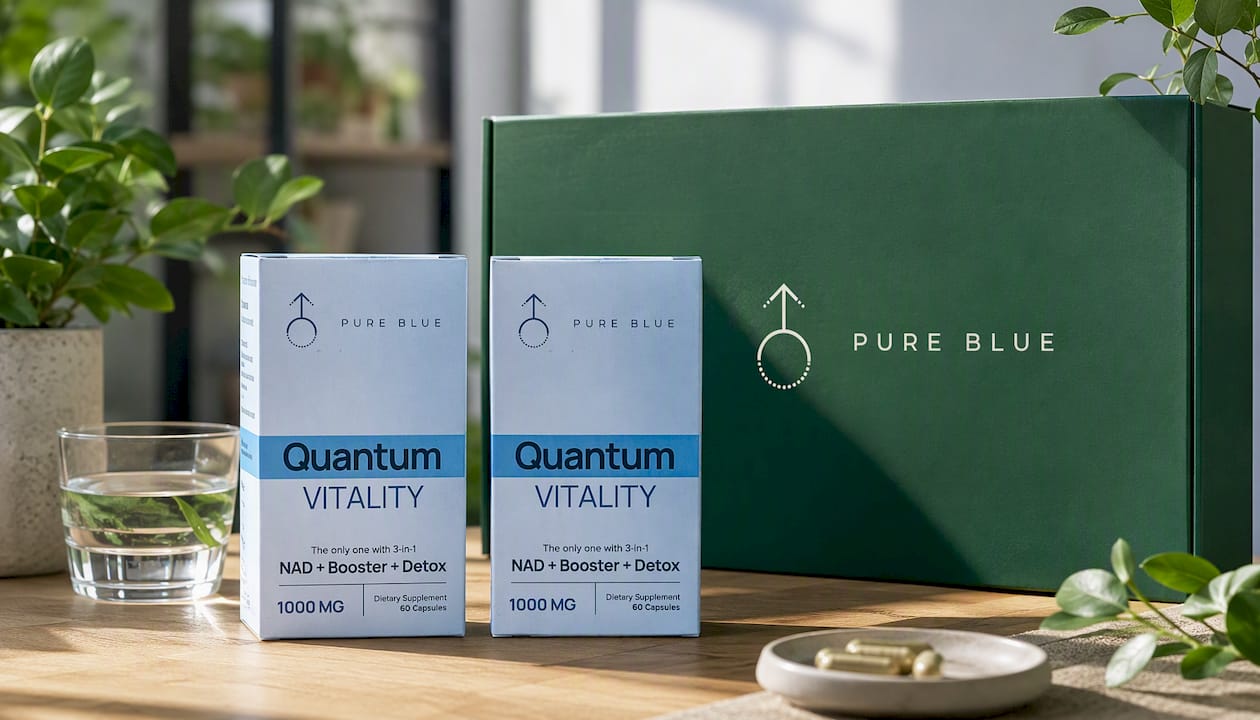
That combination, verified sourcing plus a formula built to support the NAD+ pathway rather than just one isolated precursor, is the practical answer to a lot of the uncertainty covered above. You don’t have to guess whether a bottle matches its label. If you want to see the full ingredient breakdown and dosing details, the Quantum Vitality NAD+ Booster+ Detox product page lays out exactly what’s inside and how it’s tested. If you’d rather try it before committing, the free trial offer on Quantum Vitality is a low-risk way to see how your body responds. Whichever route you take, compare the COA against what’s listed on the page, and if you’re managing a medical condition or taking regular medication, check with your doctor before starting.
Primary Sources and Further Reading
For readers who want to examine the original evidence rather than take the summary at face value, these are the studies and resources this article draws from:
- Nicotinamide riboside and nicotinamide mononucleotide facilitate NAD+ synthesis via enterohepatic circulation | Science Advances, the metabolic-tracing study behind the gut-conversion discussion.
- Nicotinamide mononucleotide (NMN) as an anti-aging health product | PMC, covering NMN preclinical and small human trial data.
- Review of nicotinamide riboside pharmacology, safety, and human trials | PMC, the deepest single summary of NR’s clinical trial history.
- An updated review on the mechanisms, pre-clinical and clinical comparisons of NMN and NR | PMC, the mechanistic comparison referenced throughout.
- Clinicaltrials, for readers tracking ongoing and completed trials for both compounds.
This article is general information, not a substitute for advice from a qualified doctor. Consult a qualified healthcare professional about your own circumstances before acting on anything here.
Sources
- Nicotinamide riboside and nicotinamide mononucleotide facilitate NAD+ synthesis via enterohepatic circulation | Science Advances
- Nicotinamide mononucleotide (NMN) as an anti-aging health product – Promises and safety concerns | PMC
- Review of nicotinamide riboside pharmacology, safety, and human trials | PMC
- An updated review on the mechanisms, pre‑clinical and clinical comparisons of nicotinamide mononucleotide (NMN) and nicotinamide riboside (NR) | PMC
- NMN vs NR: the two leading NAD+ precursors, head-to-head | Aminoscope