Cart
0

Yes, plenty of supplements skip artificial sweeteners entirely. The fastest way to confirm one does: scan the ingredient list for names like sucralose or acesulfame potassium, and look for a front-label claim of “no artificial sweeteners.” Organic, third-party-tested supplement lines that formulate without artificial sweeteners can be a reasonable starting point if you’d rather not build your own label-reading habit from scratch.
TL;DR:
- Most supplements labeled “no artificial sweeteners” either avoid or use natural alternatives like stevia, monk fruit, or allulose, avoiding commonly prohibited compounds.
- Artificial sweeteners such as sucralose, aspartame, saccharin, acesulfame-K, advantame, and neotame are approved by the FDA, but sugar alcohols and allulose are not classified as artificial and can be misleading.
- Tolerability issues with sweeteners include metallic aftertastes from sucralose and bitterness from aspartame or gastrointestinal discomfort from sugar alcohols, influencing individual choices.
- Unflavored products typically contain no sweeteners, while flavored options often use stevia, monk fruit, or small amounts of real sugar, with flavor choice impacting consumer preference.
- Checking for a certificate of analysis is recommended to verify third-party testing claims, ensuring label accuracy and product purity, especially for organic and additive-free supplements.
Table of Contents
- What Counts as an Artificial Sweetener?
- Should You Actually Avoid Artificial Sweeteners?
- How Do You Shop for Clean-Label Supplements?
- Which Supplement Categories Are Easiest to Buy Clean?
- What Proof Backs Pure Blue’s Clean-Label Claims?
- A Practical Note on Taste, Price, and Purity Trade-Offs
- Ready to Buy Clean? Here’s Where to Start
- Sources
- FAQ
What Counts as an Artificial Sweetener?
Artificial sweeteners are lab-made compounds designed to taste far sweeter than table sugar at a tiny fraction of the volume. The FDA maintains an official list of the ones approved for use in food and supplements, and six names show up constantly on labels:
- Sucralose (often sold under the brand name Splenda)
- Aspartame (marketed historically as NutraSweet)
- Saccharin (Sweet’N Low)
- Acesulfame potassium, listed as acesulfame-K or Ace-K
- Advantame, a newer, ultra-potent option used in tiny amounts
- Neotame, chemically related to aspartame but sweeter still
Two label-reading traps trip people up. First, sugar alcohols like erythritol, xylitol, and maltitol are not artificial sweeteners. They’re carbohydrates your body absorbs and processes differently, though some cause bloating in sensitive people. Second, allulose sits in its own category: FDA guidance lets manufacturers exclude it from total and added sugars on the label, even though it’s a naturally occurring sugar, not a synthetic one. That single rule explains why a product can claim “0g sugar” and still taste sweet.
Should You Actually Avoid Artificial Sweeteners?
The World Health Organization advised in 2023 against using non-sugar sweeteners as a weight control tool, noting they don’t deliver the long-term metabolic benefit people assume. That’s a guidance statement about intended use, not a ban. The FDA still permits every sweetener listed above for the general population within set daily limits.
Where things get genuinely murky is the research on metabolic and gut effects. A review of the current evidence found mixed results on how non-nutritive sweeteners affect blood sugar and the gut microbiome, with outcomes varying by the specific compound and how a study was designed. Some trials show no measurable effect; others suggest changes in glucose response for certain people. Individual variability seems to matter more than any blanket rule.
Tolerability is the more immediate issue for most shoppers. Sucralose and aspartame leave a metallic or bitter aftertaste for a meaningful share of users, and sugar alcohols can trigger gas or loose stool at higher doses. Neither problem is universal, but if you’ve noticed either after taking a supplement, the sweetener is the first thing worth checking.
How Do You Shop for Clean-Label Supplements?
Reading a supplement label takes about 30 seconds once you know the sequence. Follow these steps in order:
- Read the front claim first. “No artificial sweeteners,” “naturally sweetened,” or “organic” narrows your options fast, but treat it as a starting point, not proof.
- Go straight to the ingredient list. Ingredients are listed by weight, so if sucralose or acesulfame-K appears near the top, the marketing claim doesn’t match the formula.
- Check the Supplement Facts panel for sugar per serving. Zero grams paired with a sweet taste often signals allulose, stevia, or monk fruit rather than an artificial compound.
- Identify the actual sweetening agent. Monk fruit and stevia extracts carry no calories and no blood sugar impact for most people; allulose behaves similarly but labels differently, as noted above.
- Watch for vague catch-all terms. “Natural flavors” listed alongside a high-intensity sweetener further down the list is a common way brands soften an otherwise synthetic formula.
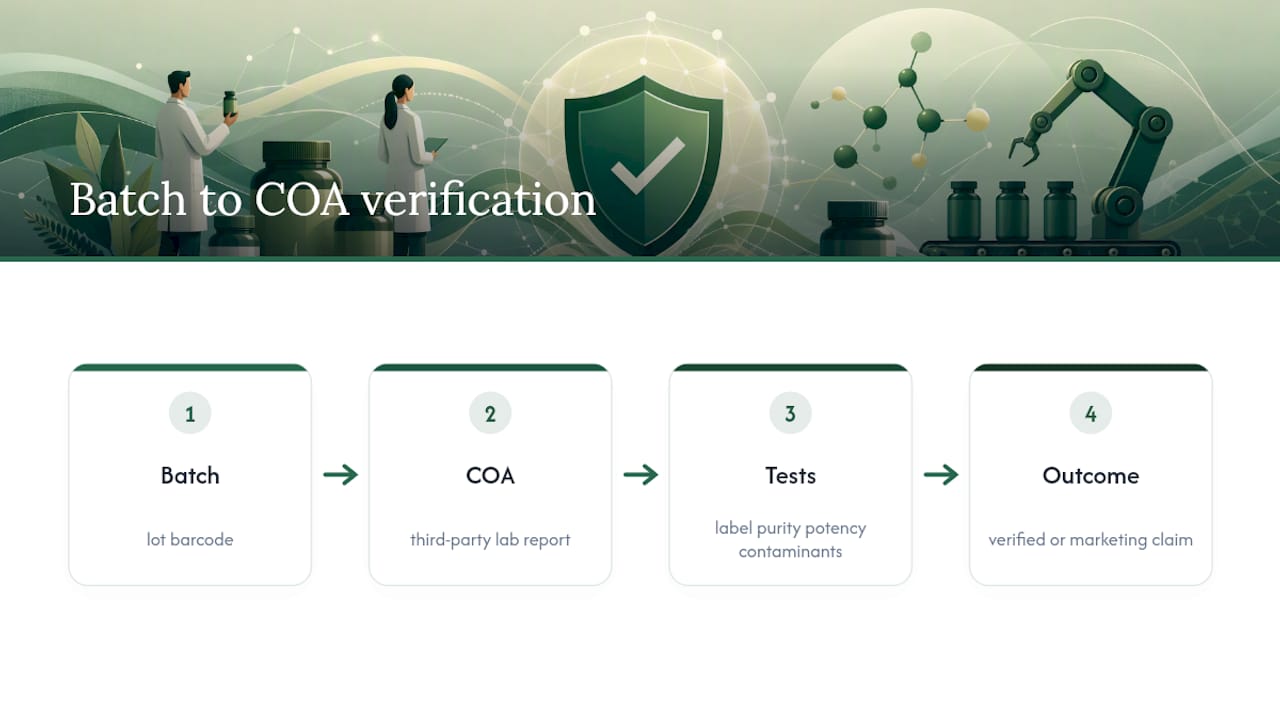
- Ask for a certificate of analysis (COA) if the label leaves you unsure. A legitimate manufacturer can produce one on request.
Pro Tip: Keep a mental note of your own reaction to stevia and monk fruit before you commit to a full container. Both are natural, but a subset of people find stevia’s aftertaste worse than sucralose’s, which defeats the purpose of switching.
If you’re still deciding whether a supplement belongs in your routine at all, it’s worth reading through when supplements are actually useful before you spend money on any formula, clean label or not.
Which Supplement Categories Are Easiest to Buy Clean?
Sweetener content varies a lot by category, and knowing the pattern saves you time.
Protein powders split into two camps: unflavored versions with zero sweetener of any kind, and flavored versions that almost always lean on stevia, monk fruit, or a minimal amount of real sugar. A growing number of sports supplement brands now market flavored proteins specifically as free of sucralose and aspartame, which tells you demand has shifted enough that manufacturers see it as a selling point rather than a niche request.
Pre-workouts are the trickiest category. Because they need strong flavor to mask bitter stimulants and amino acids, many still default to sucralose. Look specifically for “no sucralose” or “naturally sweetened” on the front label, since this category hides artificial sweeteners more often than any other.
Electrolyte powders tend to use allulose or stevia blends, since the sugar content needed for taste is usually low to begin with.
Fiber supplements are frequently unflavored or use monk fruit, though some flavored gummy-fiber products slip in sucralose to offset the tartness of citrus flavoring.
Gummies, as a format, need enough sweetness to mask the gelatin base, so check these closely. Pure Blue’s Blue Bear Male Gummies rely on organic ingredients rather than synthetic sweeteners, positioning them as a gummy option for men who want the format without the usual sucralose trade-off.
For a category comparison at a glance:
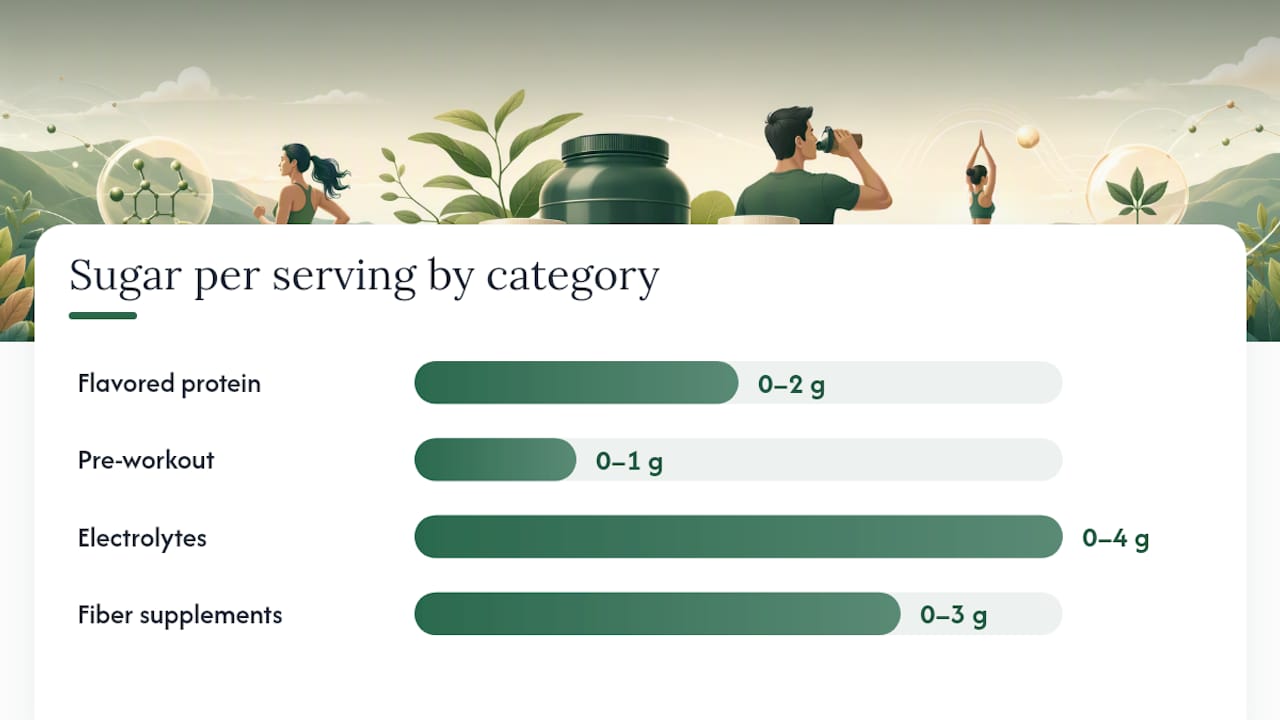
| Category | Sweetener type | Format | Taste/GI trade-off | Sugar per serving |
|---|---|---|---|---|
| Unflavored protein | None | Powder | Neutral, mixes into anything | 0g |
| Flavored protein | Stevia/monk fruit | Powder | Mild aftertaste possible | 0 to 2g |
| Pre-workout | Often sucralose (check label) | Powder | Can taste metallic if artificial | 0 to 1g |
| Electrolytes | Allulose/stevia | Powder | Generally clean taste | 0 to 4g |
| Fiber | Monk fruit or none | Powder/gummy | GI upset possible from fiber itself, not sweetener | 0 to 3g |
| Gummies | Organic/minimal sugar | Gummy | Sweeter profile by design | a moderate amount of sugar |
Pure Blue’s Quantum Vitality NAD+ Booster+ Detox fits the powder/capsule side of this table: an organic 3-in-1 formula built around energy and detox support without artificial fillers.
What Proof Backs Pure Blue’s Clean-Label Claims?
Pure Blue formulates its line around three checkable claims: organic sourcing, no artificial fillers, and third-party testing for purity and potency on every batch. Manufacturing happens in an FDA-registered facility, which is a baseline manufacturing standard, not a product endorsement, but it’s still worth confirming on any brand you buy from.
A certificate of analysis (COA) is the actual proof document behind a “third-party tested” claim. It’s a lab report showing what a specific batch contains and confirming it matches the label, free of contamination and free of undisclosed ingredients. Any brand claiming third-party testing should be able to produce one for the batch you’re holding. If a company can’t or won’t share a COA on request, treat “third-party tested” as marketing language rather than a verified claim.
A Practical Note on Taste, Price, and Purity Trade-Offs
Unflavored products are the safest bet if sweeteners of any kind concern you, but they’re also the least fun to drink. Naturally sweetened options close that gap without the aftertaste some people get from sucralose, though monk fruit and stevia aren’t universally loved either.
My honest advice: trial one product at a time instead of restocking your whole cabinet at once. If you have any sensitivity to sugar alcohols or a stevia aversion, request the COA before you commit to a multi-bottle order. Circle back to the category breakdown above once you know which format fits your routine, and let taste tolerance, not price alone, decide the winner.
— Organic
Ready to Buy Clean? Here’s Where to Start
Some supplement catalogs are built around the standard of organic ingredients, no artificial fillers, and third-party testing on every batch, so you are not stuck re-verifying every claim yourself.
If daily energy and mental clarity are the goal, the Quantum Vitality NAD+ Booster+ Detox covers that 3-in-1 use case in one organic formula, and a free trial listing exists if you want to test it before committing. Men looking for a gummy format without synthetic sweeteners have the Blue Bear Male Gummies available as a one-time purchase. If you’re ready to stock up on more than one product, the Power Bundle packages several formulas together at a lower per-unit cost than buying each separately. Browse the full Pure Blue lineup and pick the format that matches your routine.
Sources
- High-intensity sweeteners | FDA
- WHO advises not to use non-sugar sweeteners for weight control in newly released guideline | WHO
- Review article on sweeteners and health (PMC9824470)
FAQ
What is the best non-artificial sweetener?
Monk fruit and stevia extract are the two most widely used natural sweeteners in supplements, since both carry no calories and minimal blood sugar impact for most people. Allulose is a close third, though its labeling rules under FDA guidance confuse some shoppers into thinking it’s calorie-free sugar rather than a distinct sweetener.
What happens when you stop using artificial sweeteners?
Most people notice taste preferences shift within a few weeks, with lower-sugar foods starting to taste sweet enough on their own. The evidence on broader metabolic changes after stopping is still mixed and compound-specific, so expect gradual taste adaptation rather than a dramatic physical change.
Is there a protein powder that doesn’t have artificial sweeteners?
Yes. Unflavored protein powders never contain sweeteners at all, and a growing share of flavored proteins now use stevia or monk fruit specifically to avoid sucralose and aspartame. Checking the ingredient list rather than the front label is the reliable way to confirm it.
What is the cleanest meal replacement or supplement formula?
“Cleanest” depends on your priorities, but organic sourcing, a short ingredient list, and a documented third-party COA are the three markers worth checking regardless of brand. Pure Blue’s Quantum Vitality formula is built to that standard, using organic ingredients without artificial fillers.
Are sugar-free supplements automatically free of artificial sweeteners?
No. “Sugar-free” only refers to added sugar content and says nothing about whether a product uses sucralose, aspartame, or another synthetic sweetener to replace that sugar. Always check the ingredient list separately from the sugar claim on the front of the package.