Cart
0

The fastest evidence-backed way to bounce back is a fixed sequence: rehydrate the moment you land, get timed bright light based on which direction you flew, take a short nap if you need one, eat on local time, and protect your first night’s sleep. Expect travel fatigue to lift in 24 to 48 hours, while true jet lag takes roughly a day per time zone crossed. Supplements can support the process, but they don’t replace it.
TL;DR:
- Hydration, timed light exposure, and protecting sleep are essential, and supplements like NAD+ boosters support recovery but do not replace these core practices.
- Preparing by gradually shifting sleep and meal schedules before departure accelerates adaptation, especially when timed outdoor light exposure aligns with your travel direction.
- During flight, staying hydrated, avoiding alcohol, and scheduling sleep to match your destination’s day-night cycle help reduce fatigue and jet lag effects.
- The first 48 hours after landing are critical; focus on rehydrating, getting daylight, anchoring meal times to local schedule, and minimizing strenuous activity.
- Buffer extra recovery time for long or multiple time zone crossings, as jet lag generally requires about one day per zone to resolve, with eastward trips taking longer.
Table of Contents
- Travel Fatigue Recovery: Spotting the Difference From Jet Lag
- How Do You Prepare Before a Flight to Cut Recovery Time?
- What Should You Do During the Flight Itself?
- Your First 48 to 72 Hours After Landing
- Eastward vs. Westward Travel: Your First-Day Schedule
- How Long Does Travel Fatigue Recovery Actually Take?
- The Circadian Science Behind Every Tactic Here
- Where Supplements Fit Into a Travel Fatigue Recovery Plan
- What to Eat Before, During, and After You Fly
- Managing Stress and Mental Fog During Recovery
- Setting Up Your Sleep Environment After You Land
- Do Supplements or Medications Help With Travel Fatigue?
- What Frequent Travelers Actually Do When Nothing Goes to Plan
- A Faster Way to Support Recovery on the Road
- Sources
- FAQ
Travel Fatigue Recovery: Spotting the Difference From Jet Lag
Not every post-flight crash is jet lag, and treating it like jet lag wastes time you don’t have. Travel fatigue shows up as dehydration, muscle soreness, headaches, and the kind of decision fatigue that makes you order the wrong thing at customs food court. It hits after short hops and long hauls alike, and it usually clears on its own within a day or two.
Jet lag is different. It’s a circadian mismatch: your body thinks it’s 3 a.m. while the sun is up, so you get daytime sleepiness, disrupted digestion, and trouble falling or staying asleep at the new local bedtime. The Mayo Clinic notes dehydration compounds both conditions, which is why rehydration is step one no matter which one you’re dealing with.
A quick landing checklist, regardless of which you’re facing:
- Drink 16 to 20 ounces of water before you leave the airport.
- Get outside into natural daylight within the first hour if you can.
- Skip anything that requires major decisions for the first few hours.
Seek medical attention if you notice leg swelling, chest pain, or shortness of breath. Those can signal a blood clot risk from prolonged sitting, not ordinary fatigue.
How Do You Prepare Before a Flight to Cut Recovery Time?
Recovery starts days before you board. Shifting your sleep schedule by 15 to 30 minutes per night for three to four nights before departure lets your circadian rhythm ease into the new time zone instead of getting yanked into it. That small nightly shift matters because your body clock resists sudden changes. A 30 minute nudge is barely noticeable, but attempting a 3-hour shift overnight almost never sticks.
Here’s the pre-flight sequence worth following:
- Three to four days out: move bedtime and wake time 15 to 30 minutes toward your destination’s schedule each night.
- Two days out: start eating meals closer to your destination’s clock, especially breakfast and dinner.
- The day before: get extra outdoor light exposure in the direction that matches your travel (morning light if flying east, evening light if flying west).
- Booking stage: where flight options allow it, choose arrival times that let you get outside during daylight rather than landing at midnight with nowhere to walk.
If your itinerary includes a long layover, a day-use hotel room for even two hours of horizontal sleep beats trying to nap upright at a gate.
Pro Tip: If a full 3 to 4 day pre-shift isn’t realistic, even one or two nights of a 30 minute adjustment plus a well-timed morning walk on departure day gives you a head start most travelers skip entirely.
What Should You Do During the Flight Itself?
In-flight habits either compound fatigue or blunt it, and the difference is mostly about what you drink and when you move. Airplane cabin air runs at a fraction of ground-level humidity, so aim for roughly one 8 ounce glass of water per hour you’re awake, and add an electrolyte packet if the flight runs past six hours.
- Get up and walk the aisle every 60 to 90 minutes, or flex your ankles and calves in your seat if the seatbelt sign is on.
- Wear compression socks on flights over four hours. Prolonged sitting raises circulatory stress and clot risk, and movement is the simplest countermeasure.
- Time sleep to your arrival, not your departure. If you’ll land in the morning, try to sleep through most of an overnight flight. If you land in the evening, stay awake and save the sleep debt for that first local night.
- Skip alcohol entirely (it worsens dehydration and disrupts sleep architecture) and cut caffeine at least six hours before your planned in-flight sleep window.
Your First 48 to 72 Hours After Landing
What you do in the first three days after landing determines whether you’re functional for that big meeting or wrecked through the whole trip. Follow this sequence in order rather than picking and choosing:
- Rehydrate immediately. Drink 16 to 24 ounces of water within the first hour off the plane, and use an electrolyte mix if your flight was longer than five hours.
- Get outside within 30 to 60 minutes. A brisk 15 to 20-minute walk in daylight does double duty: it resets your clock and works out flight stiffness.
- Change clothes and, if possible, shower. It sounds trivial, but the sensory reset genuinely shifts your mental state faster than sitting in travel clothes.
- Nap only if necessary, and cap it at 25 to 30 minutes. Anything longer pushes you into deep sleep stages that leave you groggier and harder your nighttime sleep. Skip the nap entirely if it’s within six hours of your target bedtime.
- Eat on local time, not your body’s old schedule. A protein-forward breakfast and an earlier, lighter dinner help anchor peripheral clocks in your liver and gut, which shift independently of your brain’s master clock.
- Keep exercise light for the first two to four days. A walk or gentle stretching works better than a hard gym session, which can spike cortisol when your system is already taxed. Morning exercise tends to advance your clock, and evening exercise tends to delay it, so match the timing to your travel direction.
- Use caffeine as a tool, not a habit. One dose in the local morning is fine. Cut it off by early afternoon so it doesn’t sabotage the night’s sleep you’re trying to protect.
- Protect the first night above all else. A dark, cool room matters more on night one than any other recovery tactic you’ll use this trip.
Pro Tip: Pack a small recovery kit before you leave: electrolyte tablets, an eye mask, compression socks, and a phone charger you can reach without digging through your whole bag. Frequent flyers treat this as routine gear, not an extra step.
A basic kit checklist:
| Item | Why it matters |
|---|---|
| Electrolyte packets | Faster rehydration than water alone after a long flight |
| Eye mask | Blocks light for naps and protects the critical first night |
| Compression socks | Reduces leg swelling and circulatory stress |
| Blackout curtain clips or travel blackout shades | Controls light in hotel rooms with thin curtains |
Eastward vs. Westward Travel: Your First-Day Schedule
Direction changes everything about how you time light, and getting it backward can add days to your recovery. Flying east (say, New York to Paris) moves your bedtime earlier, which your body resists hard. Flying west (Paris to New York) delays your bedtime, which is a shift most people adapt to two to three days faster.
If you flew east, seek bright morning light and avoid bright light in the evening, since evening light pushes your clock the wrong direction:
- Morning arrival: get outside immediately, eat breakfast on schedule, delay any nap until after lunch and cap it at 25 to 30 minutes.
- Afternoon arrival: take a short walk in remaining daylight, keep dinner light, and dim screens by early evening.
- Evening arrival: keep lights low, avoid screens, and go to bed close to local bedtime even if you don’t feel tired yet.
If you flew west, seek evening light and minimize intense morning light for the first day or two:
- Morning arrival: keep morning activity low key, save your outdoor time for midday and afternoon.
- Afternoon arrival: get outside for at least 20 to 30 minutes, exercise lightly, and eat dinner a little later than usual.
- Evening arrival: stay up slightly later than you’d like with dim social activity or a walk, then sleep in the next morning if your schedule allows it.
Morning light after eastward travel and evening light after westward travel does most of the heavy lifting in re-anchoring your circadian rhythm, more than any single supplement or nap strategy.
How Long Does Travel Fatigue Recovery Actually Take?
Plain travel fatigue, the soreness-and-brain-fog kind, typically resolves within 24 to 48 hours once you’re hydrated and sleeping normally again. Jet lag runs on a different clock: expect roughly one day of adjustment per time zone crossed, and eastward trips tend to run slower than westward ones for the reasons covered above.
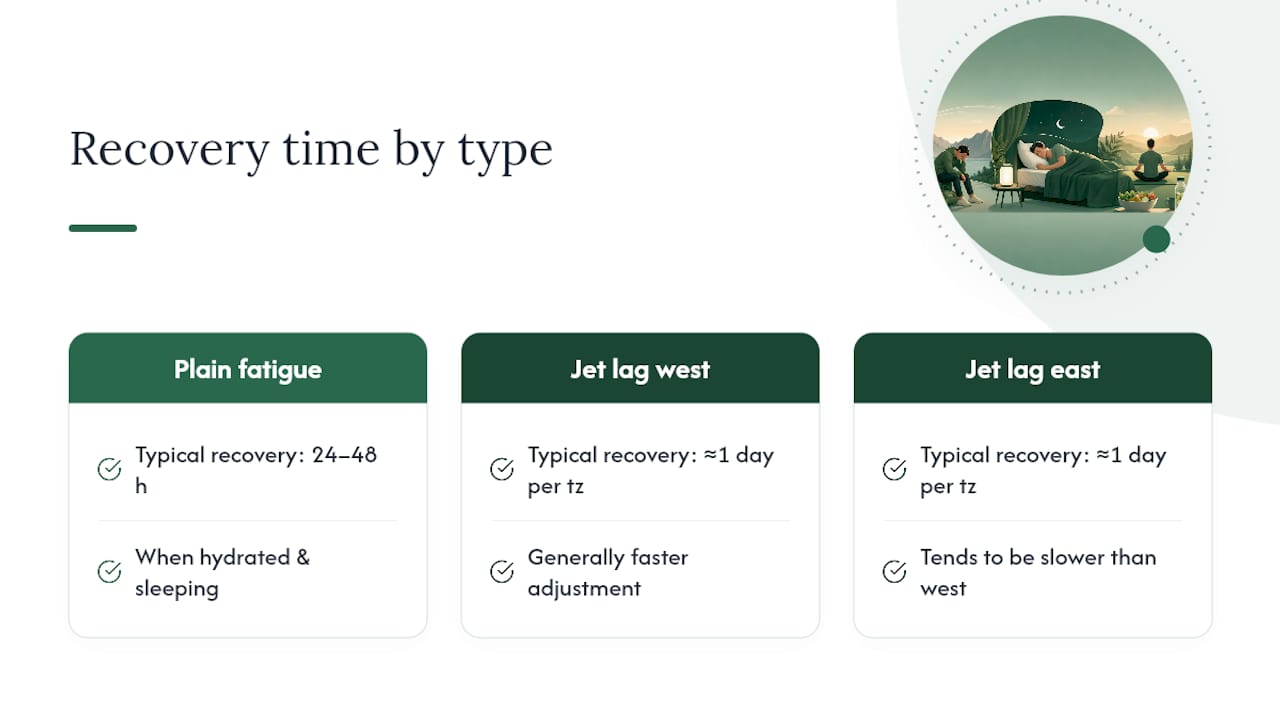
Several factors stretch that timeline. Being over 50, carrying sleep debt into the trip, crossing more than six time zones, getting sick in transit, or skipping regular meals all add recovery days. If you have a critical event, a keynote, a wedding, a big negotiation, build in at least one buffer day for every three time zones crossed. That buffer is cheap insurance against showing up running on fumes.
The Circadian Science Behind Every Tactic Here
None of this is guesswork. Outdoor sunlight delivers somewhere between 10,000 and 100,000 lux, compared to a few hundred lux from indoor lighting. That intensity gap is why a walk outside resets your clock faster than sitting near a bright window ever could, and why timing (morning versus evening) matters more than how long you stay out.
Melatonin works as a timing signal, not a sedative. A small dose taken at the right moment relative to your target bedtime nudges your internal clock; a larger dose taken at the wrong time does very little and can leave you groggy the next morning.
Dehydration and prolonged sitting both slow you down for straightforward physiological reasons: reduced blood volume means less oxygen delivery to your brain, and inactive leg muscles mean sluggish circulation. Water and movement fix both directly. It’s less about a magic protocol and more about correcting two basic deficits your body is already screaming about.
Where Supplements Fit Into a Travel Fatigue Recovery Plan
Supplements support recovery. They don’t replace it. Hydration, light timing, and sleep protection do the heavy lifting, and anything you add on top should be judged by that standard.
Pure Blue’s Quantum Vitality NAD+ Booster+ Detox is formulated as a 3-in-1 energy, clarity, and detox support product built around organic ingredients with no artificial fillers. It’s third-party tested for purity and potency and manufactured in an FDA-registered facility, and the brand reports a 4.9 out of 5 customer rating. For travelers running on disrupted sleep and dehydration, that kind of adjunct support can take the edge off brain fog while your circadian system catches up on its own schedule.
None of that substitutes for the fundamentals in this guide. If you’re on other medications or managing a chronic condition, talk to a doctor before adding any new supplement to your routine, especially around travel when your system is already under stress.
What to Eat Before, During, and After You Fly
Food timing anchors your peripheral clocks (liver, gut, pancreas) independently of the light-driven master clock in your brain, which is why eating on the wrong schedule can keep you jet lagged even after your sleep improves. In the 48 hours before departure, favor lighter, lower-sodium meals; heavy, salty airport food adds to the dehydration you’re already fighting in a low-humidity cabin.
During the flight, eat only when it lines up with your destination’s mealtimes, not your origin’s. Skipping a meal entirely because it “isn’t time yet” at home helps signal the shift faster than eating on the old schedule.
After landing, prioritize protein at your first local meal. It supports alertness better than a carb-heavy meal, which tends to trigger an energy crash a couple of hours later. Keep dinner lighter and earlier for the first two nights, since a heavy late meal delays sleep onset and works against the very schedule you’re trying to lock in. Fresh fruit, lean protein, and foods with natural electrolytes (coconut water, broths) do more for you in the first day than a coffee-and-pastry breakfast, however tempting the pastry case looks after 14 hours of travel.

Managing Stress and Mental Fog During Recovery
Travel fatigue isn’t only physical. Decision fatigue, irritability, and a foggy inability to focus are common the first day or two, and treating them as a mental health issue rather than just a body issue speeds things up. Genuine recovery requires psychological detachment: unstructured downtime and lower cognitive load produce restorative effects beyond sleep alone. Booking your first day solid with meetings or sightseeing works against you.
Give yourself permission to do less on day one. A short walk, a slow meal, and low-stakes conversation beat a packed itinerary every time when your cognitive bandwidth is already thin. Simple breathing exercises or a short guided relaxation practice in the evening can lower the physical tension that builds from hours of sitting and recycled air, and it primes you for the deeper sleep your body needs that first night.
If irritability or anxiety spikes noticeably beyond your normal baseline and lingers past the first few days, that’s worth mentioning to a doctor rather than writing off as ordinary jet lag. Most of the fog clears on its own, but it shouldn’t take a week to lift.
Setting Up Your Sleep Environment After You Land
Your hotel room or spare bedroom probably isn’t built for circadian repair, so a few adjustments go a long way. Darkness is the biggest lever: even small amounts of light leaking around curtains can delay melatonin release, so travel blackout clips or an eye mask matter more on night one than any other night of the trip.
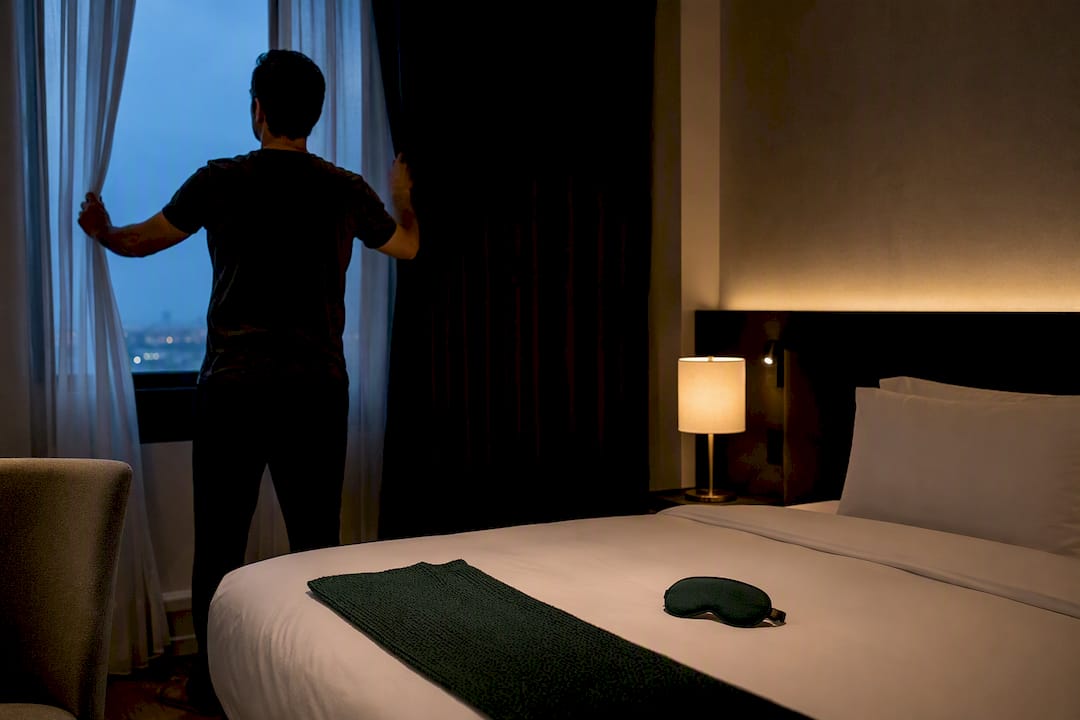
Temperature runs a close second. A room in the mid 60s Fahrenheit supports deeper sleep than a warm room, and most hotel thermostats default too high. Turn it down before you nap or go to bed rather than after you’re already tossing and turning.
White noise or a fan helps mask unfamiliar sounds, which matter more than usual when your brain is already on alert in a new environment. The Sleep Foundation recommends keeping screens out of the bedroom for at least 30 minutes before sleep, since blue light in the evening works directly against the light-timing strategy you followed all day. If you flew west and are trying to stay up later, keep that screen light dim or in another room until it’s actually time to sleep.
Do Supplements or Medications Help With Travel Fatigue?
Some travelers reach for over-the-counter melatonin, and used correctly it’s a legitimate timing tool. Small doses taken close to your target local bedtime work better than large doses taken whenever you remember, since melatonin signals timing rather than sedation. Prescription sleep aids exist too, but they’re a conversation for a doctor, not a packing list item, especially for anyone on other medications.
For the fatigue side rather than the sleep-timing side, that’s where adjunct supplements can play a role. Pure Blue’s Quantum Vitality NAD+ Booster+ Detox is built around organic, filler-free ingredients aimed at supporting energy and mental clarity, which matters when you’re trying to function through the fog of a rough travel day. It’s not a substitute for melatonin’s circadian signaling role, and it’s not a substitute for hydration or light exposure either. Think of it as one more input alongside the fundamentals, not a shortcut around them.
Anyone managing a chronic health condition or taking multiple medications should run any new supplement, including melatonin, by a doctor before travel. The interactions aren’t usually dramatic, but travel is the wrong time to find out the hard way.
What Frequent Travelers Actually Do When Nothing Goes to Plan
Real travel rarely lines up with a perfect protocol. Flights get rebooked, layovers run short, and the pre-flight sleep shift you planned gets wiped out by a late work deadline. When that happens, prioritize in this order: hydration first, light exposure second, sleep protection third. Everything else is negotiable.
Buffering an extra day around anything important, packing that small recovery kit, and choosing arrival times that let you see daylight before you check into a hotel room are the habits that actually separate people who function on day two from people who don’t. Consistency across trips beats chasing a new hack every time you fly.
— Organic
A Faster Way to Support Recovery on the Road
Rehydration, light timing, and protected sleep do the real work of travel fatigue recovery, and nothing replaces them. Some supplements add targeted support for the energy and mental clarity that dip while your circadian system catches up, built from organic ingredients with no artificial fillers and third-party tested for purity in an FDA-registered facility.
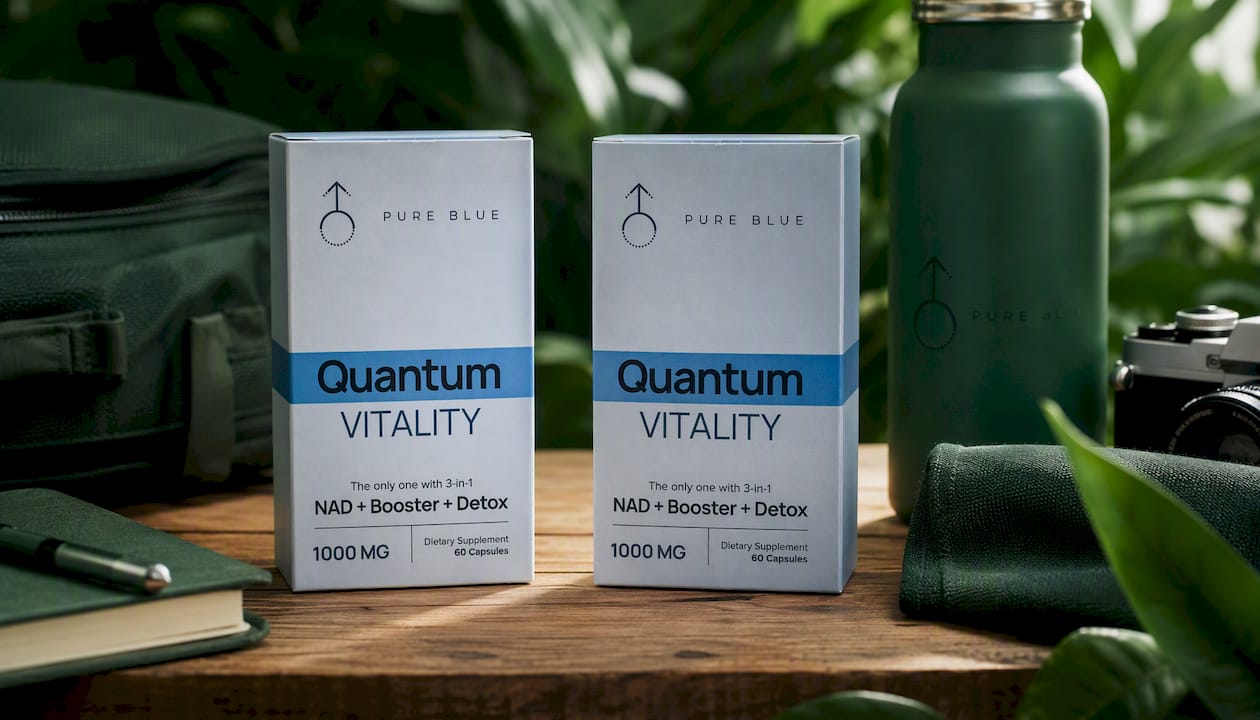
The Quantum Vitality NAD+ Booster+ Detox combines energy, clarity, and detox support in one formula, designed for travelers who need to function on the day they land, not three days later. If you want to try it before committing, the free sample offer is the lowest-friction way to see how it fits into your own recovery routine. Pair it with the hydration and light protocols in this guide, protect that first night of sleep, and you’re covering both the physiological basics and the adjunct support at the same time.
Sources
- Tired of jet lag? Experts share their top tips for travel recovery | Euronews
- How to Recover From Travel Fatigue Fast - ScienceInsights
- Circadian rhythm and light (NCBI resource)
- Jet lag - Symptoms and causes - Mayo Clinic
- How to get over jet lag | Sleep Foundation
FAQ
How Long Does It Take to Recover From Travel Fatigue?
Plain travel fatigue usually clears within 24 to 48 hours once you rehydrate and sleep normally. Jet lag takes longer, roughly one day per time zone crossed.
How Can I Recover From Travel Fatigue Fast?
Rehydrate immediately after landing, get outdoor daylight within the first hour, take a nap no longer than 30 minutes if needed, and eat your next meal on local time. Protecting that first night’s sleep matters more than any single tactic on this list.
How Long After Traveling Will I Feel Exhausted?
For simple travel fatigue, expect the worst of it to pass within two days. For jet lag across multiple time zones, plan on roughly a day of adjustment per zone crossed, longer if you flew east.
Why Am I So Exhausted After Traveling?
Cabin dehydration, hours of sitting, disrupted sleep timing, and a circadian mismatch between your body clock and the destination’s schedule all stack together. The Mayo Clinic points to dehydration specifically as a major contributor most travelers underestimate.
Can Supplements Help With Travel Fatigue Recovery?
Supplements can support energy and mental clarity while your body adjusts, but they work alongside hydration, light timing, and sleep protection, not instead of them. Quantum Vitality NAD+ Booster+ Detox is formulated as adjunct support with organic, third-party tested ingredients for travelers looking for that extra layer.