Cart
0
Ubiquinone and ubiquinol are the same molecule in two different electrical states, and neither one is universally “better.” As a rule of thumb, ubiquinone (standard CoQ10) makes sense for most healthy adults under 40 who want mitochondrial support at a reasonable price, while ubiquinol is worth the premium for older adults, statin users, or anyone with diagnosed mitochondrial dysfunction. Either form works better taken with a fatty meal, and the formulation matters as much as the redox state.
TL;DR:
- Ubiquinol offers a higher absorption rate, with about 1.5 to 2 times greater plasma levels than plain crystalline ubiquinone in well-formulated products.
- Long-term clinical evidence for cardiovascular benefits predominantly supports ubiquinone, especially in studies like Q-SYMBIO and KiSel-10, which used the oxidized form.
- Ubiquinone is more stable and less expensive to produce, making it a cost-effective choice for healthy adults under 40 who seek mitochondrial support.
- Supplement absorption improves significantly when taking CoQ10 with dietary fat, rather than on an empty stomach, regardless of the form used.
- People over 40, on statins, or with mitochondrial disease benefit more from ubiquinol, but formulation quality and proper dosing are critical for effectiveness.
Table of Contents
- CoQ10 vs Ubiquinol: What’s Actually Different Between Them?
- What Do the Clinical Trials Actually Show?
- How Much Better Does Ubiquinol Actually Absorb?
- Who Should Take Ubiquinone vs Ubiquinol?
- What’s a Safe Dose, and Does It Interact With Anything?
- How Pureblue Approaches CoQ10-Adjacent Support
- Why Supplement Quality Varies So Much From Bottle to Bottle
- What Do We Know About Long-Term Safety?
- Which to Take and Why: An Editorial Take
- Try Quantum Vitality for Everyday Cellular Energy Support
- Sources
- FAQ
CoQ10 vs Ubiquinol: What’s Actually Different Between Them?
The confusion around “coq10 vs ubiquinol” comes from treating them like competing ingredients. They’re not. Coenzyme Q10 is the umbrella name for the compound; ubiquinone and ubiquinol are the two chemical forms it cycles between inside your cells.
Ubiquinone is the oxidized form. It’s missing two electrons compared to its counterpart, and it’s the form found in most conventional CoQ10 capsules on store shelves. It’s also the form your body converts into ubiquinol before using it in most tissues, and it’s the more stable version chemically, which is one reason it dominated the supplement market for decades.
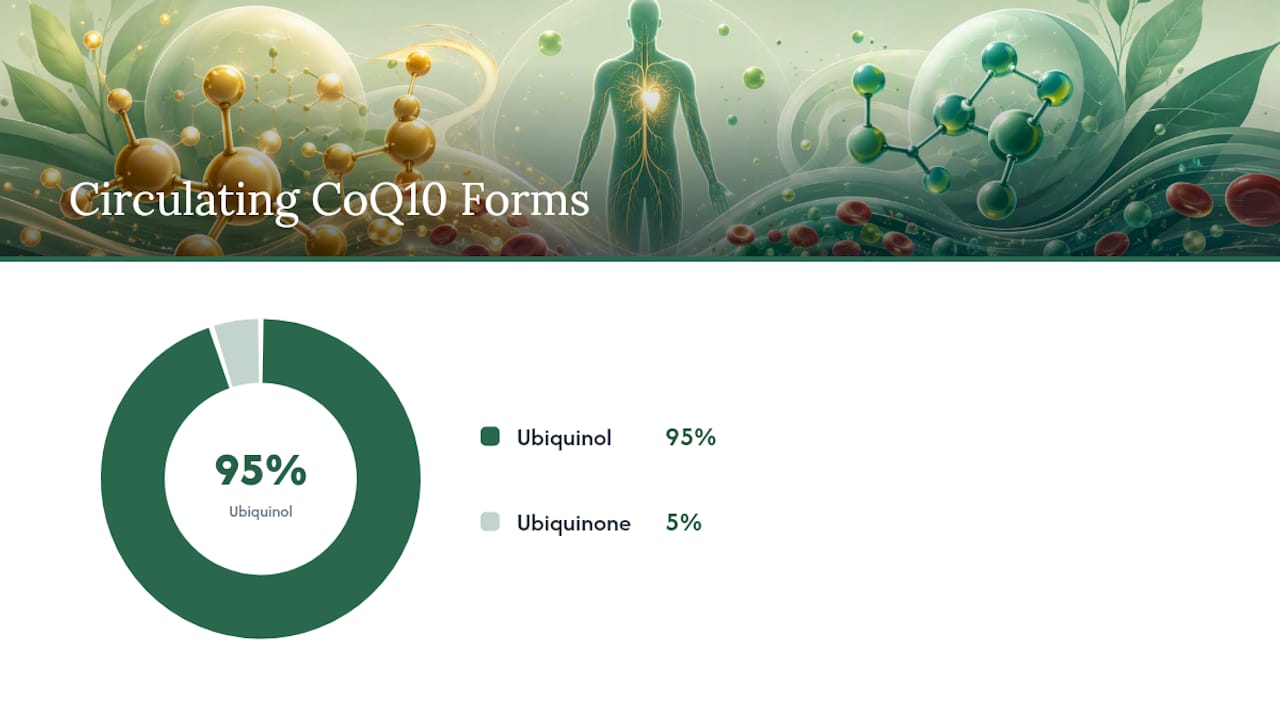
Ubiquinol is the reduced form, carrying those two extra electrons. It’s the active antioxidant form and makes up roughly 95% of the CoQ10 circulating in healthy human blood, according to the NCBI Bookshelf overview on CoQ10 biology. Your liver and mitochondria handle the ubiquinone-to-ubiquinol conversion constantly, which is exactly why the two are described as a single redox cycle rather than two separate nutrients.
That interconversion matters clinically for one big reason: conversion efficiency isn’t fixed. It declines with age and with certain conditions that impair mitochondrial Complex I and II activity or reduce an enzyme called NQO1. In someone whose conversion pathway is working fine, dosing with ubiquinone gets metabolized into ubiquinol just as readily as taking ubiquinol directly. In someone whose pathway is compromised, supplementing with pre-converted ubiquinol skips that bottleneck entirely.
Beyond biochemistry, the two forms behave differently as products:
- Stability: Ubiquinone is a stable, non-reactive crystalline powder that holds up well in standard capsules for years. Ubiquinol is chemically reactive by nature (that’s what makes it an antioxidant), so it oxidizes back toward ubiquinone over time unless it’s protected in an airtight, oxygen-limiting softgel.
- Packaging: You’ll rarely see ubiquinol in a basic two-piece capsule. It’s almost always in a liquid-filled softgel with an oil carrier, partly for stability and partly because CoQ10 in general is fat-soluble and needs a lipid vehicle to absorb well.
- Cost: Ubiquinol supplements typically run noticeably higher per milligram than ubiquinone, reflecting a more complex manufacturing process and shorter shelf stability.
- Formulation impact on absorption: A plain crystalline ubiquinone powder in a dry capsule absorbs poorly. Micronized particles, lipid-based carriers, and cyclodextrin-complexed versions of ubiquinone all measurably improve how much reaches your bloodstream, sometimes closing much of the gap with ubiquinol.
Quick fact: Roughly 95% of the CoQ10 circulating in your blood at any given moment is already in the ubiquinol form, whether you supplement with ubiquinone or ubiquinol, according to the same StatPearls review. Your body is doing the conversion work regardless of which capsule you buy.
The takeaway: the redox difference is real and biologically meaningful, but the practical difference between two specific bottles on a shelf often comes down more to formulation quality than to which letter is on the label.
What Do the Clinical Trials Actually Show?
If you’re supplementing for heart health specifically, the trial evidence points toward ubiquinone, not ubiquinol. That’s a detail a lot of ubiquinol marketing conveniently skips.
The two landmark trials most cited in cardiology circles both used standard ubiquinone. Q-SYMBIO followed patients with chronic heart failure and found that CoQ10 supplementation at 300 mg/day (split into three 100 mg doses) reduced major cardiovascular events and cardiovascular mortality over two years compared to placebo. KiSel-10 studied elderly Swedish participants on a combination of CoQ10 (200 mg/day) and selenium, and found reduced cardiovascular mortality that persisted years after the intervention ended. Both trials remain the strongest long-term outcome data CoQ10 research has produced, and both used the oxidized form.
Ubiquinol simply hasn’t accumulated the same body of long-term outcome trials. A comparative cardiology review looking at both forms head-to-head confirms this gap directly: the randomized controlled trial evidence for reduced cardiovascular mortality comes primarily from ubiquinone trials, while ubiquinol research is concentrated in shorter studies measuring biomarkers, antioxidant status, and plasma levels rather than hard outcomes like death or hospitalization.
Here’s what the trial landscape looks like in practical terms:
- Q-SYMBIO: Ubiquinone, 300 mg/day split into three doses, heart failure patients, two-year follow-up, reduced major cardiovascular events.
- KiSel-10: Ubiquinone plus selenium, 200 mg/day CoQ10, healthy elderly population, reduced cardiovascular mortality tracked over a decade.
- Ubiquinol studies: Generally shorter duration, smaller cohorts, and focused on surrogate markers like oxidative stress, endothelial function, and plasma CoQ10 concentration rather than mortality or major cardiac events.
This doesn’t mean ubiquinol is ineffective. Its biomarker and antioxidant data is genuinely solid, and it raises plasma CoQ10 levels efficiently, which matters for people who aren’t converting ubiquinone well in the first place. But if your specific goal is “I want the form with the most convincing long-term heart outcome data behind it,” the honest answer right now is ubiquinone.
What this means for someone using CoQ10 to support cardiovascular health: if you’re following in the footsteps of the Q-SYMBIO or KiSel-10 populations (heart failure, older age, statin therapy), standard ubiquinone at trial-matched doses has the deepest evidence trail. If you’re using CoQ10 more generally for energy and cellular support without a specific cardiac diagnosis, either form is reasonable, and absorption practicalities become the deciding factor.
How Much Better Does Ubiquinol Actually Absorb?
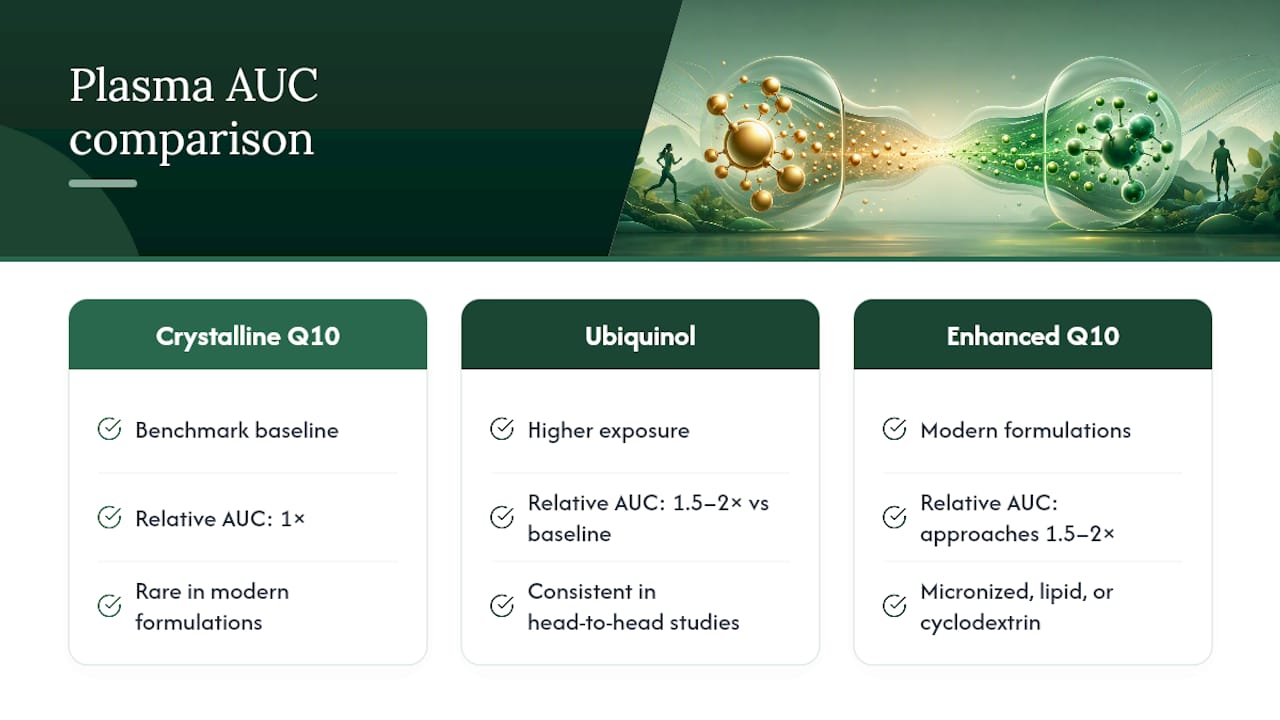
This is where ubiquinol’s reputation is genuinely earned. Multiple pharmacokinetic studies comparing the two forms directly find that ubiquinol produces roughly 1.5 to 2 times higher plasma AUC (the total drug exposure over time) than standard crystalline ubiquinone in healthy adults. A separate comparative study using the same crystalline-ubiquinone benchmark found a similar pattern, with ubiquinol consistently raising plasma CoQ10 levels more efficiently than the basic oxidized form.
Statistic callout: Ubiquinol’s absorption edge over plain crystalline ubiquinone runs roughly 1.5 to 2 times higher plasma AUC in head-to-head pharmacokinetic comparisons. That’s the number driving most of the “ubiquinol is superior” marketing you’ll see, and it’s accurate, as far as it goes.
Here’s the catch: that comparison uses old-style crystalline ubiquinone as the baseline, and almost nobody sells that anymore in serious formulations. Enhanced-delivery ubiquinone, whether micronized into smaller particles, suspended in a lipid carrier, or bound in a cyclodextrin complex, can raise plasma CoQ10 levels enough to approach or match what ubiquinol achieves. The gap that looks dramatic in a lab comparing raw powders shrinks considerably once you compare well-formulated products against each other.
The single biggest lever you control, regardless of which form you buy, is fat. CoQ10 is fat-soluble, and taking it with a meal containing dietary fat multiplies absorption several-fold compared to taking it on an empty stomach or with a low-fat snack. This one habit does more for your actual CoQ10 levels than agonizing over the ubiquinone-versus-ubiquinol decision.
Pro Tip: Take your CoQ10 capsule alongside breakfast eggs, an avocado, whole-milk yogurt, or any meal with a real fat source. Taking it on an empty stomach with black coffee is close to wasting the dose.
If you’re on a higher dose (say 300 mg or more per day), splitting it into two smaller doses taken with separate meals tends to produce steadier plasma levels than one large dose at once.
Who Should Take Ubiquinone vs Ubiquinol?
Matching the form to your situation is more useful than picking a “winner.” Think through these profiles:
- Healthy adults under 40 without chronic conditions. Standard ubiquinone, ideally in a micronized or lipid-based formulation, is a sound and cost-effective starting point. Your conversion pathway is almost certainly working fine at this age.
- Adults over 40, especially those on statin therapy. Statins deplete endogenous CoQ10 production, and conversion efficiency naturally declines with age. Ubiquinol’s ability to bypass the conversion step becomes more relevant here, and it’s the profile where the extra cost is easiest to justify.
- People with diagnosed mitochondrial dysfunction or advanced cardiac disease. This is where the case for ubiquinol is strongest on biological grounds, since the conversion pathway itself may be compromised in these conditions, making direct ubiquinol supplementation a more reliable way to raise plasma levels.
- Budget-conscious users who still want an absorption edge. Try an enhanced-delivery ubiquinone formulation first. You get most of the practical benefit without the ubiquinol price premium.
- Anyone managing a diagnosed heart condition, taking prescription medications, pregnant, or preparing for surgery. Talk to a clinician before starting or changing CoQ10 dosing, since dose and form both matter for that conversation.
What’s a Safe Dose, and Does It Interact With Anything?
Most human studies land CoQ10 dosing between 100 and 300 mg per day, with some therapeutic trials pushing to 300 to 600 mg/day in specific clinical contexts, according to the StatPearls overview. Q-SYMBIO used 300 mg/day split into three 100 mg doses; KiSel-10 used 200 mg/day. That split-dosing pattern isn’t an accident.
Statistic callout: For daily doses above a moderate amount, splitting the total into two administrations, one in the morning and one in the evening, tends to improve absorption efficiency and keeps plasma levels steadier than one large single dose.
CoQ10, in either form, has a good safety record at these ranges:
- Reported tolerability in humans extends up to 1,200 mg/day in some studies without serious adverse effects, though most people never need doses that high.
- The most common side effects are mild: occasional stomach upset, nausea, or headache.
- CoQ10 can modestly reduce the effectiveness of warfarin and other anticoagulants by promoting clotting factor activity, so anyone on blood thinners needs medical supervision before adding it.
- People with diagnosed cardiac conditions, anyone pregnant, and anyone with major surgery scheduled should also get clinician guidance first, since CoQ10 affects clotting and cardiovascular parameters that matter in those situations.
None of this makes CoQ10 risky for a typical healthy adult. It just means the “just take more” instinct isn’t the smartest approach past a certain point, and the interaction profile deserves a real conversation if you’re on prescription medication.
How Pureblue Approaches CoQ10-Adjacent Support
Some supplement brands emphasize purity, testing, and formulation honesty when developing CoQ10-adjacent products. A few proof points worth knowing:
- Some formulas are third-party tested for purity and potency before shipping.
- Products may be manufactured in FDA-registered facilities following standard manufacturing practices.
- Ingredients are often organic without artificial fillers, a standard valued in mitochondrial-support supplements and multivitamins alike.
The flagship Quantum Vitality NAD+ Booster+ Detox formula targets a related but distinct piece of cellular energy metabolism: NAD+ levels, which work alongside CoQ10 in the mitochondrial pathways that generate ATP. Where CoQ10 sits in the electron transport chain itself, NAD+ feeds the upstream reactions that keep that chain running. Neither one replaces the other, and Quantum Vitality isn’t positioned as a treatment for any disease. It’s built for general energy support, mental clarity, and detox pathways in people who already take their supplement stack seriously.
Why Supplement Quality Varies So Much From Bottle to Bottle
CoQ10, in either form, is one of the more inconsistently manufactured supplement categories on the market. Because ubiquinol is chemically unstable, poorly made products can partially oxidize back into ubiquinone sitting on a shelf, meaning the “ubiquinol” on the label may not match what’s actually in the capsule by the time you take it. Ubiquinone doesn’t have that specific problem, but it has its own consistency issues: particle size, carrier oil quality, and encapsulation method all vary widely between brands, and none of that shows up on a standard label.
This is exactly the gap third-party testing is meant to close. Independent lab verification checks that the labeled dose matches the actual content, screens for contaminants like heavy metals, and in better cases, confirms the ratio of ubiquinone to ubiquinol hasn’t drifted during storage. Certifications from organizations like USP or NSF, or a certificate of analysis available on request, are the practical signals to look for. A supplement with no visible testing claim isn’t automatically bad, but it’s asking you to trust the label at face value with no verification behind it.
Price is a rough but real proxy here too. Ubiquinol production is more technically demanding, and a suspiciously cheap ubiquinol product is more likely to be under filled, poorly stabilized, or mislabeled than a suspiciously cheap ubiquinone product. When the price looks too good relative to the category average, that’s worth treating as a flag rather than a bargain.
What Do We Know About Long-Term Safety?
The long-term safety picture for CoQ10 is reassuring, though it’s built more on decades of accumulated clinical use than on a single definitive mega-trial. Doses in the 100 to 300 mg/day range have been used in research settings for years, including in Q-SYMBIO’s two-year follow-up and KiSel-10’s decade-long mortality tracking, without signals of serious cumulative harm. Tolerability studies report humans handling doses up to 1,200 mg/day without severe adverse effects, which gives a wide safety margin above the typical maintenance dose most people actually take.
What’s less settled is head-to-head long-term safety comparison between the two forms specifically. Most long-duration trials used ubiquinone, so the deepest safety track record technically belongs to that form. Ubiquinol hasn’t shown any distinct safety signal of its own in the shorter studies available, but “no signal yet” in a smaller, shorter body of research isn’t the same statement as “proven safe over decades” the way ubiquinone’s trial history allows.
For most healthy adults, this distinction is more academic than practical. Mild stomach upset remains the most commonly reported issue with either form. The more relevant long-term consideration isn’t the molecule itself, it’s consistency: taking a stable dose daily over months matters more for whatever benefit you’re chasing than chasing marginal differences in theoretical long-term risk between two forms that both have solid track records at standard doses.
Which to Take and Why: An Editorial Take
The conventional advice on this topic is lazy in a predictable way: it treats “ubiquinol is more bioavailable” as the entire argument and stops there. Bioavailability isn’t the same thing as outcomes, and the outcomes data, imperfect as it is, still points toward ubiquinone for anyone specifically chasing cardiovascular benefit. That’s an inconvenient detail for an ingredient with a higher price tag to sell against.
What gets underweighted is formulation. A cheap ubiquinone capsule with no delivery enhancement absorbs badly, and a poorly stabilized ubiquinol softgel can degrade before you ever swallow it. The form matters less than whether the company making it actually engineered for absorption and verified potency through testing.
If you’re healthy, under 40, and not on a statin, start with a well-formulated ubiquinone and save the money. If you’re older, medicated, or dealing with a diagnosed mitochondrial issue, ubiquinol’s absorption edge earns its premium. Either way, the meal you take it with matters more than most people assume.
— Organic
Try Quantum Vitality for Everyday Cellular Energy Support
If you’ve read this far weighing ubiquinone against ubiquinol, you already care more about formulation quality and real testing than most supplement shoppers do.
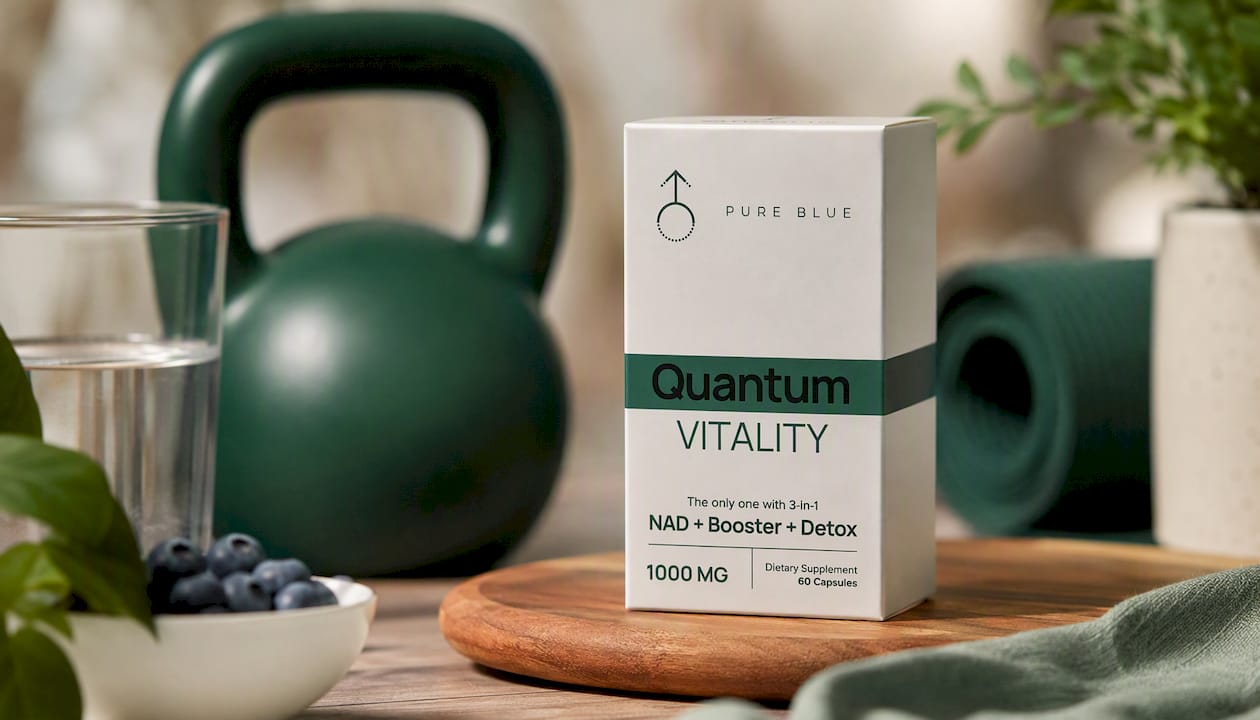 (Suggested dimensions: 1200x628px. Alt text: “Quantum Vitality NAD+ Booster+ Detox bottle by Pureblue, organic energy and detox supplement.”)
It’s built to support the energy and mitochondrial pathways that work alongside CoQ10, without asking you to make any medical claims or promises the label doesn’t back. If your current stack already includes a CoQ10 form you’ve settled on, Quantum Vitality is a natural next addition rather than a competing choice. Check current pricing and availability on the Quantum Vitality product page and see whether it fits into your routine.
Sources
- PubMed article comparing ubiquinol and ubiquinone pharmacokinetics
- Comparison of Coenzyme Q10 (Ubiquinone) and Reduced Coenzyme Q10 (Ubiquinol) as Supplement to Prevent Cardiovascular Disease and Reduce Cardiovascular Mortality
- Coenzyme Q10 - StatPearls
- The ubiquinone–ubiquinol redox cycle and its clinical consequences: an overview (PMC review)
This article is general information, not a substitute for advice from a qualified doctor. Consult a qualified healthcare professional about your own circumstances before acting on anything here.
FAQ
Which Is Better to Take, Ubiquinol or CoQ10?
Neither is universally better since ubiquinol is simply the reduced form of the same CoQ10 molecule. Standard ubiquinone (CoQ10) has stronger long-term cardiovascular outcome data from trials like Q-SYMBIO and KiSel-10, while ubiquinol offers a meaningful absorption advantage that matters more for older adults or people with conversion issues.
What Is the Best Form of CoQ10 to Take?
The best form depends on your age, health status, and budget rather than a single universal answer. Healthy adults under 40 generally do well with enhanced-delivery ubiquinone, while adults over 40, statin users, or those with mitochondrial concerns tend to benefit more from ubiquinol’s higher plasma absorption.
Who Should Not Take Ubiquinol?
Anyone on blood-thinning medication like warfarin should talk to a doctor first, since CoQ10 in either form can interfere with anticoagulant effectiveness. People who are pregnant, scheduled for major surgery, or managing a diagnosed cardiac condition also need clinician guidance before starting supplementation.
Why Is Ubiquinol So Expensive?
Ubiquinol costs more because it’s chemically less stable than ubiquinone and requires more complex manufacturing, typically an airtight, oil-based softgel, to prevent it from oxidizing back before you take it. That production complexity, combined with its documented 1.5 to 2 times higher plasma absorption compared to standard crystalline ubiquinone, is what drives the price premium.