Cart
0

B vitamins are required for your cells to make ATP, but they are not stimulants. Supplements only reliably boost how energetic you feel when they correct an existing deficiency. If your levels are already adequate, adding more B12 or B6 to your morning routine is unlikely to change how you feel by lunchtime.
That’s the finding across the clinical literature. A clinical evidence review on B‑vitamin supplementation and fatigue found no robust evidence that supplementing boosts energy or physical performance in healthy people whose baseline levels are already sufficient. A broader narrative review of vitamins and minerals for energy and cognition reaches a similar conclusion: these nutrients are foundational to the machinery of energy production, but they are not a lever you can pull for more energy on demand.
Here’s the practical takeaway:
- B vitamins act as coenzymes, helper molecules that enable enzymes to convert food into usable cellular fuel.
- Supplementation helps most when it corrects a measurable gap, not when it’s layered on top of an already-adequate diet.
- Fatigue with no identified deficiency usually has a different root cause: sleep debt, chronic stress, or simply eating too little.
Quick fact: Vitamin B12 deficiency disproportionately affects older adults and people on vegetarian or vegan diets, largely because of how the body absorbs B12 from food rather than how much they’re eating, according to the NIH Office of Dietary Supplements. Pureblue’s Quantum Vitality formula is third-party tested for purity and potency, a baseline worth knowing about before you consider any B-vitamin product, whether it’s ours or someone else’s.
Key Takeaways
B vitamins are essential coenzymes for converting food into cellular energy, but supplements meaningfully raise energy only in people correcting an actual deficiency.
| Point | Details |
|---|---|
| Mechanism over magic | B vitamins act as coenzymes across glycolysis, the citric acid cycle, and the electron transport chain, not as stimulants. |
| Deficiency drives benefit | Clinical evidence shows energy gains from supplementation concentrate in people who started deficient, not in replete individuals. |
| Know your risk group | Older adults, vegans and vegetarians, people with GI disorders, and long-term PPI or metformin users face higher B12 deficiency risk. |
| Test before high-dose therapy | Serum B12 alone can miss functional deficiency; pairing it with MMA and homocysteine gives a clearer picture. |
| Choose tested products when needed | Pureblue’s Quantum Vitality and Blue Bear Male Gummies use organic ingredients and third-party testing for people with a confirmed need. |
This article is general information, not a substitute for advice from a qualified doctor. Consult a qualified healthcare professional about your own circumstances before acting on anything here.
Table of Contents
- How B Vitamins for Energy Actually Work at the Cellular Level
- The Eight B Vitamins and What Each One Does for Energy
- What Human Studies Show About Supplementing for Energy
- Who Actually Benefits From B-Vitamin Supplements
- How to Test for B-Vitamin Deficiency Before You Supplement
- Getting B Vitamins From Food, and What the RDAs Actually Say
- Side Effects and Interactions Worth Knowing Before You Supplement
- Where Pureblue Fits Into the Evidence
- If Testing Confirms You Need Support, Here’s What Pureblue Offers
- Sources
How B Vitamins for Energy Actually Work at the Cellular Level
Your body doesn’t run on the calories you eat directly. It runs on adenosine triphosphate, or ATP, the molecule every cell burns for fuel. Making ATP requires a chain of chemical reactions, and B vitamins show up as essential coenzymes at nearly every step.
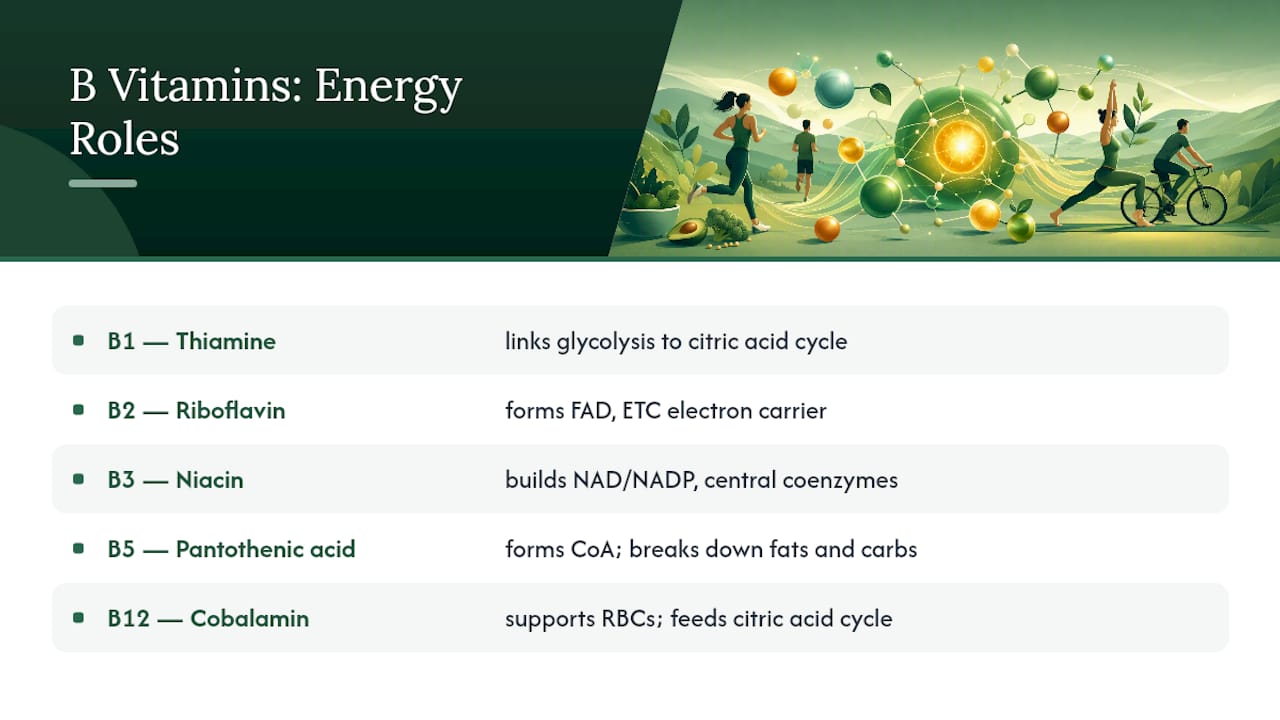
Start with glycolysis, the process that breaks glucose down into a usable form. Thiamine (B1) participates directly in the enzyme complex that feeds glycolysis’s output into the citric acid cycle, the next major stage. Riboflavin (B2) and niacin (B3) form the backbone of two molecules you’ve likely heard of if you’ve ever read a supplement label: FAD and NAD. These two carry electrons through the citric acid cycle and into the electron transport chain, the final stage where the bulk of your ATP actually gets produced.
Fat metabolism runs on a parallel track called beta-oxidation, and it depends on similar coenzyme support, particularly from pantothenic acid (B5), which forms coenzyme A, a molecule involved in shuttling fatty acid fragments into the energy-production pathway. Vitamin B6, in its active form pyridoxal-5-phosphate (PLP), supports amino acid metabolism, which matters when the body needs to route protein into energy production during periods of low carbohydrate or fat intake.
The narrative review on vitamins and minerals for energy and cognition makes a point worth remembering: every B vitamin except folate is involved in one or more of these steps of cellular energy production. Because the process is sequential, a shortage in any single vitamin can become a bottleneck. Miss enough B1, and glycolysis backs up. Miss enough B2 or B3, and the electron transport chain runs short on the carriers it needs.
Here’s where the biochemistry gets misread. Cellular ATP production and the subjective feeling of “having energy” are related but not identical. You can have technically normal ATP output and still feel foggy and tired because of poor sleep, dehydration, or psychological stress. This distinction matters because most supplement marketing blurs it, implying that stacking B vitamins will make you feel more energized the way a cup of coffee does. Caffeine works on adenosine receptors in your brain within minutes. B vitamins work on metabolic pathways that, when already functioning normally, have no obvious ceiling to raise.
A few things worth keeping in mind about this system:
- ATP production is a chain, not a single step, so multiple vitamins act as bottlenecks at different points.
- NAD and FAD, both B-vitamin derivatives, are required for the electron transport chain, where most ATP is generated.
- Correcting one vitamin deficiency while ignoring another can leave part of the chain still constrained.
- Subjective energy and cellular ATP output are related but governed by different factors, including sleep and stress.
Think of the pathway like a factory assembly line. Adding more of one part to a line that’s already fully stocked doesn’t speed up production. It only helps if that part was actually running short.
The Eight B Vitamins and What Each One Does for Energy
Each B vitamin plays a distinct role in the pathways described above, and each one shows up in different foods with different deficiency risks. Here’s what you need to know about all eight.
Vitamin B1 (thiamine) helps convert glucose into usable energy by supporting the enzyme complex that bridges glycolysis and the citric acid cycle. Good sources include pork, whole grains, and legumes. Low thiamine can cause irritability, fatigue, and in severe cases, a condition called beriberi that affects the nervous system and heart.
Vitamin B2 (riboflavin) forms FAD, one of the two main electron carriers your cells use to generate ATP in the electron transport chain. You’ll find it in eggs, dairy, and leafy greens. Deficiency can show up as cracked lips, a sore tongue, and skin irritation around the nose and mouth.
Vitamin B3 (niacin) builds NAD and NADP, the other major electron carrier system and arguably the most central coenzyme pair in all of energy metabolism. Chicken, tuna, and peanuts are strong sources. Severe deficiency causes pellagra, marked by dermatitis, diarrhea, and cognitive decline, though this is rare in places with fortified grain supplies.
Vitamin B5 (pantothenic acid) forms coenzyme A, which is central to breaking down fats and carbohydrates for energy. It’s found widely in mushrooms, avocado, and sunflower seeds, and true deficiency is uncommon since it’s present in nearly all whole foods.
Vitamin B6 (pyridoxine) supports amino acid metabolism and helps the body convert stored glycogen into glucose when energy demand rises. Chickpeas, salmon, and potatoes are solid sources. Low B6 can contribute to fatigue and, in more serious cases, anemia.
Vitamin B7 (biotin) assists in fatty acid synthesis and contributes to energy metabolism, though outright deficiency is rare outside of specific conditions like excessive raw egg white consumption, which contains a protein that blocks biotin absorption. Eggs (cooked), nuts, and seeds provide biotin along with, ironically, the compound that can interfere with it in raw form.
Vitamin B9 (folate) is essential for DNA synthesis and cell division rather than the direct ATP pathways covered earlier, which is why the narrative review excludes it from the core energy-metabolism list. Still, folate deficiency contributes to a type of anemia that leaves people feeling drained because fewer healthy red blood cells are delivering oxygen to tissue. Leafy greens, lentils, and fortified grains are the main sources.
Vitamin B12 (cobalamin) supports both red blood cell formation and the metabolic pathways that feed into the citric acid cycle. Meat, fish, dairy, and fortified cereals are the primary dietary sources, which is why deficiency risk climbs sharply for people who avoid animal products.
B12 deserves a closer look because supplement labels list two different forms, and the difference actually matters clinically. Cyanocobalamin is the synthetic, more stable form commonly used in fortified foods and lower-cost supplements. Methylcobalamin is the form your body uses directly without an extra conversion step. A review comparing methylcobalamin and cyanocobalamin found that both forms effectively raise blood B12 levels and treat deficiency, though methylcobalamin may offer advantages in certain clinical contexts, such as for people with impaired conversion capacity. Neither form is inherently wrong for a healthy person to take; the difference tends to matter more for people with specific absorption or metabolic issues than for the general population choosing between two bottles on a shelf.
What Human Studies Show About Supplementing for Energy
The clearest pattern in the clinical literature is this: benefit clusters almost entirely around people who started with low or borderline B-vitamin status. People who walk into a trial already replete rarely see a measurable change in fatigue scores, reaction time, or endurance markers after taking B-vitamin supplements.
The PMC review of B-vitamin supplementation and fatigue lays this out directly: there’s no strong evidence that giving B vitamins to healthy, adequately nourished people improves their energy or physical performance. Trials that show positive results tend to involve populations with a documented gap, such as older adults with low B12 status or people recovering from malnutrition, not gym-goers looking for an edge.
That said, the underlying research isn’t a single clean signal. Study designs vary enormously. Some measure subjective fatigue through questionnaires, which are prone to placebo effects and expectation bias. Others measure objective outcomes, like grip strength, reaction time, or blood biomarkers, which are harder to fake but sometimes fail to capture how someone actually feels day to day. Sample sizes range from a few dozen participants in short-term trials to larger, longer cohort studies. That heterogeneity is exactly why isolated studies claiming energy benefits from B-complex supplements should be read skeptically until you know who was studied and what was actually measured.
The consistent thread across the literature is that B vitamins function as a system, and correcting one deficiency while another lingers may leave the underlying fatigue only partly resolved. Full-spectrum B-complex formulas are often recommended specifically when multiple deficiencies are suspected, rather than as a blanket energy booster for anyone feeling run down.
Here’s how to translate that into a personal decision:
- A positive trial result should change your behavior if it comes from a population that matches your situation, like older adults with confirmed low B12.
- A positive result shouldn’t change your behavior if the study population was already replete or the outcome measured was purely subjective with no control for placebo effects.
- Lifestyle-driven fatigue, from poor sleep, high stress, or under-eating, responds poorly to vitamin supplementation because the actual bottleneck isn’t a nutrient gap.
- If you supplement and notice no change within a few weeks and you had no prior deficiency, the supplement likely isn’t the missing piece.
Who Actually Benefits From B-Vitamin Supplements
Supplementation tends to help a fairly specific set of people, and recognizing whether you fall into one of these groups is more useful than guessing.
- Older adults. Absorption of B12 from food declines with age, largely due to reduced stomach acid production, a condition called atrophic gastritis, which impairs the release of B12 from protein in food.
- Vegans and vegetarians. B12 occurs almost exclusively in animal products, so anyone avoiding meat, dairy, and eggs for an extended period faces a real, well-documented deficiency risk, according to the NIH factsheet on vitamin B12.
- People with gastrointestinal disorders or a history of bariatric surgery. Conditions like Crohn’s disease, celiac disease, and surgical alterations to the stomach or small intestine can all impair B-vitamin absorption regardless of dietary intake.
- Long-term users of certain medications. Proton pump inhibitors and metformin, both taken chronically for common conditions, are associated with reduced B12 absorption over time.
- People with alcohol use disorder. Chronic alcohol use interferes with the absorption and storage of several B vitamins, particularly thiamine, and can lead to serious neurological consequences if left uncorrected.
Left unaddressed, these gaps show up as more than tiredness. B12 or folate deficiency can cause a type of anemia that leaves fewer healthy red blood cells to carry oxygen, and thiamine deficiency in the context of alcohol use disorder can lead to nerve damage or a serious neurological condition. If you fall into one of these groups, the reasonable next step isn’t guessing your way through a supplement aisle. It’s talking to a clinician about testing, and in the meantime looking at whether simple dietary changes, like adding fortified cereals or B12-rich foods, can close the gap.
How to Test for B-Vitamin Deficiency Before You Supplement
Guessing at deficiency from symptoms alone is unreliable, because fatigue, brain fog, and low mood overlap with dozens of unrelated conditions. Lab testing gives you an actual answer.
The standard starting point is a serum B12 test, but it has a well-known blind spot: it can show a “normal” result even in someone who is functionally deficient, particularly older adults. That’s why clinicians often pair it with a methylmalonic acid (MMA) test and sometimes a homocysteine (Hcy) level. Elevated MMA is a more specific marker of cellular B12 deficiency than serum B12 alone, and adding homocysteine helps distinguish B12 deficiency from folate deficiency, since both can raise homocysteine levels. For folate specifically, red blood cell (RBC) folate is considered a more reliable long-term marker than serum folate, which fluctuates with recent diet.
A few points worth keeping straight:
- Serum B12 alone can miss functional deficiency, especially in older adults with atrophic gastritis.
- MMA and homocysteine together help clarify ambiguous serum B12 results.
- RBC folate reflects longer-term status better than a single serum folate draw.
- Testing before starting high-dose therapy is the more responsible path when the diagnosis isn’t already clear, a point echoed in the narrative review on energy and fatigue, which favors targeted testing over blanket high-dose supplementation for unexplained fatigue.
Pro Tip: If you’ve had bloodwork done recently and your B12 came back “normal” but you still have unexplained fatigue or tingling in your hands and feet, ask your doctor specifically about an MMA test. Normal serum B12 doesn’t always rule out a real problem. If numbness, tingling, or hand weakness has already shown up, it’s worth understanding what deficiencies can cause those symptoms before assuming it’s unrelated to nutrition.
Getting B Vitamins From Food, and What the RDAs Actually Say
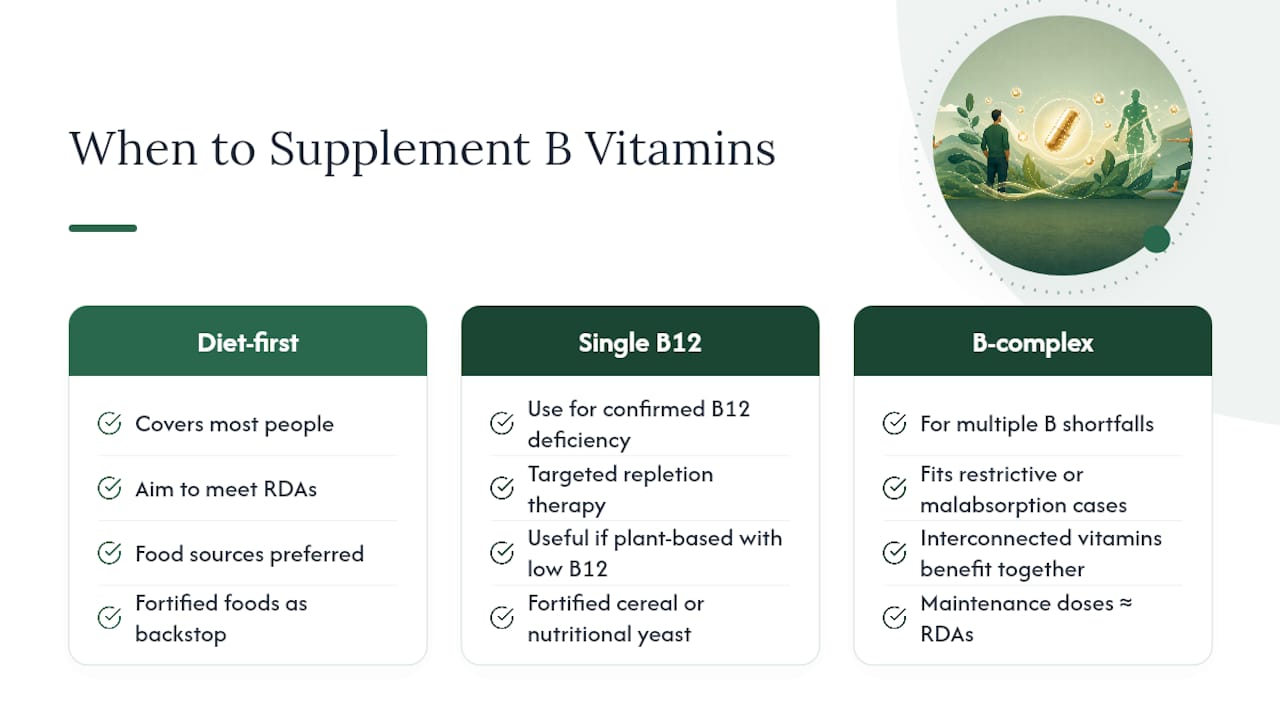
A diet-first approach covers most people’s needs without any supplement at all. The Recommended Dietary Allowances for adults, set by the National Institutes of Health, specify daily intake levels for B vitamins, including thiamine (B1), riboflavin (B2), niacin (B3), B6, folate, and B12, which vary by age and gender according to official guidelines.
Simple food swaps go a long way toward hitting these numbers: fortified breakfast cereal or nutritional yeast for B12 if you’re plant-based, salmon or chickpeas for B6, and eggs or Greek yogurt for riboflavin. A Harvard Health review of vitamins and minerals for energy notes that most people meet their B-vitamin needs through varied diets, with supplements and fortified foods serving mainly as a backstop for restrictive diets or absorption issues.
When supplementation makes sense, the choice between a full B-complex and a single vitamin depends on what you’re actually short on. A confirmed isolated B12 deficiency calls for targeted B12 repletion. Suspected shortfalls across multiple B vitamins, common in restrictive eaters or people with malabsorption, are a better fit for a full-spectrum B-complex, since the interconnected nature of these vitamins means a gap in one can undercut the benefit of correcting another. Reasonable dosing for general maintenance typically sits close to the RDA; high-dose regimens, often used therapeutically for confirmed severe deficiency, should be supervised by a clinician rather than self-directed. If you’re unsure whether you need anything beyond diet at all, it’s worth reading through the case for when supplementation is actually necessary before adding another bottle to your shelf.
Water-soluble doesn’t mean risk-free. Your body clears excess B vitamins through urine more efficiently than fat-soluble vitamins, but “reasonably safe in normal doses” and “unlimited at any dose” are not the same claim, a distinction Mayo Clinic’s guidance on B-complex vitamins makes clearly.
Side Effects and Interactions Worth Knowing Before You Supplement
Most B vitamins have a wide margin of safety at typical supplemental doses, but a few specific risks deserve direct attention rather than a vague warning label.
High-dose niacin, often used in therapeutic amounts far above the RDA to manage cholesterol, can cause a well-known flushing reaction, and sustained high doses have been linked to liver toxicity. Excessive vitamin B6, typically from long-term high-dose supplementation rather than food, has been associated with peripheral neuropathy, nerve damage that can cause numbness or tingling in the hands and feet, according to Mayo Clinic’s review of B-complex risks. Vitamin B12 has a strong overall safety profile even at high doses, though anyone on medications that affect absorption should still involve a pharmacist in the conversation.
Worth watching for:
- Flushing, upset stomach, or unusual fatigue after starting a high-dose niacin regimen.
- Tingling, numbness, or loss of sensation in the hands or feet, which can signal B6-related neuropathy or an underlying B12 problem.
- Interactions with metformin and proton pump inhibitors, both of which can reduce B12 absorption over time.
- Any new or worsening neurological symptom, which warrants stopping the supplement and contacting a clinician rather than waiting it out.
If you take prescription medication regularly, run any new B-vitamin regimen past your pharmacist first. Interactions are uncommon but not nonexistent, and the conversation takes five minutes.
Where Pureblue Fits Into the Evidence
Pureblue’s approach starts from the same premise this article does: B vitamins matter enormously for cellular energy, but that doesn’t mean more is automatically better for everyone. A quality-tested product becomes a reasonable option specifically for people who’ve identified a real gap, whether through testing, a restrictive diet, or a known absorption issue.
A few things worth knowing about how Pureblue builds its products:
- Ingredients are 100% organic and free from artificial fillers.
- Quantum Vitality is formulated as a 3-in-1 NAD+ booster and detox formula, built around the same NAD-dependent energy pathways described earlier in this article.
- Every product is third-party tested for purity and potency before it reaches a customer.
- Manufacturing takes place in an FDA-registered facility.
- Pureblue reports a customer rating of 4.9 out of 5.
Pro Tip: Third-party testing means an independent lab, not the manufacturer itself, verifies what’s actually in the bottle matches the label. Ask any supplement brand whether they have this before you buy, not after.
The Editorial Take on B Vitamins and Energy Marketing
The supplement aisle sells B vitamins like they’re an energy switch you can flip. They’re not. They’re structural, more like the wiring in a house than a light switch itself. Flip the switch (get enough sleep, eat enough food, manage stress) and good wiring lets the power flow. Bad wiring, meaning an actual deficiency, and no amount of switch flipping fixes anything until you repair the wire.
The honest answer to “will B vitamins boost my energy” is: it depends entirely on whether you’re deficient, and most people who ask that question haven’t checked. Pureblue’s position is to favor diet first, testing when there’s real reason to suspect a gap, and a third-party tested product when supplementation is actually warranted. That’s a less exciting pitch than “energy in a bottle,” but it’s the one backed by the evidence.
— Organic
If Testing Confirms You Need Support, Here’s What Pureblue Offers
If you’ve gone through the steps in this article, checked your diet, considered your risk factors, maybe talked to your doctor about testing, and landed on “yes, I actually have a gap,” that’s the moment a quality supplement earns its place.
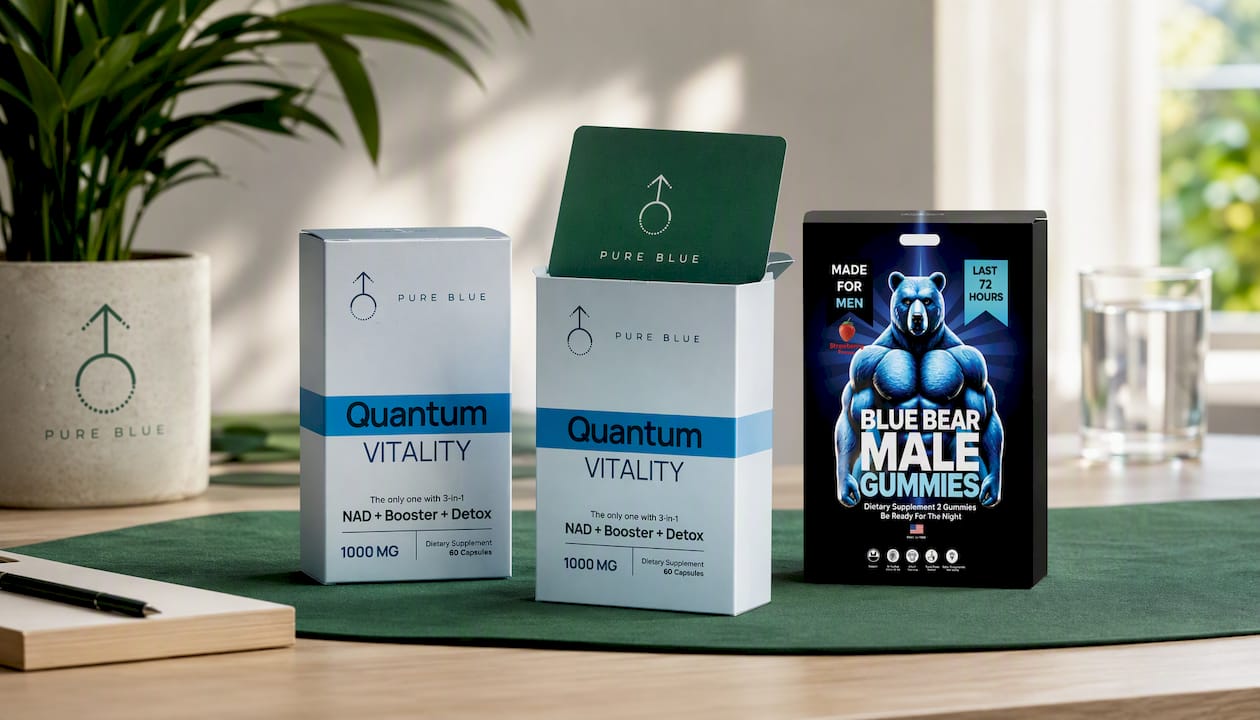
Pureblue’s Quantum Vitality NAD+ Booster+ Detox is built around the NAD-dependent energy pathways this article walked through, combined into a 3-in-1 formula that also supports detoxification. Every batch is third-party tested for purity and potency, made with organic ingredients and no artificial fillers, in an FDA-registered facility. If you’d rather try it before committing, the introductory offer on Quantum Vitality is built for exactly that. For men specifically looking for a gummy format tied to vitality and performance, Blue Bear Male Gummies apply the same organic, third-party tested standard.
None of these products claim to make an already well-nourished person feel more energetic than they already are. They’re built for the reader who’s done the work in this article and confirmed a real need. If that’s you, the next step is simple: check the product page, review the ingredient panel against what your testing showed, and decide from there.
Sources
- Effects of B‑vitamin supplementation on energy and fatigue — clinical evidence (PMC10542023)
- Vitamin B12 — Office of Dietary Supplements (NIH) factsheet