Cart
0
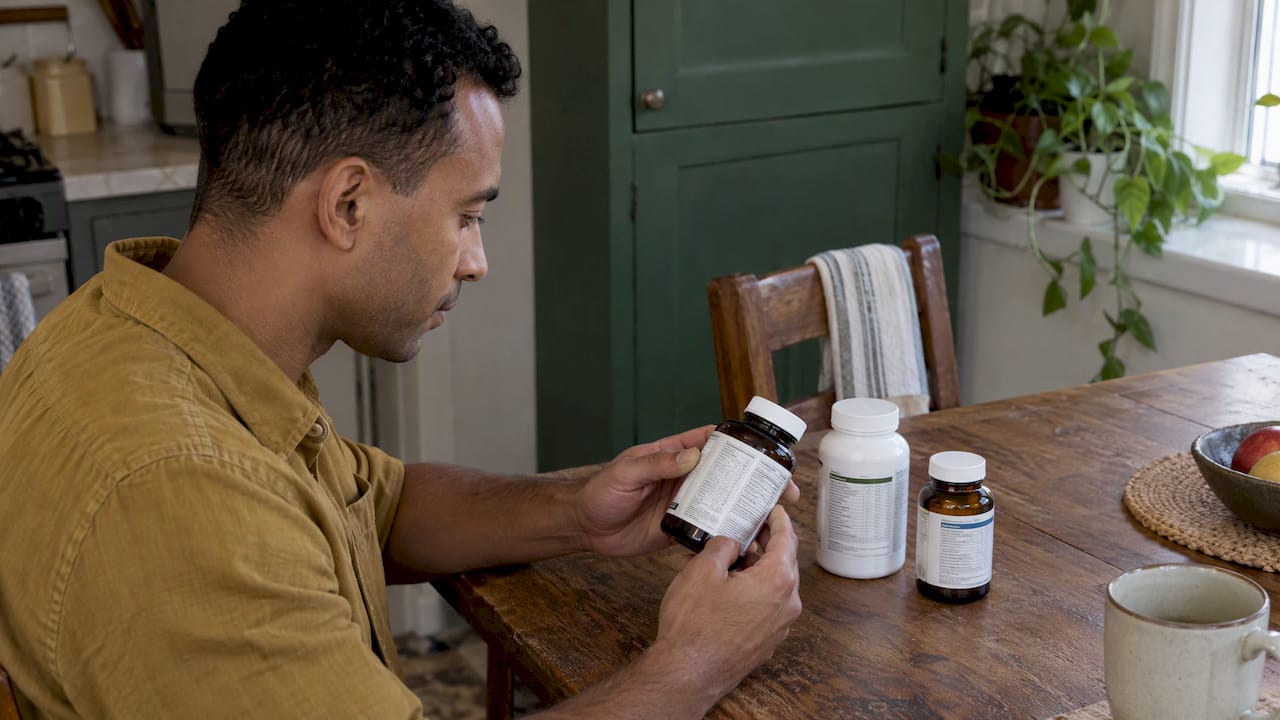
“High potency” is not a personal safety assessment. To evaluate the claim, identify the nutrient, the amount in the labeled serving and the reference being used. A larger percentage on the front of a bottle does not establish a larger benefit.
Disclosure: Pure Blue sells supplements and publishes this educational guide. This article does not establish that our products are appropriate for a particular person or that a high-potency formula improves health outcomes.
Read the actual labeling rule
FDA's high-potency guidance describes an individual vitamin or mineral at 100 percent or more of its Reference Daily Intake per reference amount customarily consumed. In a combination product, the labeling must identify which nutrients the individual claim describes.
For a claim describing the multi-ingredient product, the rule requires at least 100 percent of the RDI for at least two-thirds of the specified vitamins and minerals present at 2 percent or more of the RDI. The two-thirds fraction applies to the qualifying nutrients; it does not mean that merely having two-thirds present at 2 percent makes a product high potency.
This nutrient-content rule is not a clinical recommendation, an FDA approval or a general definition of the strength of every botanical extract.
Keep three references separate
- Daily Value: a label reference, not an individualized prescription.
- RDA or Adequate Intake: nutrient-intake references whose applicability depends on factors such as age and life stage.
- Tolerable Upper Intake Level: a nutrient-specific risk reference, not a target to aim for or a guaranteed safe boundary for every individual.
NIH describes wide variation in multivitamin/mineral formulations, including some amounts exceeding established upper limits. The product name alone cannot tell you where a formula sits.
Check which sources the limit includes
Do not assume every upper limit applies to exactly the same set of food, supplement and medicine sources. For example, the NIH magnesium fact sheet distinguishes the upper limit for supplemental magnesium from magnesium naturally present in food and beverages. Copy the relevant source scope beside a limit before using it in a comparison.
Do not apply one nutrient's rule to another, or treat the absence of an established upper limit as proof that unlimited intake is safe. If you cannot identify an applicable reference, mark it unknown and ask a pharmacist or clinician.
Build a complete label record
Record the exact product and label version, serving size, ingredient form, amount and unit per serving, and how much is actually being used. Include other supplements and relevant nonprescription medicines. Keep missing individual amounts marked as missing; a proprietary-blend total cannot reveal the amount of each component.
Our testing-claim guide explains why a measured ingredient amount and a contaminant result answer different questions. Neither a COA nor a certification establishes an appropriate personal intake or a clinical benefit.
Ask what decision the comparison should support
Bring the record to a pharmacist or clinician and ask whether there is a reason for the proposed ingredient and amount, which sources overlap, whether medicines or health conditions change the assessment, and how an existing plan should be reviewed. Do not raise, reduce or stop a prescribed treatment from a percentage-Daily-Value comparison.
For the current commercial formula, use the regular Quantum Vitality listing. This link is a product reference, not an endorsement of a high dose. If a dosing error, possible overdose or reaction is suspected, seek prompt professional help rather than waiting to finish a label exercise; severe symptoms require emergency care.