Cart
0

NAD+ can help brain fog, but the honest answer sits between hype and dismissal: the biology is compelling, the human proof is still thin. NAD+ fuels the mitochondria that keep neurons running and activates sirtuin enzymes that guard against inflammation and cellular damage, both of which line up with what brain fog feels like at a cellular level. But early human trials on NAD+ precursors show mixed, modest results, not the dramatic cognitive fixes some clinics advertise.
People with post-viral fatigue, chronic fatigue patterns, or age-related cognitive slowdown tend to report the most noticeable change. Before trying an IV protocol or a high-dose supplement regimen, get a medical evaluation first. Brain fog has dozens of causes, and NAD+ is one lever among several, not a guaranteed fix.
- Best-fit candidates: post-viral/long COVID recovery, chronic fatigue, age-related decline, post-substance recovery.
- Weakest evidence for: using NAD+ alone as a first-line fix without ruling out sleep apnea, thyroid disease, or medication side effects.
- Safest first step: talk to a clinician and get baseline labs before starting IV NAD+ or high-dose oral precursors.
Key Takeaways
NAD+ supports brain energy and cellular repair through mitochondrial ATP production and sirtuin activation, but human trials on cognition remain limited and mixed.
| Point | Details |
|---|---|
| Mechanism is solid | NAD+ fuels mitochondrial ATP production and activates SIRT1, SIRT3, and SIRT6 to control inflammation and DNA repair. |
| Human evidence is emerging | The December 2025 RCT found no significant cognitive score gains, but fatigue and sleep improved after 10+ weeks. |
| Route matters | IV NAD+ works fastest but needs clinical oversight; oral NR/NMN suits long-term daily maintenance. |
| Not FDA-approved | NAD+ has no FDA approval for treating brain fog, so IV protocols require medical supervision and informed consent. |
| Oral maintenance option | Pureblue’s Quantum Vitality NAD+ Booster+ Detox offers a third-party tested, organic oral option to support NAD+ pathways as part of a broader plan. |
Table of Contents
- What Is NAD+ and How Does It Differ From NADH?
- How Does NAD+ Affect Brain Function?
- What Does the Research Say About NAD+ and Brain Fog?
- Oral Supplements, Injections, or IV: Which NAD+ Route Works Best?
- Is NAD+ Safe? Side Effects, Interactions, and Regulatory Status
- Who Should Try NAD+ for Brain Fog, and How Do You Decide?
- How We Reviewed the Evidence
- Where Does NAD+ Fit Into a Real Brain Fog Plan?
- A Practical Oral Option: Quantum Vitality NAD+ Booster+ Detox
- Frequently Asked Questions
- Sources
What Is NAD+ and How Does It Differ From NADH?
NAD+, or nicotinamide adenine dinucleotide, is a coenzyme your cells make from dietary vitamin B3. It shuttles electrons during metabolism, acting like a rechargeable battery that cycles between two states. NAD+ is the “charged” oxidized form; NADH is the “spent” reduced form after it has donated electrons in a chemical reaction. Your cells constantly flip between the two, and the ratio between them signals whether a cell has enough energy currency to do its job.
That cycling matters most where energy demand is highest, and few tissues demand more than the brain. The brain represents a small fraction of body weight but consumes a large share of total body energy (https://pmc.ncbi.nlm.nih.gov/articles/PMC8364152/), a mismatch that makes neurons unusually sensitive to any disruption in cellular fuel supply. When NAD+ levels drop, whether from age, chronic stress, illness, or poor sleep, neurons have less raw material to convert nutrients into usable energy. That energy shortfall is one plausible mechanism behind the mental sluggishness people describe as brain fog.
A simple way to picture the pathway: nutrients you eat feed into the NAD+ cycle, which powers the mitochondria inside each neuron, which produces ATP, which fuels the moment-to-moment work of thinking, focusing, and recalling information. Break any link in that chain and cognitive performance can suffer.
- NAD+ is the oxidized, “active” form your cells use to accept electrons during metabolism.
- NADH is the reduced form, carrying those electrons toward the mitochondria for ATP production.
- Brain cells burn through NAD+ faster than most tissues because of their constant, high energy turnover.
- Age, chronic illness, and oxidative stress are all linked to measurable drops in cellular NAD+ levels.
How Does NAD+ Affect Brain Function?
NAD+ supports neuronal energy production and cellular maintenance through several overlapping pathways, and the strongest case for NAD+ and mental clarity comes from how directly these pathways connect to the biology of fatigue and mental slowness.
Mitochondrial ATP production sits at the center. NAD+ feeds the electron transport chain inside mitochondria, the process that converts glucose and fat into ATP, the molecule neurons burn to fire signals, clear waste, and maintain the electrical gradients that let them communicate. Neurons are especially vulnerable to energy shortfalls because, unlike muscle cells, they cannot easily switch to back up fuel sources during high demand.
Sirtuin activation is the second major pathway. NAD+ is required fuel for sirtuin enzymes, particularly SIRT1, SIRT3, and SIRT6, which act as master regulators of inflammation control and DNA repair inside neurons. When NAD+ runs low, sirtuins lose their fuel source and their protective functions weaken, leaving neurons more exposed to inflammatory signaling and slower to repair everyday cellular damage.
PARP-mediated DNA repair adds a third layer, and it works almost like a competing bidder for the same resource. PARP enzymes also consume NAD+ to repair damaged DNA, and chronic or elevated DNA damage keeps PARP activity high, draining the NAD+ pool that neurons would otherwise use for energy production and sirtuin signaling. This creates a depletion cycle: more damage means more PARP activity, which means less NAD+ available for everything else.
The downstream effect of all three pathways working properly is lower oxidative stress and reduced neuroinflammation, both of which are associated with clearer thinking. Reactive oxygen species (ROS) are a normal byproduct of cellular metabolism, but excess ROS damages cell membranes and signaling proteins. Adequate NAD+ supports the antioxidant systems that keep ROS in check, and animal studies show that NAD+ repletion improves mitophagy and mitochondrial biogenesis, essentially helping cells clear out damaged mitochondria and build healthier replacements.
Pro Tip: Think of NAD+ less like a stimulant and more like an oil change. It doesn’t force your brain to work harder; it reduces the friction that was slowing normal processes down.
- Fuels the mitochondrial electron transport chain that produces ATP for neurons.
- Activates SIRT1, SIRT3, and SIRT6, which control inflammation and DNA repair.
- Gets consumed by PARP enzymes during DNA repair, linking cellular damage to NAD+ depletion.
- Supports mitochondrial quality control, helping neurons clear damaged components and rebuild.
- Lower oxidative stress and neuroinflammation are the likely downstream benefits tied to mental clarity.
The brain’s outsized 20% share of body energy use is the number that makes this whole mechanism worth taking seriously: a tissue that demanding cannot afford chronic fuel shortages without some functional cost.
What Does the Research Say About NAD+ and Brain Fog?
The evidence splits cleanly along a line: animal studies are consistently positive, human trials are limited and mixed. That gap is the single most important thing to understand before deciding whether NAD+ approaches to treating brain fog naturally are worth pursuing.
Preclinical work is where the strongest signal lives. Multiple animal-model studies report that NAD+ repletion restores mitochondrial function, reduces neuroinflammation, and improves cognitive behavior in aging and stress models. These findings are consistent across labs and species, which is reassuring from a mechanistic standpoint, but animal models don’t always translate to human outcomes, especially for something as subjective and multifactorial as brain fog.
Human data tell a more cautious story. Early trials of oral NAD+ precursors like NMN and NR reliably increase circulating blood NAD+ levels, confirming the supplements do what they claim biochemically. But cognitive-specific outcomes in those same trials remain inconsistent. Raising NAD+ in the blood is not the same as proving a person thinks more clearly.
The most relevant recent data point comes from a December 2025 randomized trial testing high-dose nicotinamide riboside against a placebo. The topline result was not a win for NAD+: cognitive test scores showed no statistically significant difference between groups. But a secondary finding is worth sitting with. Participants who adhered to supplementation for a sustained period reported improvements in fatigue, sleep quality, and some measures of executive function. That distinction between fatigue relief and pure cognitive test performance matters, because brain fog is often experienced as fatigue and slow processing rather than a measurable drop in IQ-style testing.
Evidence at a glance
| Study Type | Population | Key Finding | Evidence Strength |
|---|---|---|---|
| Animal models (aging/stress) | Rodent models | Restored mitochondrial function, improved cognitive behavior | Preclinical, strong and consistent |
| Oral NMN/NR trials | Small human cohorts | Increased blood NAD+, inconsistent cognitive endpoints | Human, low to moderate |
| December 2025 RCT (high-dose NR) | Adult human participants | No significant cognitive score difference; fatigue/sleep gains after ≥10 weeks | Human, emergent and mixed |
| Clinic/practitioner reports (IV NAD+) | Self-selected clinic patients | Same-day subjective mental clarity reported | Observational, low (not controlled) |
A few limitations explain why the human column looks so much weaker than the animal column. Sample sizes in most trials are small, often a few dozen participants. Study endpoints vary widely, some measure fatigue scales, others measure formal cognitive testing, others track sleep quality, which makes it hard to compare results across studies. Delivery routes differ too (oral versus IV), and most trials run for weeks rather than months, so long-term effects remain unknown.
Clinic and practitioner reports add another layer worth naming honestly. Some practitioner case series describe rapid subjective improvements in mental clarity within hours to days of an IV NAD+ infusion. These reports are useful for understanding real-world experience, but they are not controlled trials, and self-selected patients who paid for a clinic visit may be primed to report feeling better.
Put together, the current scientific consensus describes NAD+ as promising but still emerging: strong preclinical rationale, a coherent mechanism, and early human signals that lean positive on fatigue and sleep rather than raw cognitive test scores. If you’re grading this like a report card, preclinical evidence earns a strong grade. Human evidence for NAD for brain fog specifically sits at emergent, low to moderate, with a clear need for larger, longer randomized controlled trials before anyone can call the case closed.
Oral Supplements, Injections, or IV: Which NAD+ Route Works Best?
There is no single best delivery method. Oral precursors, injections, and IV infusions each trade off speed, cost, and convenience differently, and the right choice depends on how quickly you want results and how much oversight you’re willing to arrange.
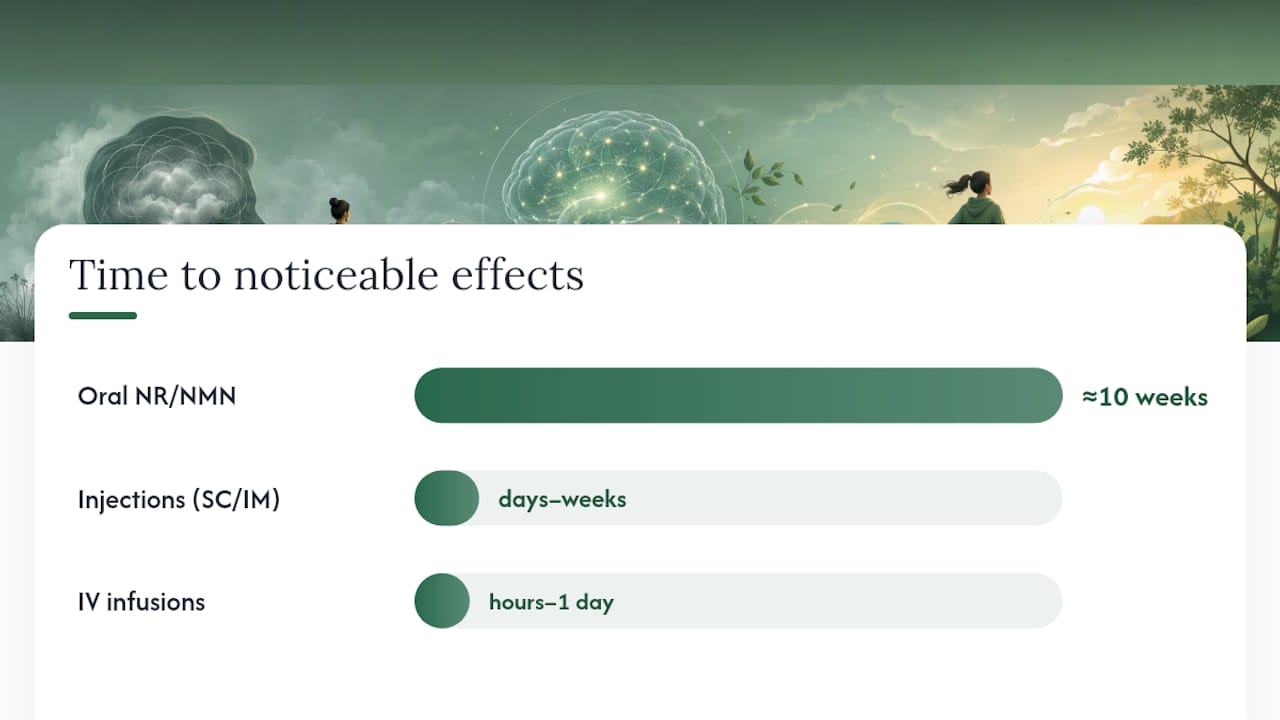
Oral NR and NMN supplements are the most practical option for long-term use. Nicotinamide riboside and nicotinamide mononucleotide both raise blood NAD+ when taken daily, and because they’re swallowed rather than infused, they fit into a normal routine without clinic visits. The tradeoff is bioavailability: oral precursors have to survive digestion before reaching the bloodstream, so they typically produce a lower peak NAD+ level than IV delivery. Realistic timelines run weeks, not days, matching the 10-week adherence window that showed benefits in the December 2025 trial.
Subcutaneous or intramuscular injections sit in the middle. They bypass digestion, which improves absorption compared to oral capsules, and dosing can be done at home after initial clinical guidance. Effects are generally reported over days to a couple of weeks, faster than oral but slower than IV.
IV NAD+ infusions deliver the compound directly into the bloodstream, which is why clinic reports describe same-day or next-day subjective clarity. That speed is the main appeal, but it comes with the highest cost, the most logistical friction (infusions typically take one to several hours and require a clinical setting), and the need for direct medical oversight to manage infusion rate, since fast IV NAD+ delivery is associated with uncomfortable side effects like flushing and chest tightness.
- Oral NR/NMN: lowest cost, most convenient, weeks-long timeline, lower bioavailability.
- Injections: moderate cost, moderate convenience, days-to-weeks timeline, better absorption than oral.
- IV infusions: highest cost, requires clinical setting, hours-to-days timeline, needs medical supervision.
Cost varies enormously by provider, region, and dose, and it’s rarely covered by insurance since NAD+ therapy for brain fog isn’t an FDA-approved indication. Treat any specific price you see quoted online as a starting point for a conversation with a provider, not a fixed figure. Whatever route you choose, insist on third-party testing and transparent sourcing. The supplement market for NAD+ boosters is largely unregulated, and verifying manufacturing standards and independent lab testing is one of the few controls you have as a consumer.
A common clinical pattern, though not standardized by formal trials, pairs an initial IV loading series (roughly one to three infusions over one to two weeks) with daily oral NMN or NR afterward for maintenance. Think of it as a jump-start followed by a slow trickle charge. This is a description of a real-world approach some clinics use, not medical advice or a protocol to follow without professional guidance.
Is NAD+ Safe? Side Effects, Interactions, and Regulatory Status
NAD+ is not FDA-approved to treat brain fog or any related cognitive or psychiatric condition. IV NAD+ infusions in particular are an off-label clinical intervention that carries its own risk-benefit profile and should only happen under medical oversight.
Reported side effects cluster around a predictable list. Flushing, nausea, headache, and chest tightness are the most commonly reported reactions, especially when IV NAD+ is infused too quickly. Slowing the infusion rate typically reduces these symptoms, which is one reason clinical supervision matters for IV protocols specifically, not just oral supplementation. Less common but more serious reactions can include abdominal cramping and significant blood pressure changes during infusion.
Drug and condition interactions deserve real caution, even in general terms. People undergoing active cancer treatment, particularly those on PARP inhibitors, should discuss NAD+ supplementation with their oncology team before starting anything, since the same DNA-repair pathway that NAD+ supports is the pathway many cancer therapies specifically target. Anyone on complex medication regimens should run a new supplement or IV protocol by their prescribing clinician first.
A few red flags are worth watching for when evaluating providers or products:
- Clinics or sellers promising guaranteed or dramatic cognitive results in days.
- Supplement brands with no visible third-party testing or certificate of analysis.
- IV providers who skip a health history or baseline vitals before infusing.
- Products manufactured outside FDA-registered facilities with vague sourcing claims.
Before starting anything, ask a provider for proof of third-party testing, confirm the clinic’s credentials and staffing, and discuss baseline labs with your own clinician, particularly if you have kidney or liver concerns, are pregnant, or manage a chronic illness. This groundwork costs an appointment and a little patience. It’s a small price against the risk of an adverse reaction from an unsupervised, unregulated source.
Who Should Try NAD+ for Brain Fog, and How Do You Decide?
People recovering from long COVID or another post-viral illness, those managing chronic fatigue syndrome, adults navigating age-related cognitive decline, and individuals in early substance-recovery tend to report the clearest benefit from NAD+ approaches. People whose brain fog traces back to untreated sleep apnea or an undiagnosed thyroid condition are less likely to see meaningful improvement from NAD+ alone, because the underlying driver sits outside the pathway NAD+ actually influences.
Before spending money on IV protocols or high-dose supplements, work through a short decision process:
- Rule out red-flag symptoms first. Sudden or severe cognitive changes, vision problems, or neurological symptoms need a medical workup before anything else, since brain fog can occasionally signal something more serious.
- Get baseline testing. A complete blood count, thyroid panel, medication review, and a conversation about sleep quality or a formal sleep evaluation cover the most common reversible causes of brain fog.
- Try lifestyle-first interventions before or alongside NAD+. Consistent sleep, regular exercise, and an anti-inflammatory diet all support the body’s own NAD+ production and address overlapping causes of mental fatigue, and pairing them with a NAD+ approach is more realistic than expecting a supplement to outwork poor sleep.
- Bring specific questions to your clinician. Ask about safety given your personal health history, what a realistic monitoring plan looks like, what outcome would count as measurable success, and what a reasonable follow-up timeline is before judging whether it worked.
If you’re weighing NAD for brain fog against other common interventions, it helps to see them side by side. Pharmaceutical stimulants can sharpen focus quickly but come with dependency risk and don’t address underlying mitochondrial health. Lifestyle changes, sleep, exercise, and diet, address root causes and carry no financial or medical risk, but require sustained effort and produce slower results. NAD+ approaches sit in between: a plausible biological mechanism with a faster subjective effect than lifestyle change alone, but weaker proof of cognitive benefit than either well-established stimulants or basic lifestyle fixes.
How We Reviewed the Evidence
This article prioritized peer-reviewed sources indexed on PubMed and PMC, weighting randomized controlled trials and systematic reviews above observational or clinic-reported data wherever both existed for the same claim.
Evidence was graded on a rough hierarchy: preclinical animal studies sit at the base, offering strong mechanistic support but limited direct relevance to human brain fog. Observational and clinic-reported data sit above that, useful for real-world context but vulnerable to selection bias and lack of a control group. Small randomized human trials sit higher still, and larger, longer RCTs, which remain scarce for NAD+ and cognition specifically, represent the strongest tier.
- Publication bias likely favors positive results, since null findings are published less often.
- Small sample sizes across most human NAD+ trials limit how confidently results generalize.
- Endpoint heterogeneity (fatigue scales versus cognitive tests versus sleep quality) makes cross-study comparison difficult.
- Commercial influence in clinic-published reports warrants extra skepticism toward dramatic claims.
Where Does NAD+ Fit Into a Real Brain Fog Plan?
Treat NAD+ as one component of a broader plan, not a standalone fix, once other reversible causes of brain fog have been ruled out. For readers who want fast correction and can arrange medical supervision, a supervised IV series followed by oral maintenance is a defensible starting point. For everyone else, oral precursors paired with consistent lifestyle changes are the more sustainable route, and honestly the more evidence-aligned one given how the December 2025 trial data actually broke down.
A few practical moves make this approach easier to evaluate honestly:
- Rule out common medical causes (thyroid, sleep, anemia, medication side effects) before attributing brain fog to low NAD+.
- Start with lifestyle interventions, sleep consistency, regular movement, and reduced processed food, since these raise NAD+ naturally and cost nothing.
- If you pursue a supervised IV series for a rapid boost, plan for oral maintenance afterward rather than treating one infusion as a permanent fix.
- Track outcomes with something concrete: a simple fatigue scale, a weekly focus self-rating, or a basic reaction-time app, checked over weeks rather than days.
Pro Tip: Pair whatever NAD+ strategy you choose with sleep optimization and a genuinely anti-inflammatory diet. NAD+ repletion works better as a supporting player alongside habits that already reduce cellular stress, not as a substitute for them.
A Practical Oral Option: Quantum Vitality NAD+ Booster+ Detox
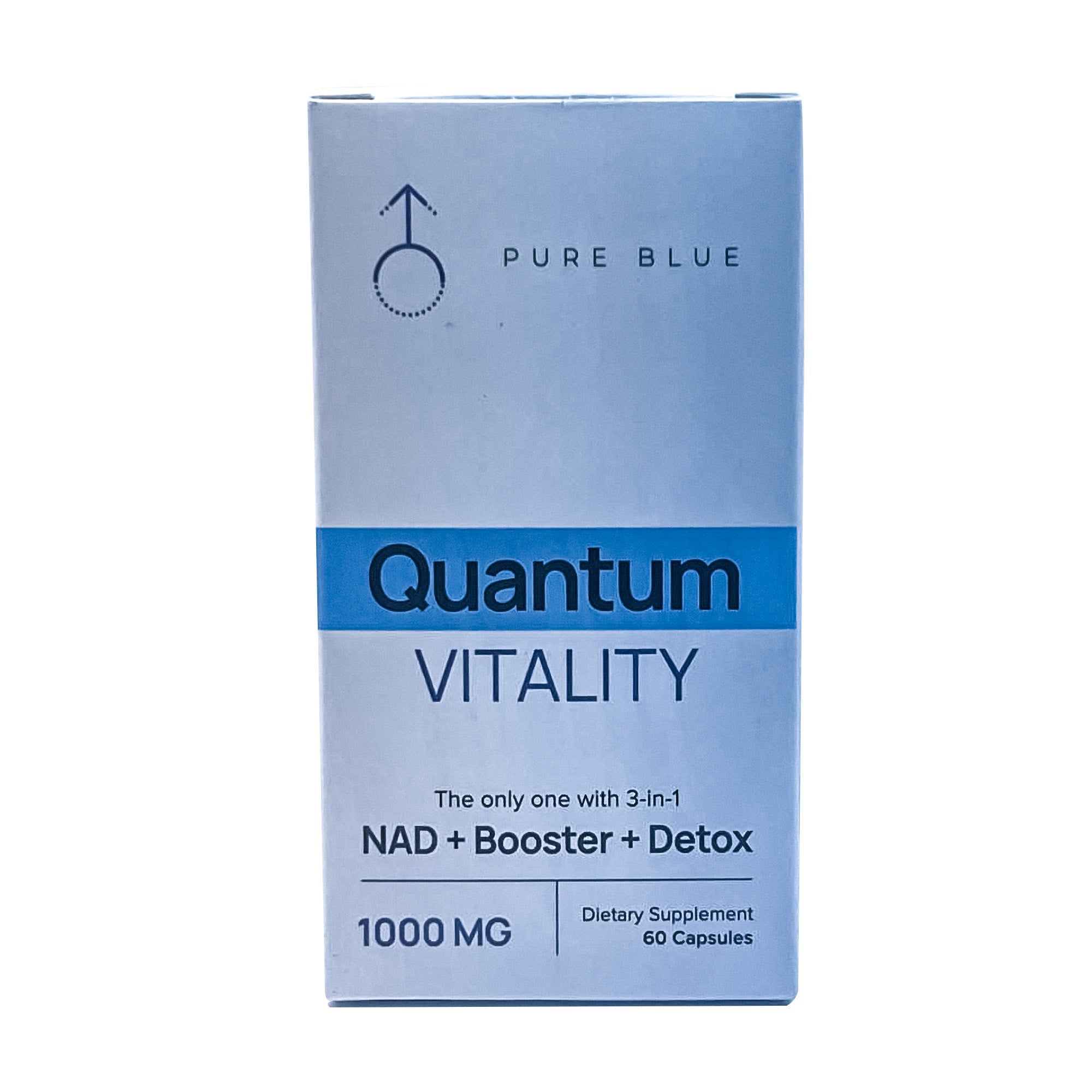
If a supervised IV series isn’t accessible or you’re simply looking for a sustainable oral maintenance approach, Pureblue’s Quantum Vitality NAD+ Booster+ Detox is built specifically for that role, supporting the same NAD+ pathways discussed throughout this article as part of a daily routine rather than a clinic visit.
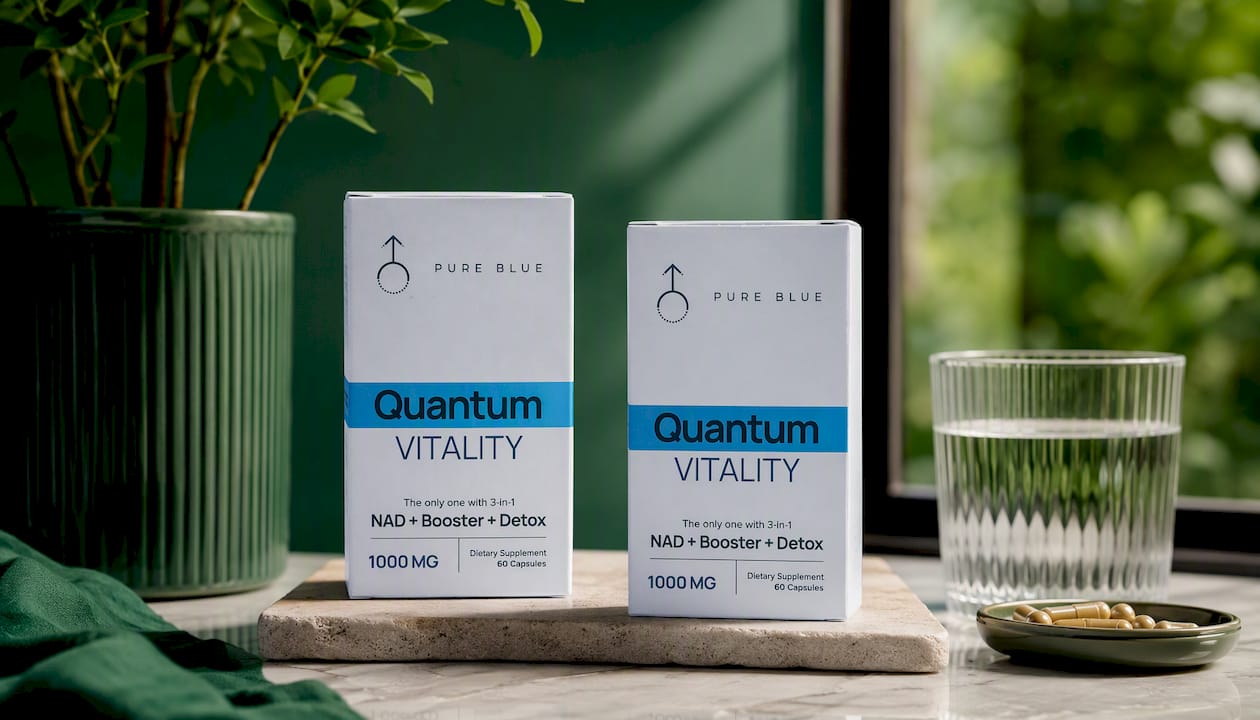
Pure Blue reports a 4.9 out of 5 customer satisfaction rating, though as with any supplement, individual results vary and this product is not intended to diagnose, treat, or cure brain fog or any medical condition. It’s formulated to support the NAD+ pathways your body already relies on for energy and mental clarity, particularly useful as maintenance after any clinical loading protocol you’ve discussed with a doctor.
If you’re weighing where to start, try the (Free) Quantum Vitality NAD+ Booster+ Detox offer for a lower-friction way to see how the formula fits your routine, and talk to your clinician before adding it if you’re managing a chronic condition or taking prescription medication.
Frequently Asked Questions
Does NAD+ actually help brain fog, or is it mostly marketing? The mechanistic case is real: NAD+ fuels mitochondria and activates protective sirtuin enzymes. But direct human evidence for cognitive improvement specifically is still limited, so treat claims of guaranteed mental clarity with skepticism.
How long does it take to notice results from NAD+ supplements? Oral precursors like NR and NMN typically need at least 10 weeks of consistent use before people report changes in fatigue and sleep quality, based on the December 2025 randomized trial. IV infusions can produce subjective effects within hours to days, according to clinic reports, though those aren’t from controlled studies.
What’s the difference between NAD+ and NADH supplements? NAD+ is the oxidized form your cells use to accept electrons during metabolism; NADH is the reduced form after electrons have been donated. Most supplements target NAD+ precursors like NR and NMN rather than NADH directly.
Is NAD+ IV therapy safe? It carries a real risk-benefit profile and is not FDA-approved for treating brain fog, which means it should only be done under medical supervision. Common side effects include flushing, nausea, headache, and chest tightness, especially with fast infusion rates.
Can I raise my NAD+ levels naturally without supplements? Yes. Consistent sleep, regular exercise, and an anti-inflammatory diet all support your body’s natural NAD+ production and are a reasonable first step before or alongside any supplement or IV protocol.
Who should avoid NAD+ therapy? People undergoing active cancer treatment, especially those on PARP inhibitors, should talk to their oncology team first. Anyone on complex medications or managing a chronic condition should check with their clinician before starting oral supplements or IV protocols.
This article is general information, not a substitute for advice from a qualified doctor. Consult a qualified healthcare professional about your own circumstances before acting on anything here.
Sources
When reading any primary study yourself, check the sample size, whether the endpoint measured fatigue or actual cognitive testing, and how long participants were followed before drawing conclusions.