Cart
0

The best time to take NAD+ is in the morning through early afternoon, ideally within an hour or two of waking and before roughly 2 PM. That window lines up with your body’s natural active phase, when NAD±dependent enzymes are already ramping up cellular energy production. A few exceptions matter, though.
- Delivery form changes the math. IV or injection NAD+ hits your system fast and hard, so clinics schedule it earlier than an oral capsule you might take with lunch.
- High-dose clinical protocols (think IV infusions for detox or recovery) often run on tighter morning windows under supervision.
- Your chronotype matters. A confirmed night owl’s “morning” might start closer to 10 AM, and that’s fine.
- Sleep-sensitive people should stop earlier, since NAD+ can be mildly stimulating for some.
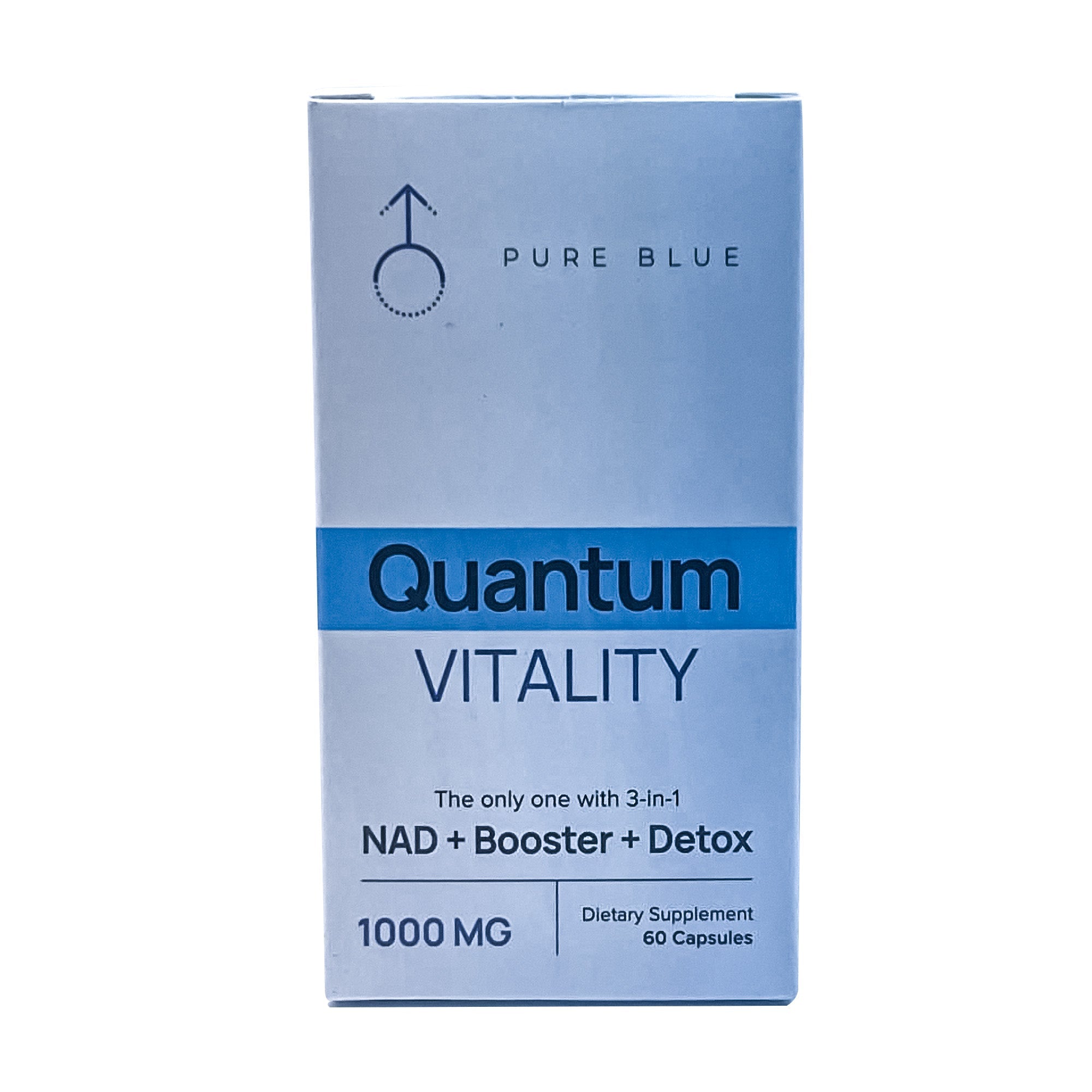
For daily maintenance, a product like Quantum Vitality NAD+ Booster+ Detox is built for a simple morning routine, with a free trial version available if you want to test the timing before committing.
Key Takeaways
Morning to early afternoon dosing aligns with active-phase circadian biology, and the right specific window depends on your delivery form, dose size, and personal sleep sensitivity.
| Point | Details |
|---|---|
| Default window | Take NAD+ within 1 to 2 hours of waking, and no later than early afternoon for most forms. |
| Evening dosing is risky | Late doses can disrupt sleep onset for some people; reserve them for shift workers or clinician-directed cases. |
| Split doses for higher amounts | Divide morning and early afternoon doses if you’re on a higher total daily amount or notice side effects. |
| Form changes timing | IV and IM act fast and get scheduled earlier in the day; oral forms are more flexible but slower acting. |
| Pureblue’s role | Quantum Vitality NAD+ Booster+ Detox is organic, third-party tested, and formulated for a simple daily morning routine. |
Table of Contents
- When to Take NAD+ Supplements: What the Circadian Science Says
- How Should You Take NAD+ in the Morning?
- Should You Split Your NAD+ Dose Throughout the Day?
- Is It Ever a Good Idea to Take NAD+ at Night?
- When Should You Take NAD+ Before or After a Workout?
- Does the Best Time to Take NAD+ Depend on the Form?
- How Often Should You Take NAD+ and What Schedule Fits You?
- What Are the Timing-Related Side Effects to Watch For?
- How Pureblue’s Quantum Vitality Fits Into a Morning Routine
- How to Run Your Own 4-Week NAD+ Timing Test
- Should You Try Quantum Vitality for Your Morning NAD+ Routine?
- Sources
When to Take NAD+ Supplements: What the Circadian Science Says
Your cells don’t run on a flat, 24-hour hum. They run on a rhythm, and NAD+ is one of the molecules keeping time. Levels of NAD+ rise and fall across the day, tracking closely with your circadian clock genes and the enzyme NAMPT, which controls the rate-limiting step in how your body recycles NAD+ from its building blocks. NAMPT activity itself oscillates on a roughly 24-hour cycle, which means the raw material for NAD+ production isn’t equally available at 7 AM and 11 PM.
That oscillation connects directly to sirtuins, the family of proteins that regulate metabolism, DNA repair, and inflammation, and that depend on NAD+ to function. When NAD+ is abundant, sirtuins work harder. When it dips, so does their output. This is the mechanistic reason timing isn’t just a marketing angle. It’s baked into the biochemistry.
The strongest evidence for time-of-day effects still comes from animal research. In one study, researchers found that dosing NAD+ during the active phase produced better glucose homeostasis and weight outcomes than dosing during the rest phase, with hepatic NAD+ levels rising within an hour of administration. The timing of the dose was also able to shift peripheral clock phases in the liver, altering downstream metabolic signaling pathways like AMPK and mTORC1.
“The active-phase dosing improved glucose tolerance and reduced weight gain compared to rest-phase dosing, and NAD+ levels in the liver rose within an hour of injection.” That single finding is the closest thing to a smoking gun for chronotherapy with NAD+, even though it comes from rodents, not people.
Human data hasn’t caught up yet. Reviews connecting NAD+ metabolism to circadian regulation lay out the mechanism clearly, but large-scale human trials testing time-of-day as a deliberate variable remain scarce. Most human studies measure safety and biomarker shifts, not whether taking NAD+ at 8 AM beats 8 PM. So the morning recommendation rests on solid mechanistic footing and consistent clinical practice, not a stack of randomized human trials. Worth knowing before you treat any timing rule as gospel.
How Should You Take NAD+ in the Morning?
Morning is where most of the practical upside sits, and for good reason: your cortisol is naturally rising, your metabolism is waking up, and NAD±dependent pathways are already primed to work harder. Aim for one of these windows depending on your form and goals.
- Within 1 to 2 hours of waking for oral capsules, gummies, or sublingual drops, which gives the compound time to work before your energy dips mid-morning.
- Between 7 and 10 AM if you’re following a more structured supplement schedule and want consistency day to day.
- 8 AM to 2 PM for clinic-based IV or injection sessions, which is the window most infusion clinics default to for active-phase alignment.
Whether you take NAD+ on an empty stomach or with food depends heavily on the form. Oral precursors like NR and NMN are sometimes recommended on an empty stomach for faster absorption, but if you’re prone to nausea or stomach upset, taking them with a light breakfast usually solves it without meaningfully hurting absorption. Sublingual and liposomal formulas are more forgiving either way since they bypass a chunk of digestive breakdown. If you get an uneasy stomach on an empty-stomach protocol, cutting the dose in half for a few days or shifting it 15 to 20 minutes after your first bite of food is a simple fix most people don’t need long term.
Pairing NAD+ with your morning coffee is common and generally fine. Both compounds nudge cellular energy pathways, though there’s no evidence they amplify each other. If you work out in the morning, taking NAD+ 30 to 60 minutes before you start gives your mitochondria a head start, though timing this precisely matters more for performance goals than for general wellness use.
Pro Tip: If you’re new to NAD+, start your morning dose on a day without a big workout planned. That way you can tell whether any stomach sensitivity is coming from the supplement itself before you add exercise into the mix.
Should You Split Your NAD+ Dose Throughout the Day?
Split dosing exists to solve one problem: higher total daily amounts can cause noticeable side effects, like flushing, jitteriness, or a stomach ache, when taken all at once. Breaking the dose into two smaller servings smooths out the curve.
- A common pattern is half your dose in the morning and the other half in early afternoon, typically between noon and 2 PM.
- If you’re sleep-sensitive, finish your second dose by 5 to 6 PM at the latest to avoid interfering with sleep onset later that night.
- Split dosing tends to make the most sense for people on higher total daily amounts, long workdays where energy needs to stretch further, or anyone who’s noticed side effects from a single larger dose.
- If you’re only taking a standard daily maintenance dose, like what you’d get from a gummy or single capsule serving, splitting usually isn’t necessary. Save it for when you’re scaling up.
Consistency matters more than precision here. Taking your two doses at roughly the same times each day, give or take 30 minutes, helps your body settle into a predictable rhythm and makes it easier to notice whether the schedule is actually helping. If you’re experimenting with a new split schedule, give it at least a week before judging whether it’s working. A single day of feeling off doesn’t tell you much, but a pattern across five or six days does. Keep a simple note of your energy levels and how you slept, since that’s the easiest way to catch a schedule that’s quietly working against you.
Is It Ever a Good Idea to Take NAD+ at Night?
There’s a niche argument for evening NAD+: some people report better next-day recovery when they take it before bed, theoretically supporting the body’s overnight repair processes. That idea has more anecdotal traction than research behind it, and the tradeoff is real. NAD+ can be mildly activating, and for a meaningful share of people, an evening dose translates into a harder time falling asleep or shallower sleep overall.
If you want to test evening dosing anyway, a few guardrails help.
- Start with a lower dose than you’d take in the morning, since sleep sensitivity tends to scale with amount.
- Cut off any evening dose 4 to 6 hours before your usual bedtime, which for most people means finishing by early evening rather than right before turning in.
- Reserve high-dose evening protocols, like IV infusions, for situations where a clinician is directly overseeing the schedule.
- Night-shift workers are the clearest exception. Your “morning” is whenever your wake window starts, even if that’s 9 PM. Align the dose with your personal circadian phase, not the clock on the wall.
For nearly everyone else, the honest advice is to treat evening dosing as an experiment, not a default. If a week of testing costs you sleep quality, that’s your answer.
When Should You Take NAD+ Before or After a Workout?
Timing NAD+ around exercise is one of the more actionable decisions you’ll make, because the windows are tight and the reasoning is straightforward.
- Pre-workout: Take your dose 30 to 60 minutes before you start training. This gives your mitochondria time to access more available NAD+ right as your energy demands spike, which is the theoretical basis for using it as a performance support rather than a pure recovery tool.
- Post-workout: If you’re using NAD+ primarily for recovery, taking it within 30 to 45 minutes after your session, alongside your usual post-workout protein, may support the repair processes your body is already ramping up. There’s no strong evidence this beats pre-workout timing for most people, so this comes down to which goal matters more to you: performance or recovery.
- During a fasted window: If you’re intermittent fasting, you don’t need to break your fast to take most NAD+ forms, but if you notice nausea or lightheadedness on an empty stomach, shifting your dose to your first meal is a reasonable fix. Fasted dosing can occasionally amplify insulin sensitivity effects, so if you’re managing blood sugar closely, taking it with food is the safer default.
None of these windows are rigid. They’re starting points based on how your body processes energy substrates around exercise, and the right one for you depends on whether you’re chasing a performance edge or just trying to bounce back faster.
Does the Best Time to Take NAD+ Depend on the Form?
Yes, and this is one of the most overlooked parts of NAD+ timing advice. Not all delivery methods behave the same way once they’re in your system, and the differences directly change when you should take them.
Oral precursors like NR and NMN have to survive digestion before your body converts them into usable NAD+, so absorption is slower and less complete. Taking them 30 to 60 minutes before breakfast, or with a very light snack if you’re prone to stomach upset, gives them the best shot at absorption without interfering with your first real meal. Sublingual and liposomal versions skip part of that digestive bottleneck by absorbing through tissue in your mouth or via lipid-based delivery, which is why they’re often recommended in the same morning window but with a bit more flexibility on food timing. Nasal sprays work similarly, offering a faster route into circulation, and are typically used first thing in the morning for the same active-phase alignment.
IV and intramuscular delivery are in a different category entirely. Because they bypass digestion completely and reach near-complete bioavailability almost immediately, the effects show up fast and can feel more intense. That’s exactly why clinics schedule these sessions in the late morning to early afternoon rather than at the end of the day. A dose that hits your system hard at 4 PM is a very different experience than one that hits at 4 AM.
| Delivery Form | Typical Timing Window | Why |
|---|---|---|
| Oral NR/NMN | 30–60 min before breakfast | Slower absorption, benefits from digestive runway |
| Sublingual/liposomal | Morning, with flexible food timing | Partially bypasses digestion, faster onset |
| Nasal spray | Morning | Fast systemic absorption |
| IV/IM | Late morning to early afternoon | Near-complete bioavailability, strong and immediate effect |
If you’re transitioning off a clinic-based IV protocol and moving to daily oral maintenance, expect the effect to feel more gradual. That’s normal, not a sign the oral form isn’t working. It’s simply a slower-onset delivery method doing its job over a longer timeline.
How Often Should You Take NAD+ and What Schedule Fits You?
Most people looking for daily maintenance do best with a single morning dose, which is the simplest schedule to stick with and the easiest to evaluate. If you’re on a higher total daily amount or noticing side effects from a single serving, split dosing between morning and early afternoon is the next step up. Clinical IV protocols often follow a different structure entirely: an induction phase of several consecutive daily sessions, followed by a maintenance phase spaced out to once every few weeks. Intramuscular injection schedules vary widely by provider and goal, so that’s a conversation for whoever is administering them.
A simple way to choose your own schedule:
- Define your goal (daily energy, workout support, or a specific clinical protocol).
- Pick your form based on convenience, budget, and how fast you want results.
- Start with the standard single dose for your chosen product before considering splitting.
- Add a second dose only if needed, based on tolerability or total daily amount.
- Get medical oversight if you’re considering IV, IM, or any high-dose protocol.
Give any new schedule 2 to 8 weeks before deciding whether it’s working. Two weeks is usually enough to notice a shift in energy or sleep; eight weeks is a fairer test for anything related to longer-term markers like recovery or workout capacity.
What Are the Timing-Related Side Effects to Watch For?
Most people tolerate NAD+ well, but a handful of side effects are common enough to plan around, and several of them are directly tied to when you take your dose rather than how much.
- Mild nausea or stomach discomfort, more common with oral forms taken on an empty stomach.
- Flushing or a warm sensation, typically dose-dependent and more noticeable with IV or higher oral amounts.
- Sleep disruption, almost exclusively reported with evening or late-afternoon dosing rather than morning use.
- Jitteriness or overstimulation, which tends to show up in people taking higher doses without splitting them.
Because rigorous randomized trials on timing are still limited, most of this guidance comes from clinical practice patterns and consistent user-reported trends rather than large-scale data. That’s a meaningful caveat, not a reason to dismiss it.
If you’re on medications that affect liver metabolism, have a complex medical history, or are considering a high-dose IV protocol, talk to a clinician before starting rather than after you notice a problem. For everyone else, simple mitigation works well: lower the dose, split it into two smaller servings, or shift it to be taken with food if your stomach is sensitive. If side effects persist past a week of these adjustments, that’s your signal to stop and reassess rather than push through.
How Pureblue’s Quantum Vitality Fits Into a Morning Routine
Quantum Vitality NAD+ Booster+ Detox is built around the same morning-first logic this article has walked through. It’s formulated with organic ingredients, manufactured in an FDA-registered facility, and third-party tested for purity and potency, so what’s on the label matches what’s actually in the bottle.
- Organic formulation with no artificial fillers, aligning with a clean daily routine rather than a clinical protocol.
- Third-party testing for purity and potency, verified independently rather than taken on faith.
- FDA-registered manufacturing, which speaks to production standards even though it doesn’t mean FDA approval of the product itself.
- Designed for daily use, fitting naturally into a single morning dose or a split schedule if you’re pairing it with other energy-support habits.
None of this replaces a conversation with your doctor if you’re managing a health condition or considering a high-dose clinical protocol. For daily maintenance use, though, a consistent morning routine with a tested product is a reasonable, low-friction place to start.
How to Run Your Own 4-Week NAD+ Timing Test
The fastest way to find your personal best window isn’t reading more studies. It’s running a small test on yourself. Spend two weeks taking NAD+ only in the morning and jot down a quick daily note on your energy and how you slept. Then switch to a split-dose or shifted schedule for two more weeks and compare the same two things.
Track sleep onset (how long it takes you to fall asleep), overall sleep quality, daytime energy, workout performance if that applies to you, and any stomach discomfort. Patterns usually show up by day 10 to 12 of each phase.
If you notice new sleep problems, persistent GI issues, or no benefit at all after a full four weeks, that’s worth a conversation with a clinician rather than more self-experimentation.
Should You Try Quantum Vitality for Your Morning NAD+ Routine?
If you’ve made it this far, you already know the honest answer: morning dosing is the sensible default, and a clean, tested product makes that default easier to stick with. Quantum Vitality NAD+ Booster+ Detox is formulated as a 3-in-1 NAD+ booster and detox blend, made with organic ingredients and manufactured in an FDA-registered facility, with third-party testing behind every batch.
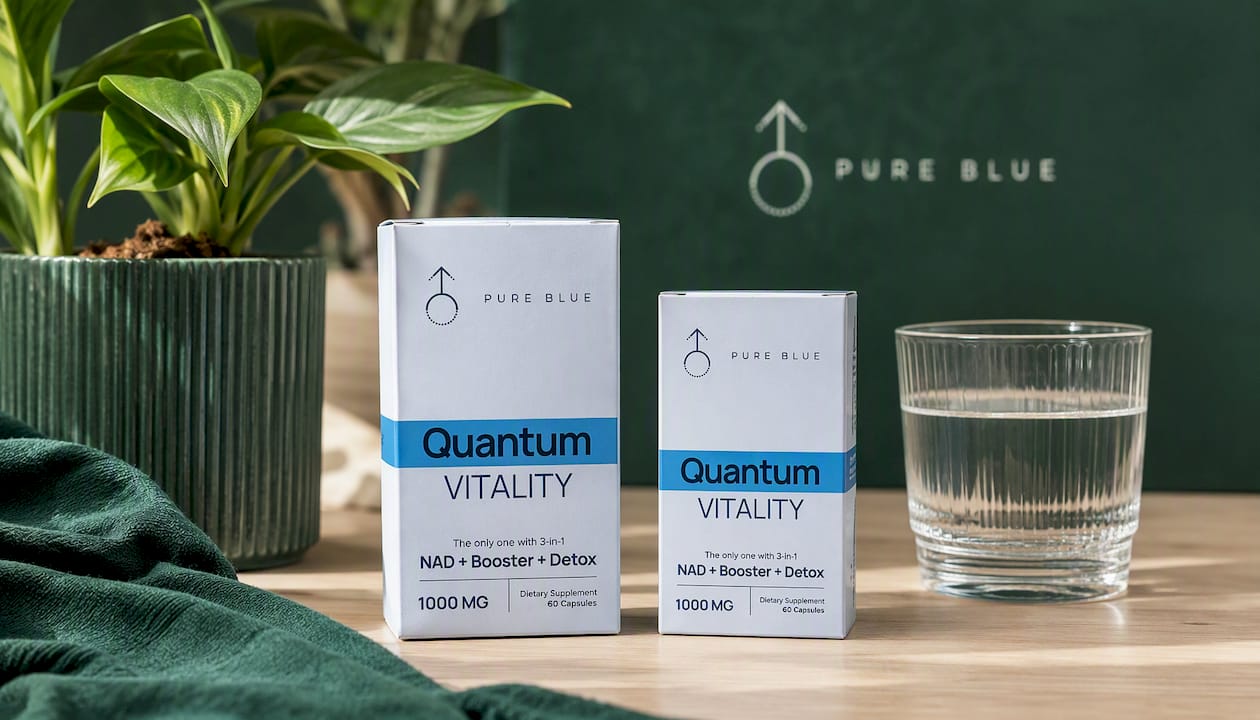
It’s built for the exact routine this article recommends: one dose in the morning, or split between morning and early afternoon if you’re scaling up. If you’d rather test the timing before committing to a full purchase, the free trial offer is a low-risk way to see how your body responds. For clinical-grade regimens or high-dose protocols, talk to your doctor first. But for daily maintenance, Quantum Vitality NAD+ Booster+ Detox is ready for your morning routine starting tomorrow.
Sources
- Review: NAD+ metabolism and circadian clocks (PMC review)
This article is general information, not a substitute for advice from a qualified doctor. Consult a qualified healthcare professional about your own circumstances before acting on anything here.