Cart
0

NAD+ is the coenzyme your cells actually run on. NMN is a precursor molecule your body converts into NAD+ after you swallow it. That distinction settles most of the confusion right away: taking oral NAD+ directly does very little, because the molecule is too large and too fragile to survive digestion intact, while oral NMN reliably raises blood NAD+ levels in short-term human trials.
If your goal is to raise cellular NAD+, an oral precursor, either NMN or nicotinamide riboside (NR), is the more practical starting point than oral NAD+ itself. IV NAD+ therapy exists too, and it does raise blood levels fast, but it’s clinical, expensive, and backed mostly by small pharmacokinetic studies rather than long-term outcome data.
Here’s the short version before you dig into the mechanisms:
- NAD+ = the active coenzyme cells use for energy production and DNA repair.
- NMN = a direct precursor your body converts into NAD+ through the salvage pathway.
- Oral NAD+ gets broken down in digestion before it can act.
- Oral NMN and NR both raise blood NAD+ in weeks, not months.
- IV NAD+ works faster but costs more and lacks large controlled trials.
- Most health-conscious adults should start with an oral precursor and monitor results before considering anything more invasive.
Key Takeaways
Oral NMN and NR reliably raise blood NAD+ in human trials, while oral NAD+ is largely degraded before absorption, making precursors the more practical starting point for most readers.
| Point | Details |
|---|---|
| NAD+ vs NMN roles | NAD+ is the active coenzyme; NMN is a precursor your body converts into NAD+ through the salvage pathway. |
| Oral NAD+ underperforms | The NAD+ molecule breaks down in digestion, so oral NAD+ rarely raises blood levels the way precursors do. |
| Biomarkers move, function lags | A 2024 meta-analysis found consistent NAD+ increases but no significant benefit on glucose, insulin, or lipids. |
| Dosing and safety | Trials tested 250–1,200 mg/day of NMN over 4–12 weeks, with mild GI effects as the main concern. |
| Pure Blue’s approach | Quantum Vitality NAD+ Booster+ Detox offers third-party tested, organic NAD+ support built around this evidence base. |
Table of Contents
- NAD vs NMN: How the Conversion Pathway Actually Works
- Which Delivery Method Actually Raises NAD+ Fastest?
- Do Human Trials Show Real Benefits, Not Just Higher NAD+?
- What Dose and Side Effects Should You Expect?
- How Should You Decide Between NMN, NR, or IV Therapy?
- Does NMN or NAD+ Interact With Any Medications?
- What Happens if You Take NAD+ Precursors Long-Term?
- Why Pure Blue Built Quantum Vitality Around This Evidence
- Ready to Try an Evidence-Aligned NAD+ Formula?
- Frequently Asked Questions
- Sources
NAD vs NMN: How the Conversion Pathway Actually Works
The biochemistry here isn’t complicated once you see the sequence. Your body converts NR into NMN, and NMN into NAD+, using a chain of enzymes called the salvage pathway. Three names matter: NRK (nicotinamide riboside kinase) phosphorylates NR into NMN, NAMPT (nicotinamide phosphoribosyltransferase) recycles nicotinamide back into NMN, and NMNAT (nicotinamide mononucleotide adenylyltransferase) performs the final step, turning NMN into usable NAD+.
That’s the whole story of “NAD+ and NMN comparison” boiled down to enzymes: NMN sits one step away from finished NAD+, while NR sits two steps away. In theory, that should make NMN slightly more efficient. In practice, human data doesn’t clearly back that up yet.
Where the science gets messier: the transporter debate. A 2019 mouse study identified a protein called Slc12a8 as a direct NMN transporter, letting NMN enter cells without first breaking down into NR. That finding got a lot of attention because it offered a mechanism for how oral NMN could work efficiently. The catch: this was mouse tissue, and whether the same transporter functions the same way in humans is still contested. Most researchers now think NMN gets converted to NR outside the cell before entering, then reassembled into NAD+ inside, rather than crossing the membrane as NMN itself intact.
Why does this matter practically? Because it explains why NR has a longer track record in human trials. NR doesn’t need a debated transporter. It uses well-established uptake routes that have been studied for years. That’s part of why one small crossover study (just six participants) found NR raised blood NAD+ more than NMN did in the same timeframe. It’s a tiny sample, not a verdict, but it lines up with the mechanistic picture.
NAD+ itself is the reason oral NAD+ supplements don’t perform the way people expect. The molecule is large, charged, and doesn’t survive the digestive environment well. Enzymes in your gut break it down into smaller pieces, mostly nicotinamide, before it ever reaches your bloodstream intact. This is documented clearly in the foundational research on NMN’s absorption and conversion: the smaller precursor molecules survive the trip; the finished coenzyme generally doesn’t.
Pro Tip: If a supplement label claims “pure NAD+” for oral use, ask how it survives stomach acid and liver first-pass metabolism. If the answer isn’t clear, you’re likely paying a premium for a molecule that breaks down before it does anything.
- NR → NMN → NAD+ is the core salvage pathway sequence.
- NAMPT recycles nicotinamide, the byproduct of NAD+ consumption, back into the pathway.
- The NMN transporter Slc12a8 is confirmed in mice, not confirmed in humans.
- Oral NAD+'s size and charge make it a poor candidate for direct absorption.
Which Delivery Method Actually Raises NAD+ Fastest?
Delivery method changes everything about whether a NAD+ supplement does anything measurable. Here’s how the four common routes stack up in practice.
Oral NMN and oral NR both show consistent, replicated increases in blood NAD+ across short-term human trials, typically over 4 to 12 weeks. The pharmacokinetic evidence is fairly consistent: these precursors survive digestion well enough to raise circulating NAD+ in a dose-dependent way. Neither route has shown itself to be dramatically superior to the other in large human comparisons, mostly because those head-to-head trials barely exist yet.
Oral NAD+ is the weak link. Since the molecule breaks down before absorption, most of what you swallow never reaches systemic circulation as intact NAD+. You’re effectively paying for nicotinamide, a much cheaper compound, dressed up as something more sophisticated.
IV NAD+ skips digestion completely. It goes straight into the bloodstream, so it raises circulating NAD+ faster and to a higher degree than any oral route. Clinics offering IV NAD+ therapy, like the infusion protocols described by Ozari Health, point to this rapid effect as the appeal. But the supporting research is thin: published IV studies tend to involve just six to 37 participants, and most are structured as pharmacokinetic or tolerability pilots rather than trials measuring meaningful clinical outcomes. Clinics extrapolate benefit from those small studies, which is a leap worth knowing about before you pay clinical prices.
Cost tracks invasiveness almost perfectly. A month of oral NMN or NR supplementation typically runs a fraction of what a single IV NAD+ infusion costs, and infusions usually need to be repeated regularly to sustain any effect. For most people without a specific clinical reason to seek IV therapy, that math alone makes oral precursors the more sustainable option.
Here’s the practical breakdown:
- Oral NMN: convenient, well-tolerated, growing trial base, moderate cost.
- Oral NR: longest trial history, confirmed uptake mechanism, similar cost to NMN.
- Oral NAD+: largely degraded before absorption, weakest evidence for direct effect.
- IV NAD+: fastest and largest increase in circulating NAD+, highest cost, thinnest outcome data, requires clinical supervision.
None of these routes have been shown to reverse aging or guarantee dramatic energy gains. They differ mainly in how reliably they raise a biomarker, not in how conclusively they’ve been shown to change how you feel or function long-term. That distinction shows up clearly once you look at what the actual clinical trials measured.
Do Human Trials Show Real Benefits, Not Just Higher NAD+?
Human trials on NAD supplementation benefits are smaller and shorter than most people assume. Typical studies enroll small numbers of participants and run for a few weeks to several months. That’s enough time to see whether blood NAD+ moves. It’s not enough time to see whether grip strength, insulin sensitivity, or lipid profiles meaningfully change in a way that holds up statistically.
The pooled numbers: A 2024 meta-analysis covering roughly 342 participants across multiple RCTs found no significant effect on fasting glucose, fasting insulin, HbA1c, or lipid profile from NAD+ precursor supplementation. Muscle strength showed a marginal signal that lost statistical significance once researchers ran sensitivity analyses.
That’s the gap between what marketing implies and what pooled data supports. NAD+ levels go up reliably. That part of the evidence is solid and repeated across multiple independent trials. What doesn’t reliably follow is a corresponding shift in the outcomes people actually care about, weight, blood sugar control, physical performance, or subjective energy.
Why the disconnect? A few explanations show up consistently in the literature:
- Surrogate endpoint problem: blood NAD+ is easy to measure and moves quickly, but it’s a biomarker, not a functional outcome. Raising a biomarker doesn’t guarantee downstream benefit.
- Short trial windows: most studies stop at 12 weeks. Metabolic and strength changes, if they exist, may need longer exposure to show up.
- Small, heterogeneous samples: combining trials with different doses, populations, and measurement tools weakens statistical power to detect real effects.
- Publication and framing bias: studies funded or designed around a specific hypothesis sometimes emphasize the biomarker result over the null functional finding.
A separate review of the RCT landscape makes a related point: the field genuinely lacks large, long-duration outcome trials. Most of what exists functions more like proof-of-concept work, confirming that these compounds do something measurable, than like the kind of multi-year outcome trial that would settle questions about anti-aging or disease prevention.
None of this means NAD+ precursors don’t do anything. It means the evidence currently supports a narrower claim than most marketing makes: these compounds reliably raise a biomarker linked to cellular energy metabolism, and the leap from that biomarker to lived, measurable benefit hasn’t been nailed down in controlled human data yet. Researchers reviewing this literature have cautioned specifically against marketing that implies anti-aging cures, since clinically meaningful outcomes remain unproven even as the biochemical markers move consistently in the expected direction.
What Dose and Side Effects Should You Expect?
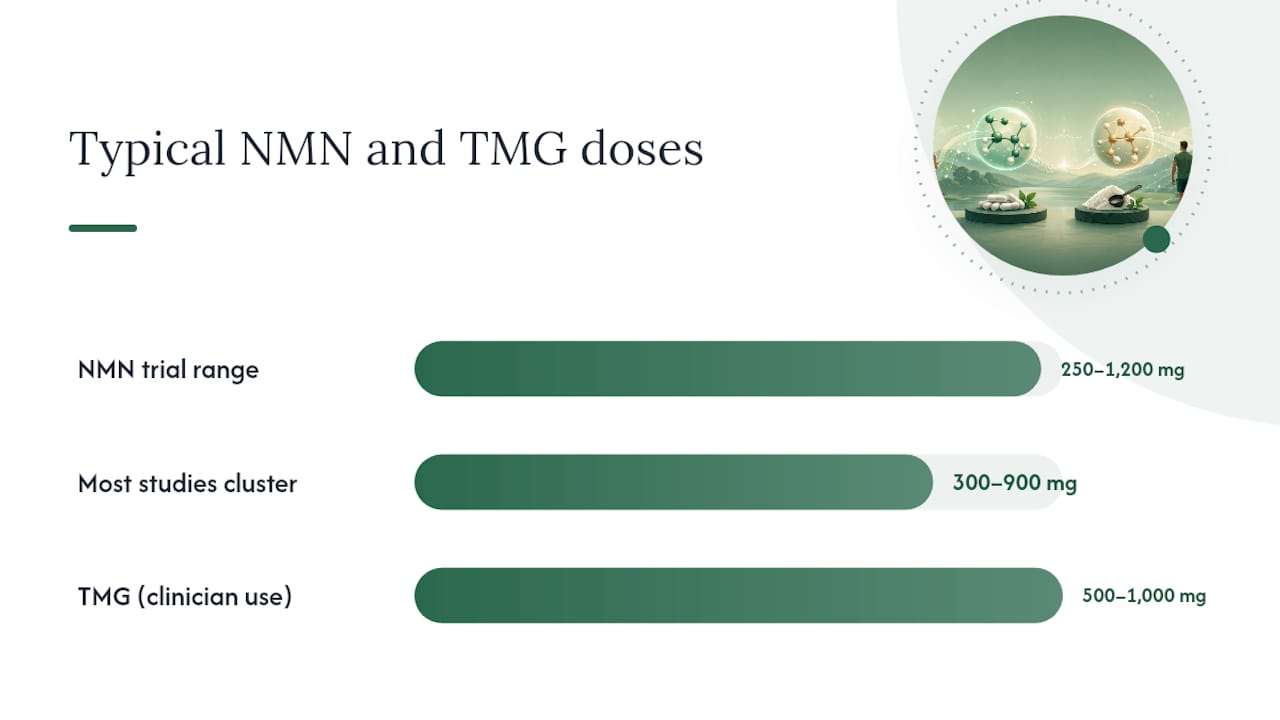
Trial doses for NMN typically range from 250 mg to 1,200 mg per day, with most studies clustering around 300 to 900 mg. Researchers usually reassess outcomes somewhere between four and twelve weeks, which is also roughly the window most people should give a new supplement before deciding whether it’s doing anything noticeable.
Safety data across these trials is reassuring on the acute side. Doses up to 1,200 mg per day were generally well tolerated, with no serious adverse events reported within the trial windows studied. The most common complaints were mild and gastrointestinal: nausea, bloating, occasional diarrhea, usually at the higher end of the dose range. None of the published human trials to date have flagged serious toxicity concerns at these doses, though “no serious adverse events in a 12-week trial” isn’t the same claim as “safe indefinitely at any dose,” and long-term safety data simply doesn’t exist yet.
There’s a subtler consideration that gets less attention than it deserves: methylation burden. When your body metabolizes nicotinamide, a byproduct of NAD+ turnover, it consumes methyl groups donated by S-adenosylmethionine (SAM). Push a lot of NAD+ precursor through that pathway consistently, and you’re placing extra demand on your body’s methyl-donor supply. Clinicians working in this space frequently recommend co-supplementing with trimethylglycine (TMG), also known as betaine, to help replenish those methyl groups and keep homocysteine levels stable.
- Typical NMN trial dose: 250 to 1,200 mg per day.
- Typical reassessment window: 4 to 12 weeks.
- Most common side effects: mild nausea, bloating, occasional GI discomfort.
- Practical mitigation: TMG co-supplementation, commonly in the 500 to 1,000 mg per day range, used by clinicians to offset methylation demand.
Pro Tip: If you’re taking a higher-dose NAD+ precursor regimen consistently for more than a few weeks, pairing it with a methyl donor like TMG is a low-cost, low-risk way to hedge against the methylation load, even though controlled trial evidence for TMG’s specific benefit here is still limited.
How Should You Decide Between NMN, NR, or IV Therapy?
Turning all of this into an actual decision doesn’t require a lab coat. It requires matching the evidence to your specific goal and risk tolerance.
- Start with NR if you value the deepest evidence base. NR has a longer track record of confirmed cellular uptake and more replicated trials than NMN, even though newer NMN research has caught up considerably and its regulatory standing became clearer through 2025.
- Consider NMN if you have a specific metabolic or muscle-related goal and want clinician oversight. The mechanistic case for NMN is strong even if the transporter debate is unresolved, and it remains the more studied option for people specifically interested in the “NMN vs NAD supplements” question as it relates to metabolic support.
- Reserve IV NAD+ for clinical contexts, not routine wellness. Its speed and magnitude are real, but the cost and thin outcome data make it a poor first move for most people just starting to explore NAD supplementation benefits.
- Set a defined trial window. Pick a starting dose within trial-tested ranges, commit to eight weeks, and track both objective markers (if accessible, bloodwork) and subjective measures like energy, sleep quality, and recovery time.
- Check the label before you check the results. Third-party testing, transparent sourcing, and manufacturing in a registered facility matter more than flashy percentage claims on the box.
Pro Tip: Keep a simple weekly log of energy, sleep, and workout recovery before you start. Without a baseline, it’s almost impossible to tell whether a subtle improvement eight weeks later is real or wishful thinking.
Does NMN or NAD+ Interact With Any Medications?
NAD+ precursors don’t have a large, well-documented list of drug interactions in the current research, but that’s partly because large-scale interaction studies simply haven’t been done yet, not because interactions have been ruled out. A few situations call for caution.
People on medications that affect methylation or homocysteine metabolism, including certain chemotherapy agents and methotrexate, should talk to a clinician before adding a NAD+ precursor, given the methylation demand these compounds place on the body. Anyone taking diabetes medications should also be cautious: since some trial data suggests NAD+ precursors may have subtle effects on insulin sensitivity in certain subgroups, even though pooled analyses found no significant overall effect on fasting glucose or insulin, monitoring blood sugar more closely during the first few weeks is a reasonable precaution.
Pregnant or breastfeeding individuals should avoid NAD+ precursor supplementation, since no controlled human safety data exists for these populations. The same caution applies to anyone with active cancer or a history of certain cancers, since NAD+ metabolism intersects with cell proliferation pathways that are still being studied in oncology contexts.
If you’re on any prescription medication, particularly anything metabolized by the liver, checking with a doctor or pharmacist before starting NMN or NR isn’t optional caution, it’s basic due diligence given how thin the interaction research still is.
What Happens if You Take NAD+ Precursors Long-Term?
Long-term data is the biggest blind spot in this entire field. Nearly every human trial on NMN or NR runs 12 weeks or less, which means nobody has rigorously tracked what happens after six months, a year, or five years of daily supplementation.
What we do know: blood NAD+ increases documented in short trials appear to require continued supplementation to maintain. NAD+ levels naturally decline with age as part of normal cellular metabolism, so stopping supplementation likely means those levels drift back toward baseline over time, similar to how stopping most supplements reverses their measured effect.
The methylation consideration discussed earlier becomes more relevant, not less, with long-term use. A short 8-week trial might not reveal meaningful methyl-donor depletion, but sustained daily use over months could plausibly matter more, which is part of why clinicians favor pairing extended NAD+ precursor regimens with TMG rather than treating it as optional insurance.
Sustainability also comes down to something less glamorous than biochemistry: whether you’ll actually keep taking it. A supplement with mild GI side effects, an awkward taste, or a complicated dosing schedule tends to get abandoned within a few months regardless of its biochemical merits. The compounds with the best long-term adherence tend to be the ones that are simple to take daily, reasonably priced, and don’t require constant recommitment. That’s a practical factor worth weighing as heavily as the underlying science.
Why Pure Blue Built Quantum Vitality Around This Evidence
Pure Blue designed Quantum Vitality around exactly the gaps this evidence exposes: reliable NAD+ support without overselling what biomarkers alone can prove. That’s the quality bar the research above suggests actually matters, not marketing claims about reversing aging.
Ready to Try an Evidence-Aligned NAD+ Formula?
If you’ve read this far, you already know the honest version of the story: oral precursors are the more practical route to raising NAD+ than oral NAD+ itself, and quality control matters as much as the ingredient list. That’s exactly where Quantum Vitality NAD+ Booster+ Detox fits in.
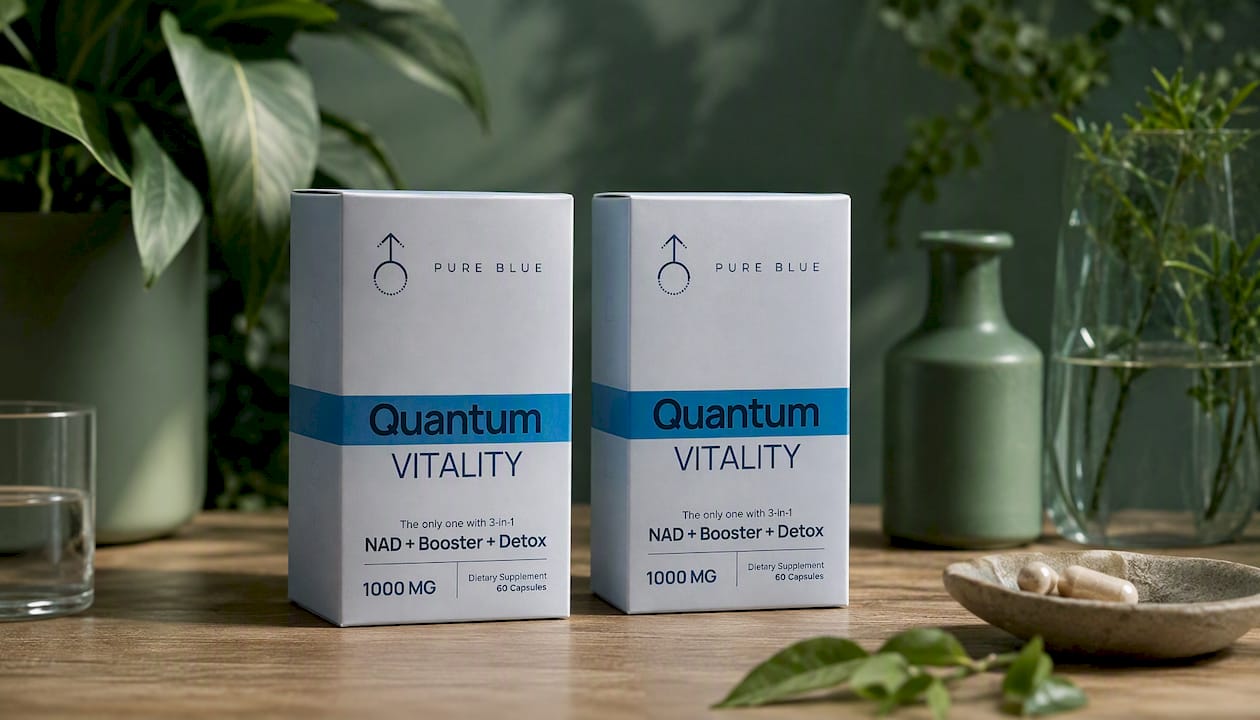
It fits into the dosing and monitoring approach outlined above: a straightforward daily addition rather than a complicated protocol you’ll abandon in three weeks. Pure Blue customers currently report a 4.9 out of 5 satisfaction rating, which lines up with what you’d expect from a formula built on transparency rather than hype.
If you’d rather test it before committing, the free trial offer on Quantum Vitality is the lowest-friction way to see how it fits your routine. Either way, the next step is simple: pick one, start your eight-week tracking window, and see what actually changes.
Frequently Asked Questions
Is NMN better than NAD+ for supplementation? Yes, for oral use. NMN is a precursor your body can absorb and convert into NAD+, while oral NAD+ is mostly broken down during digestion before it can act. If your goal is raising cellular NAD+, NMN or NR is the more effective oral route.
What’s the real difference between NAD and NMN? NAD+ is the finished coenzyme your cells use directly for energy metabolism and DNA repair. NMN is one step upstream, a molecule your body converts into NAD+ through the salvage pathway. You can’t meaningfully supplement with NAD+ orally, but you can with NMN.
How long does it take for NMN to raise NAD+ levels? Human trials typically measure changes within 4 to 12 weeks, with blood NAD+ increases showing up within that window at doses ranging from 250 to 1,200 mg per day. Functional benefits, if any, tend to take longer to assess and are less consistently documented.
Are there side effects to taking NMN or NAD+ supplements? The most commonly reported side effects are mild gastrointestinal symptoms like nausea or bloating, mostly at higher doses. No serious adverse events have been reported in trial windows, though long-term safety data beyond a few months doesn’t yet exist.
Should I take NMN with anything else for better results? Many clinicians recommend pairing higher-dose NAD+ precursor regimens with TMG (trimethylglycine) to offset the methylation demand created by nicotinamide metabolism. This is a practical precaution rather than a proven outcome enhancer, since controlled trial data on TMG co-supplementation specifically is still limited.
This article is general information, not a substitute for advice from a qualified doctor. Consult a qualified healthcare professional about your own circumstances before acting on anything here.
Sources
- PMCID: PMC9036060