Cart
0

Most people tolerate NAD supplements well at typical doses, with mild nausea, headache, GI upset, or flushing (mainly from niacin) being the most common complaints. The bigger risks show up at high doses or with long-term use where evidence is limited, and certain groups, including pregnant women, people with liver disease, and active cancer patients, should talk to a clinician first. Pureblue’s Quantum Vitality NAD+ Booster+ Detox uses third-party tested, organic ingredients to reduce product-quality risk, though that doesn’t replace medical guidance for higher-risk situations.
TL;DR:
- NAD precursors vary significantly in side effects, with niacin causing flushing and potential liver stress at high doses, while NR and NMN are generally better tolerated.
- Most mild side effects like nausea, headache, and GI upset are dose-dependent and often resolve if taken with food or at lower doses.
- High-dose NAD supplements can inhibit DNA repair enzymes and burden methylation pathways, increasing organ stress risks mainly at doses far above typical supplement levels.
- Pregnant women, cancer patients, those with liver or kidney disease, children, and individuals on complex medications should consult a healthcare professional before use.
- Product quality, including third-party testing and being made in FDA-registered facilities, is crucial to mitigate risks before considering dosage or personal health factors.
Table of Contents
- What Are NAD Supplements and Which Precursors Matter?
- Common Mild-to-Moderate NAD Supplement Side Effects
- What the Science Says About High-Dose NAD Precursor Risks
- Who Should Be Cautious or Avoid NAD Supplements
- Dosing, Drug Interactions, and Monitoring for Safety
- NAD Injections and Infusions vs Oral Supplements
- Recognizing Serious Reactions and When to Seek Care
- Where Pureblue Stands on NAD Supplement Safety
- Why “Natural” and “Safe” Aren’t the Same Word
- Choosing a Cleaner Path to NAD Support
- Sources
What Are NAD Supplements and Which Precursors Matter?
Almost no supplement bottle actually contains NAD+ itself. The molecule is too unstable and too large to survive digestion intact, so manufacturers use precursors instead, smaller compounds your body converts into NAD+ through separate metabolic pathways. That distinction matters more than most marketing copy admits, because each precursor carries its own side-effect profile.
The four names you’ll see most often on labels are nicotinamide riboside (NR), nicotinamide mononucleotide (NMN), nicotinamide (NAM, also called niacinamide), and niacin (nicotinic acid). They sound like variations on a theme, but they behave differently in the body:
- Niacin (nicotinic acid) triggers a prostaglandin release that causes the well-known “niacin flush,” a hot, tingling, reddened skin reaction that can start at doses around 500 milligrams.
- Nicotinamide (NAM) doesn’t cause flushing, but at high doses it’s been linked to liver stress and shifts in methyl metabolism, a pathway your cells use for DNA regulation and detoxification.
- NR and NMN are newer to the consumer market and generally described as better tolerated in short trials, though the human data set is still small compared to niacin’s decades of clinical use.
This is why the phrase “NAD booster” tells you almost nothing on its own. Two products marketed nearly identically, one built on niacin, the other on NR, can produce completely different experiences in your body. The practical move is simple: flip the bottle over and see which precursor is actually listed, then research that specific compound rather than the umbrella term. Added ingredients matter too. Some formulas stack in B vitamins, amino acids, or detox botanicals that can independently cause stomach upset or interact with medications, so the full ingredient list, not just the NAD-related headline, deserves a look before you start.
Common Mild-to-Moderate NAD Supplement Side Effects
The most frequent NAD supplement side effects reported in trials and consumer feedback are, thankfully, the least dangerous kind. Clinical resources describe a fairly consistent list across precursors, and short-term studies back that up: NADH and precursor trials generally found participants tolerated dosing well, with few serious adverse events reported at the doses studied.
Here’s what actually shows up most often:
- Nausea and stomach discomfort. The single most reported complaint across precursor types, usually mild and often tied to taking the supplement on an empty stomach.
- Headache. Reported at a noticeably higher rate than placebo in some short trials, typically resolving within the first week or two of use.
- Flushing and itching. Almost exclusively a niacin effect, driven by the prostaglandin response mentioned earlier, and usually fades as the body adjusts to a consistent dose.
- Diarrhea or general GI upset. More common at higher doses, and often the first sign that a dose reduction is worth trying.
- Dizziness or lightheadedness. Reported in a minority of users, sometimes linked to blood pressure changes, especially with niacin.
- Sleep disturbance. Because NAD+ metabolism intersects with your circadian clock genes, some people report vivid dreams or lighter sleep, particularly when dosing in the evening.
- Fatigue. Counterintuitive given the “energy booster” framing, but a subset of users report feeling more tired initially before energy improves.
- Muscle aches. Noted in a handful of systematic review findings among broader symptom categories, generally mild and transient.
- Skin irritation. Uncommon, but reported anecdotally with niacin-heavy formulations.
The Cleveland Clinic’s guidance on NAD+ supplements lists nausea, headache, diarrhea, flushing, and dizziness among the most frequently cited complaints, and stresses that safety data beyond a few months of use simply doesn’t exist yet for most consumer products.
Dose matters more than almost anything else here. Side effects in the reviewed trials tracked closely with how much precursor participants took, not just which one. Someone taking a modest NR dose might feel nothing at all, while the same person jumping straight to a high-dose niacin regimen could feel flushed within thirty minutes.
Pro Tip: If you’re starting a new NAD supplement, take it with food for the first week, start at the low end of the labeled dose, and keep a simple daily note of any symptoms. That log becomes useful fast if you need to talk to a doctor or figure out whether it’s the supplement or something else entirely.
If side effects show up, you have real options before quitting outright: split one dose into two smaller ones, take it with a meal instead of on an empty stomach, or switch from niacin to a non-flushing precursor like NAM or NR if flushing is the main issue.
What the Science Says About High-Dose NAD Precursor Risks
The mild symptoms in the section above happen at normal supplement doses. A separate, more serious set of concerns shows up almost exclusively at doses far beyond what’s on a typical bottle’s label, and understanding the mechanism explains why the line matters.
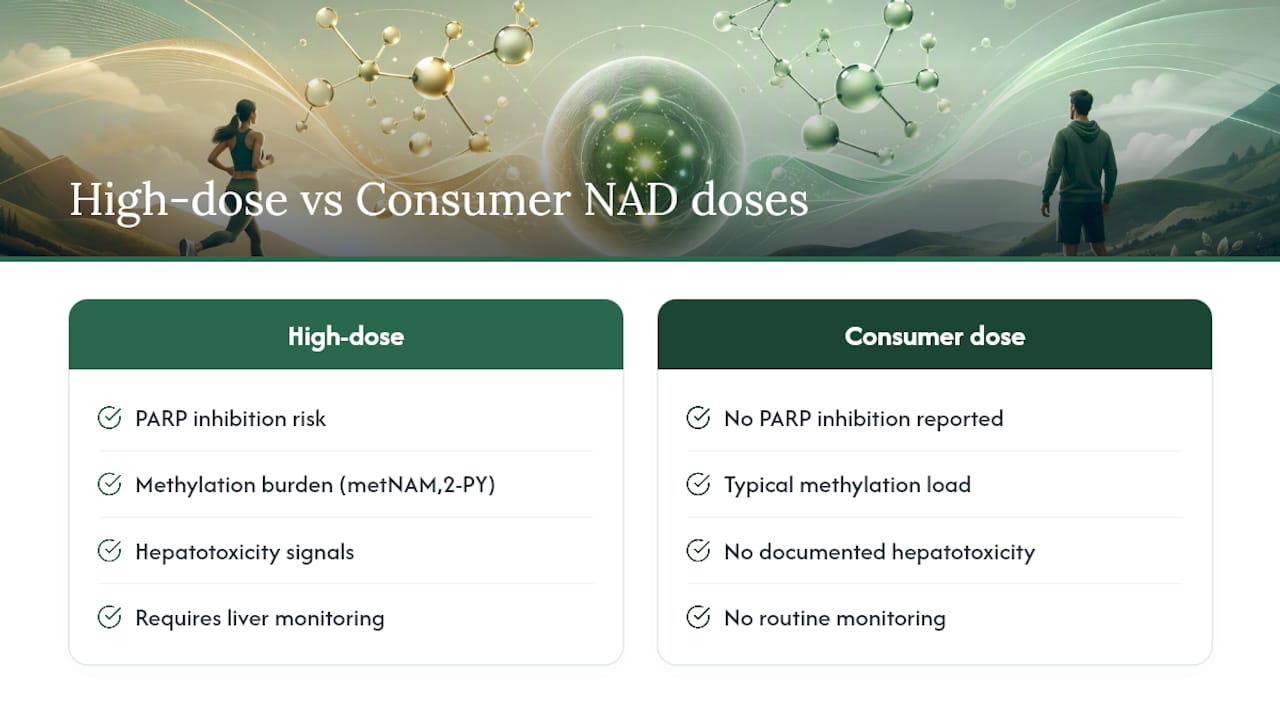
A detailed mechanistic review of high-dose nicotinamide lays out several biological pathways worth understanding in plain terms. Nicotinamide, at very high intakes, can inhibit enzymes called PARPs (poly ADP-ribose polymerases), which your cells use for DNA repair. It can also place a burden on methyl metabolism, the same biochemical system your body uses to regulate gene expression and process toxins, because NAM has to be methylated before it’s cleared. That process produces metabolites like methylnicotinamide (metNAM) and 2-PY, which some researchers link to potential organ stress, particularly in the liver, at sustained high intake.
The review’s core finding is that most documented adverse effects, including hepatotoxicity signals and epigenetic concerns tied to methylation load, appeared at doses far above typical consumer supplement ranges, often in the multi-gram territory associated with animal studies or medically supervised regimens rather than over-the-counter use.
That distinction between “theoretical mechanism” and “documented harm at consumer doses” is the whole ballgame. High-dose niacin, prescribed medically for cholesterol management, is sometimes used at 3,000 milligrams per day under direct physician supervision, specifically because liver enzyme monitoring is necessary at that range. Most retail NAD supplements sit nowhere near the multi-gram territory typically used in medical settings. A typical NAM or niacin supplement dose is generally lower than the doses used therapeutically.
Human trial data adds useful context here. A Clinicaltrials studied nicotinamide dosing schedules over several months in an older population, offering one of the more direct looks at tolerability over an extended period at defined clinical doses. Findings like this help fill in what shorter trials can’t show, but they still represent a fraction of the long-term data available for, say, a common vitamin.
That gap is the honest bottom line. Researchers reviewing NAD-boosting interventions point out that consumer adoption of these compounds has outpaced the science measuring their long-term effects, and that most of the benefit data so far comes from surrogate biomarkers (blood NAD+ levels, for instance) rather than hard outcomes like disease prevention or mortality. Nobody has run a ten-year safety trial on daily NMN use. That doesn’t mean the compounds are dangerous. It means the confident, sweeping safety claims you sometimes see online are ahead of the evidence they’re citing.
Who Should Be Cautious or Avoid NAD Supplements
Some groups face a genuinely different risk calculation than the average healthy adult, and the reasoning behind each caution is specific enough to be worth understanding rather than just following blindly.
- Pregnant or breastfeeding individuals. Data on NAD precursors during pregnancy and lactation is essentially absent, so the standard clinical guidance is to avoid supplementing without direct physician oversight.
- People with active cancer or a recent cancer history. NAD+ fuels cellular energy production, including in rapidly dividing cells. Whether raising NAD+ levels could theoretically influence tumor metabolism is unproven, but it’s a plausible enough concern that oncology consultation before supplementing is the responsible move.
- Advanced liver disease. Given the liver’s role in metabolizing nicotinamide and niacin, and the mechanistic hepatotoxicity concerns at high doses, anyone with significant liver impairment should treat these supplements as a conversation for their hepatologist, not a self-directed decision.
- Severe kidney impairment. Altered clearance of metabolites like metNAM changes how these compounds behave in the body, which is reason enough to loop in a nephrologist first.
- Children and adolescents. There’s no meaningful pediatric safety data for NAD precursors, so this population sits outside the intended use case entirely.
- Anyone on a complex medication regimen. More prescriptions means more chances for an interaction nobody has specifically studied yet.
If you fall into one of these categories, the conversation with a clinician goes better with preparation. Bring the actual supplement label or ingredient list, not just the brand name. Note how long you’ve been considering it, any symptoms you’ve already noticed, and your current prescription list, including over-the-counter drugs and other supplements. A five-minute conversation with that information in hand beats a rushed guess at your next appointment.
Dosing, Drug Interactions, and Monitoring for Safety
Dose ranges vary widely by precursor, and there’s no single universal “safe number” that applies across NR, NMN, NAM, and niacin. Consumer NAM and NR products commonly sit in the tens to low hundreds of milligrams per day, while medically supervised niacin regimens for cholesterol management can reach up to 3,000 milligrams daily, a range that requires bloodwork specifically because the risk profile changes that dramatically with dose.
Certain medication classes deserve extra attention if you’re considering an NAD supplement:
- Diabetes medications. Niacin can raise blood sugar, which matters if you’re on insulin or oral hypoglycemics.
- Blood pressure medications. Niacin’s vasodilating flush effect can compound with antihypertensives, occasionally causing lightheadedness or low blood pressure episodes.
- Anticoagulants and antiplatelet drugs. Any supplement that affects blood vessel behavior deserves a second look when you’re already on blood thinners.
- Drugs metabolized heavily by the liver. Since nicotinamide metabolism itself runs through hepatic pathways, stacking it with other liver-taxing medications adds an extra variable worth discussing with a pharmacist or doctor.
For anyone using higher doses or planning long-term use, baseline liver function tests, and a comprehensive metabolic panel (CMP) if kidney function is also a concern, give you and your clinician an actual number to track rather than a guess. MedlinePlus’s explainer on liver function tests breaks down what each marker measures, which is worth reading before your appointment so the results actually mean something to you. A reasonable cadence for someone on a sustained regimen is a baseline panel before starting, then a follow-up around the three-month mark, though your clinician may adjust that based on your specific health picture. Stop and check in sooner if you notice anything unusual, which the next section covers in detail.
NAD Injections and Infusions vs Oral Supplements
Oral capsules and IV infusions deliver NAD+ precursors, or in some infusion cases claimed NAD+ itself, through completely different routes, and that difference changes both the side-effect profile and the quality risks you’re exposed to.
Injection and infusion side effects tend to cluster around the delivery method itself rather than the compound:
- Injection site reactions. Soreness, redness, or minor bruising at the injection point, similar to any intramuscular or subcutaneous shot.
- Infusion-related systemic reactions. Nausea, flushing, or a racing heart sensation during the drip itself, sometimes managed by slowing the infusion rate.
- Procedural risks. IV placement carries its own small risk of vein irritation, infection at the site, or, rarely, an adverse reaction to additives in the infusion bag.
The bigger concern with infusions often isn’t the biological reaction. It’s what’s actually in the bag. The FDA’s guidance on dietary supplements points out that supplements aren’t held to the same premarket approval standard as prescription drugs, and that gap widens further at clinics offering compounded IV infusions, where oversight of sterility and dosing accuracy varies considerably by state and by provider. Before booking an infusion, it’s worth asking directly: who compounds this product, is the facility licensed for sterile compounding, and can they show third-party testing on the batch you’d be receiving? A legitimate clinic answers those questions without hesitation.
Recognizing Serious Reactions and When to Seek Care
Most NAD supplement side effects resolve on their own or respond to a lower dose. A short list of symptoms falls into a different category entirely and calls for prompt medical attention rather than a wait-and-see approach.
- Jaundice (yellowing of the skin or eyes), a classic sign of liver stress that should never be brushed off as “probably nothing.”
- Severe or persistent abdominal pain, especially in the upper right side where the liver sits.
- Persistent vomiting that doesn’t improve after stopping the supplement.
- Severe dizziness or fainting, distinct from the mild lightheadedness some people feel with niacin.
- Chest pain or trouble breathing, which warrants emergency care regardless of the suspected cause.
- Signs of an allergic reaction, including hives, facial swelling, or throat tightness.
If you notice any of these, stop the supplement immediately and seek urgent care, particularly for chest pain, breathing difficulty, or fainting. For suspected liver involvement, like jaundice or persistent right-sided abdominal pain, or for symptoms that just won’t quit after you’ve stopped taking the product, a prompt call to your regular clinician is the right move even if it doesn’t feel like a true emergency.
Pro Tip: Photograph the supplement label and ingredient panel with your phone before you start using anything new. If you ever need to describe your symptoms to a doctor or poison control, having the exact formulation on hand saves precious time.

Keeping a simple symptom diary, even three lines a day noting how you felt, pays off here too. It turns a vague “I’ve felt off for a while” into a clear timeline a clinician can actually work with.
Where Pureblue Stands on NAD Supplement Safety
Most of the risk in this space isn’t the biochemistry. It’s the wide gap between what’s printed on a label and what’s actually in the bottle. Supplements aren’t preapproved by regulators the way drugs are, which means quality control is left largely to the manufacturer’s own standards, and those standards vary enormously across the industry.
Pureblue’s approach starts there. Quantum Vitality NAD+ Booster+ Detox uses a 100% organic formulation with no artificial fillers, and every batch goes through third-party testing for purity and potency before it reaches a customer. The product is manufactured in an FDA-registered facility, and Pureblue reports a 4.9 out of 5 customer rating across its user base. None of that changes the biology covered earlier in this article. Third-party testing verifies what’s actually in the bottle and confirms it’s free of contaminants; it doesn’t override the medical caution that pregnant women, people with active cancer, or those with advanced liver disease still need a clinician’s input before starting any NAD precursor, Quantum Vitality included.
Where that quality control matters most is in the product-risk conversation from the injections section: knowing exactly what you’re taking, verified by an outside lab rather than just a label claim, removes one entire category of risk before you even think about dose. For anyone wanting to try the formulation before committing, Pureblue also offers a starter option to see how your body responds at a manageable entry point.
Why “Natural” and “Safe” Aren’t the Same Word
Here’s the thing the wellness industry doesn’t love to admit: pharmacologically active and dangerous aren’t opposites of “natural” and “safe.” NAD precursors work precisely because they do something measurable in your cells, which is the entire reason people take them. That same activity is why blanket claims like “NAD supplements are completely safe” deserve the same skepticism as “NAD supplements are dangerous.” Both oversimplify a compound-specific, dose-specific reality.
The conventional wisdom I’d push back on hardest is the idea that because niacin has decades of medical use behind it, all NAD precursors inherit that safety track record. They don’t. NR and NMN are chemically distinct molecules with their own metabolic fates, and treating “NAD booster” as a single category, the way so much marketing does, actively obscures the information you need to make a smart decision. The mechanistic concerns around high-dose nicotinamide, PARP inhibition, methylation burden, liver stress, are real enough to take seriously, but they’re also concentrated at doses most consumer products don’t approach. That nuance gets lost when headlines swing between “miracle anti-aging molecule” and “hidden liver danger” with nothing in between.
What actually protects you isn’t optimism or fear. It’s reading the ingredient panel to know which precursor you’re actually taking, matching the dose to what’s been studied, and treating third-party testing as a baseline expectation rather than a bonus feature. If you’re in one of the higher-risk groups covered above, a five-minute conversation with your doctor costs you nothing and closes the one gap that no amount of product quality can fix on its own.
— Organic
Choosing a Cleaner Path to NAD Support
If everything above tells you one thing clearly, it’s that product quality removes an entire category of risk before dose or biology even enter the picture. Pureblue built Quantum Vitality NAD+ Booster+ Detox around that exact principle: an organic, filler-free formula with third-party testing on every batch and manufacturing in an FDA-registered facility, so what’s on the label matches what’s in the capsule.
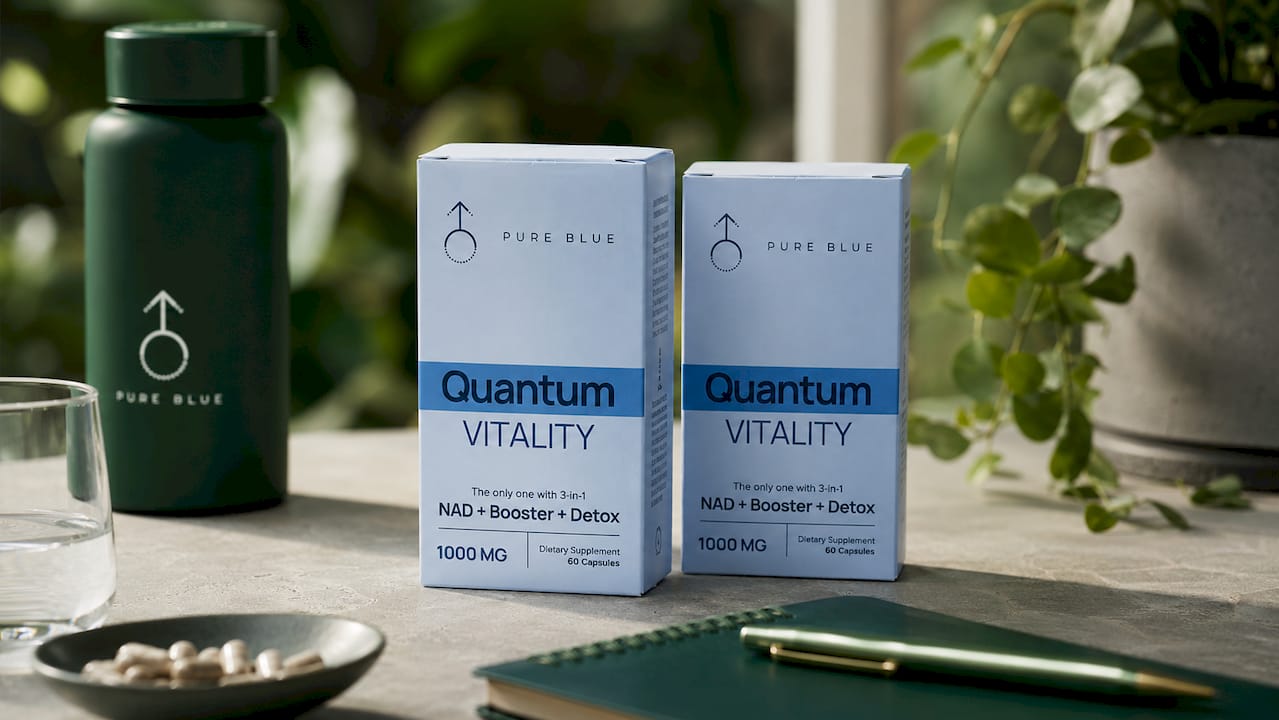
It’s built for active, health-conscious adults who want NAD+ support without gambling on an unverified formulation, particularly if you’ve read the sections above and want a starting point that already accounts for the quality concerns raised throughout this piece. If you’re new to NAD precursors and want to test your body’s response before committing to a full-size purchase, the free starter offer is the lower-commitment way in. From there, you can decide whether to move to a full order based on how you actually feel, not just how the label reads.
This article is general information, not a substitute for advice from a qualified doctor. Consult a qualified healthcare professional about your own circumstances before acting on anything here.
Sources
For readers who want to go deeper, the mechanistic review of high-dose nicotinamide covers the biological pathways behind theoretical liver and epigenetic risks in detail. The niacin safety review explains flush mechanisms and hepatotoxicity thresholds at high doses. Cleveland Clinic’s consumer guide to NAD+ supplements offers accessible, clinically grounded context, while the systematic review on NAD safety and effectiveness summarizes trial-level tolerability data. The FDA’s dietary supplement guidance explains the regulatory gap that makes third-party testing meaningful, and MedlinePlus’s liver function test guide helps you interpret monitoring bloodwork.