Cart
0
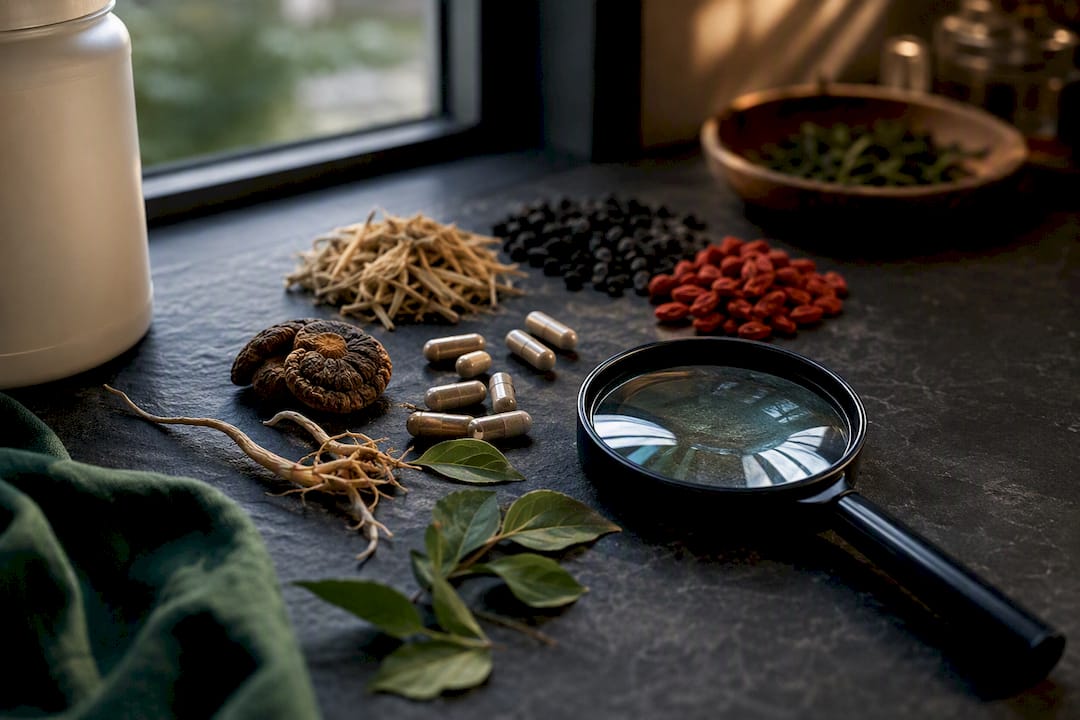
To carry the USDA Organic seal, a supplement needs at least 95% certified organic ingredients, verified by an accredited certifying agent listed right on the label. That single number is your fastest filter. Beyond it, check for a public Certificate of Analysis confirming third-party lab testing, and look at brands like Pure Blue’s Quantum Vitality formula, which pairs organic sourcing with published testing data.
TL;DR:
- A supplement must contain at least 95% organic ingredients by weight to carry the USDA Organic seal, verified by a certifying agent listed on the label.
- Checking for a valid certification involves verifying the seal, certifier name, lot number, and matching the batch results in a published Certificate of Analysis.
- The USDA Organic seal only certifies sourcing standards, not the supplement’s efficacy, safety, or presence of fillers and artificial additives.
- Many products falsely claim organic status with vague language or copied seals, so cross-referencing the certifier and checking published CoAs is essential.
- Confirming manufacturing standards like GMP certification and production in an FDA-registered facility helps ensure quality beyond organic sourcing.
Table of Contents
- What Does USDA Organic Actually Mean for Supplements?
- How Do You Verify a Supplement’s Organic Claim?
- What Else Should You Check Besides the Organic Label?
- How Long Does It Take a Supplement to Become USDA Organic?
- Are There Limitations to USDA Organic Labeling in Supplements?
- How Do You Spot a Fake or Misleading Organic Claim?
- Pure Blue’s Approach to USDA Organic Verification
- Ready to Try a Verified Organic Formula?
- Where to Verify These Claims Yourself
- Sources
What Does USDA Organic Actually Mean for Supplements?
The USDA Organic seal is a production standard, not a health claim. It tells you how ingredients were grown and handled, not whether the finished capsule will do anything measurable for your energy or focus.
Here’s the threshold that matters most: a supplement must contain at least 95% organic ingredients by weight (excluding water and salt) to display the USDA Organic seal on its label. That distinction trips up a lot of shoppers who see the word “organic” printed somewhere and assume the whole product qualifies.
The National Organic Program (NOP) oversees this system, and its own guidance is blunt: certification confirms agricultural production and handling practices, not clinical efficacy. Those are separate questions, and only one of them is regulated.
Quick stat: A product needs 95%+ organic content for the seal; 70 to 94% only earns the weaker “made with organic ingredients” phrase, with no seal allowed.
What you should expect to see on a compliant label:
- The USDA Organic seal itself, usually in the corner of the front panel
- The name of the accredited certifying agent (a small line of text, often near the ingredient panel)
- A supplement facts panel listing which specific ingredients are certified organic
- No seal at all if the product falls under the 95% line, even if “organic” appears elsewhere on the box
How Do You Verify a Supplement’s Organic Claim?
Verification takes less time than reading a nutrition label front to back. Most of it happens in under two minutes if you know what to look for.
- Find the seal. No USDA Organic seal on the front or back panel means the product cannot legally claim full organic status, regardless of what the marketing copy says.
- Read the certifier line. Every legitimately certified product lists its certifying agent by name, usually in small print near the ingredient list. No name means no accountability trail.
- Match the lot number. Reputable brands print a batch or lot code you can cross-reference against a published Certificate of Analysis.
- Pull up the CoA. A Certificate of Analysis should show results for heavy metals (lead, cadmium, arsenic), microbial limits, and potency, ideally with the batch number matching what’s on your bottle.
- Check the ingredient-level detail. A finished product can look organic while only certain ingredients actually carry that certification; the label should specify which ones.
Pro Tip: Search the brand name plus “certificate of analysis” before you buy. If nothing comes up beyond a marketing page, that’s a red flag, not a coincidence.
Watch for vague language like “organic-based” or “made with natural organic extracts,” phrasing designed to sound compliant without meeting the actual bar. If a company can’t name its certifying agent when asked, walk away.
What Else Should You Check Besides the Organic Label?
Organic certification tells you about sourcing. It says nothing about what else got added during manufacturing, and that gap is where a lot of otherwise “clean” products quietly disappoint.
Third-party lab testing fills that gap. Independent labs typically screen for heavy metals, microbial contamination, and whether the actual potency on the label matches what’s inside the capsule. Brands that publish these results as a public CoA are giving you something the USDA seal doesn’t: proof the product is safe and dosed accurately, not just organically sourced.
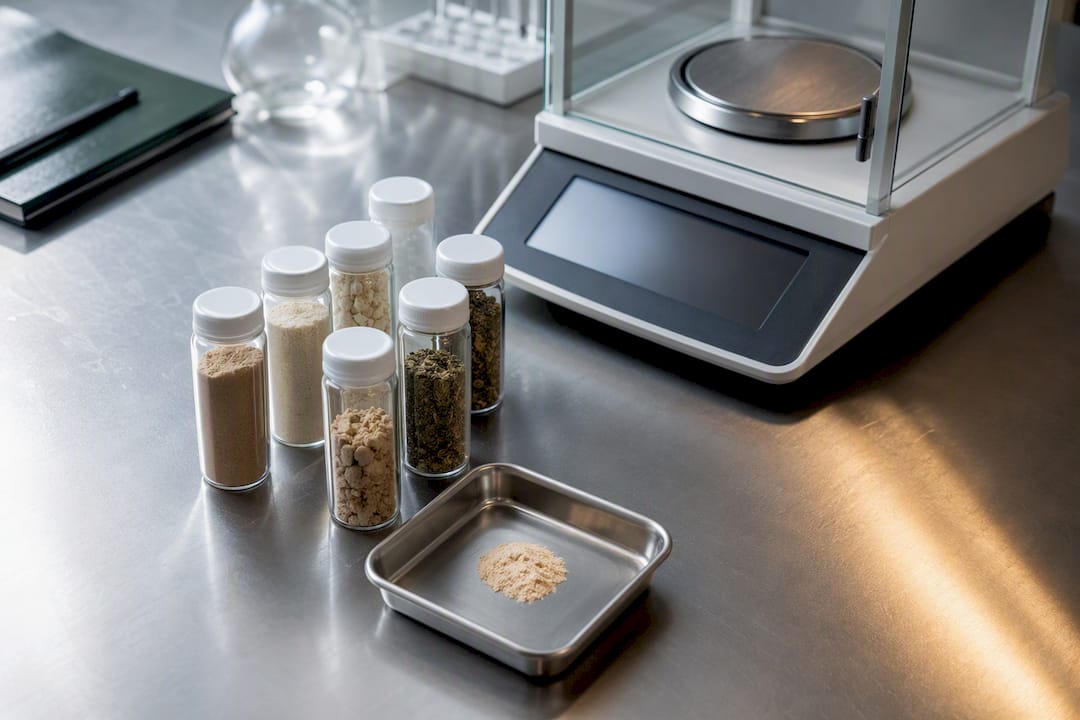
The stat that surprises people: plenty of USDA-certified organic supplements still contain fillers, gums, or artificial sweeteners in the non-organic 5% of the formula. The seal never promised a clean label. It promised a sourcing standard.
Common additives to scan for on the ingredient panel:
- Magnesium stearate or silicon dioxide used as flow agents
- Carrageenan, xanthan gum, or other thickeners in gummies and powders
- Artificial sweeteners like sucralose, sometimes disguised under a “natural flavor” line
- Titanium dioxide or synthetic dyes in capsule coatings
Manufacturing credentials matter just as much as sourcing. Look for GMP (Good Manufacturing Practice) certification and confirmation that the product is made in an FDA-registered facility, which signals batch-level oversight rather than a one-time inspection.
A fast shopper checklist: seal present, certifier named, CoA public, ingredient list free of unnecessary fillers, and facility credentials stated outright. Five checks, and you’ve filtered out most of the weak products on the shelf.
How Long Does It Take a Supplement to Become USDA Organic?
Certification isn’t a form you fill out and forget. It’s a multi-step audit that typically takes several months to a year for a new product, sometimes longer if the supply chain includes multiple organic ingredients from different growers.
The process starts with the manufacturer selecting an accredited certifying agent, one of the third-party organizations authorized by the NOP to conduct organic inspections. That agent reviews the company’s Organic System Plan, a document detailing how every ingredient is sourced, handled, and kept separate from non-organic materials during production. Any facility running both organic and conventional lines has to prove there’s no cross-contamination, which usually means dedicated equipment or rigorous cleaning protocols between runs.
After the paperwork review comes an on-site inspection. The certifying agent checks storage, handling, and recordkeeping against what was submitted. If everything holds up, the agent issues certification, but it’s not permanent. Certified operations undergo annual reinspection to keep the seal active, which means a brand can lose its certification if practices slip.
For supplement companies sourcing organic botanicals from multiple farms across different growing seasons, this timeline stretches further.
Are There Limitations to USDA Organic Labeling in Supplements?
The biggest limitation is the one most shoppers miss: the seal certifies agricultural inputs, not the finished product’s effect on your body. A supplement can be flawlessly organic and still be poorly formulated, underdosed, or built around ingredients with thin evidence behind them.
It can include synthetic preservatives, flow agents, or capsule materials that plenty of health-conscious buyers would rather avoid, and the label has no obligation to flag them beyond standard ingredient disclosure.
Multi-ingredient supplements create another gray area. A formula might list five herbs, with four certified organic and one sourced conventionally because no organic supplier exists at scale for that particular botanical.
Critics of the NOP system also point to inconsistent enforcement across the thousands of products it oversees. Certifying agents are private, USDA-accredited companies, not federal auditors doing surprise checks. That structure works well most of the time, but it relies heavily on paperwork accuracy and self-reporting between annual inspections, not continuous monitoring.
None of this makes the certification meaningless. It just means “USDA organic” answers a narrower question than most buyers assume.
How Do You Spot a Fake or Misleading Organic Claim?
Counterfeit and misleading claims usually follow a pattern once you know what to look for, and none of the tells require special equipment.
Start with the seal itself. A real USDA Organic seal is always paired with a certifying agent’s name somewhere on the packaging. If you see the seal graphic but can’t find any certifier listed anywhere on the label, that’s a strong signal the seal was copied rather than earned. Some sellers, particularly on third-party marketplaces, use the organic seal graphic on product images without ever having gone through certification.
Language is the other tell. Phrases like “organic-inspired,” “made in an organic facility,” or “crafted with organic principles” sound official but carry zero regulatory weight. They’re marketing constructions built to sit next to the word “organic” without triggering the legal requirements that come with actually claiming it.
Cross-reference suspicious products against the USDA’s organic integrity database when something feels off. Certified operations are searchable by name, and a legitimate brand will show up. If a company claiming organic status doesn’t appear anywhere in that system, treat the claim as unverified until proven otherwise.
Third-party seals matter here too. A Clean Label Project audit or a public CoA adds a layer of verification a printed seal alone can’t provide, since lab results are far harder to fake convincingly than a logo.
Pure Blue’s Approach to USDA Organic Verification
We built Pure Blue around a simple frustration: most “organic” supplement claims ask you to take the brand’s word for it. That’s backwards. Verification should be something you can do yourself, not something you’re asked to trust blindly.
We manufacture in an FDA-registered facility and send every batch through third-party lab testing before it reaches a customer, the same standard this article recommends checking for on any brand you’re considering. Our product pages link directly to batch information so you’re not left hunting for a CoA that doesn’t exist.
We’re not going to claim Quantum Vitality cures fatigue or reverses aging. What we’ll say instead: the sourcing is organic, the testing is real and available, and our customer rating currently sits at 4.9 out of 5. Judge the rest by checking the paperwork yourself, the same way you’d check any other brand’s claims.
— Organic
Ready to Try a Verified Organic Formula?
Everything in this guide points to the same conclusion: check the seal, check the certifier, check the CoA. Pure Blue’s Quantum Vitality NAD+ Booster+ Detox formula is built to pass every one of those checks, not just the ones that are easy to fake.
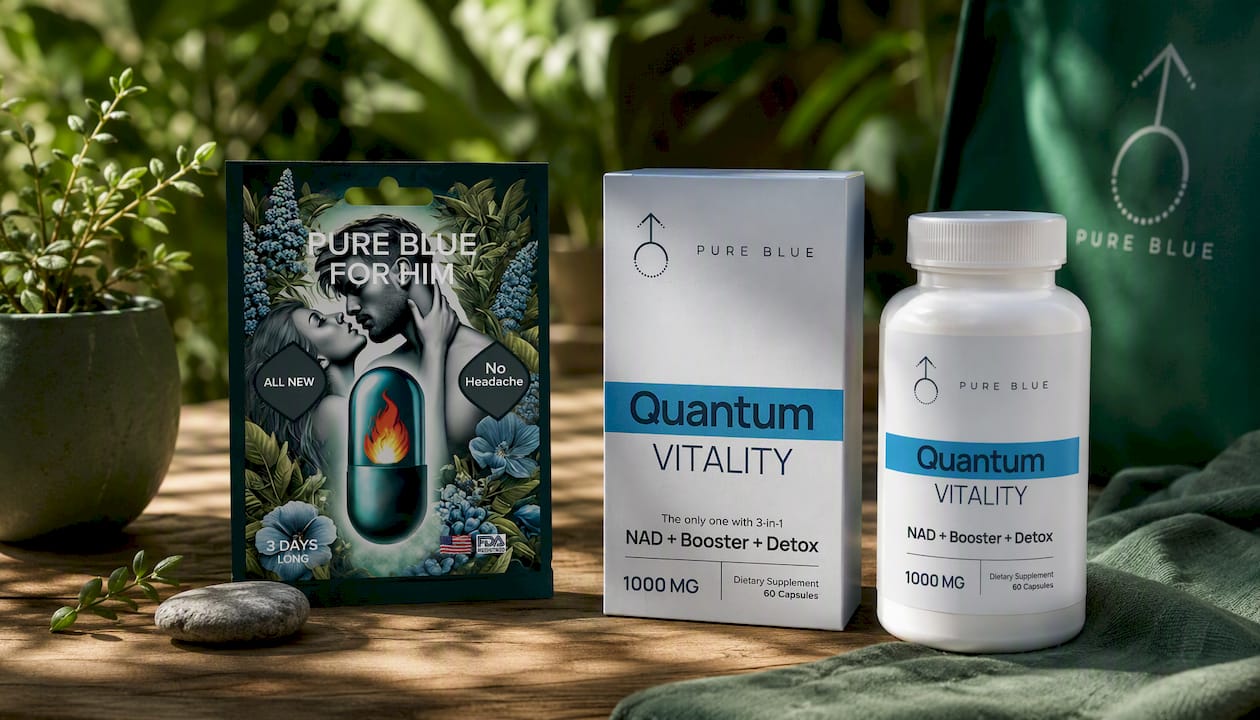
If you want to test it before committing to a full purchase, the free trial offer on Quantum Vitality is the lowest-friction way to see how the formula fits your routine. For ongoing use, the main product page lets you choose between a one-time purchase and a subscription, with the subscription typically running at a lower per-unit cost for regular users. Before your first order ships, pull up the batch ID listed at checkout and match it against the published CoA. It takes thirty seconds and confirms you’re getting exactly what the label promises. Once you’ve placed the order, that same verification habit works for every future bottle too.
Where to Verify These Claims Yourself
Don’t take any brand’s word for it, including ours. These are the same primary sources this article draws from, and they’re worth bookmarking for future purchases.
- USDA organic labeling rules, covering the 95% seal threshold and “made with organic” distinctions
- USDA’s blog on understanding the organic label, explaining what certification does and doesn’t guarantee
- USDA’s main site, for the organic integrity database and broader NOP context
- Third-party testing guidance for supplements, for how to read a CoA and what reputable brands typically publish
This article is general information, not a substitute for advice from a qualified doctor. Consult a qualified healthcare professional about your own circumstances before acting on anything here.
Sources
- USDA: Organic labeling
- Third-party-tested supplements (guidance and practices)
- USDA blog: understanding USDA organic label