Cart
0

Saunas don’t flush toxins the way liver and kidneys do, but the sweat, heat stress, and circulation changes still produce real, measurable benefits. Regular sessions are linked to better cardiovascular markers, improved circulation, lower stress, and healthier skin. Trace metals and chemical residues do show up in sweat, but the amounts are small enough that “detox” is more marketing than mechanism. Hydration, sensible session length, and a clinician’s input for anyone with heart issues or pregnancy round out the practical picture.
TL;DR:
- Sauna sessions produce small amounts of trace metals and chemicals in sweat, but the total toxin removal is minimal and not clinically meaningful.
- Regular sauna use lowers cardiovascular risk, reduces inflammation, and improves stress, sleep, and skin health over long-term, consistent habits.
- Short, 15 to 20-minute sessions three to seven times weekly are sufficient for health benefits, with longer or more intense sessions offering no added advantage.
- Hydration, electrolyte replacement, and medical consultation are essential, especially for those with heart conditions, pregnancy, or on medication.
- Supplements like NAD+ boosters support energy but do not replace the health benefits of a sustained sauna routine.
Table of Contents
- How Sauna Heat Changes Your Body
- What Sweat Studies Really Show About Toxin Removal
- The Sauna Benefits That Actually Hold Up
- How to Use a Sauna Without Overdoing It
- Sauna Detox Myths Worth Retiring
- Where Supplements Like Quantum Vitality Fit Into a Sauna Routine
- Why We Think Sauna Habits Get Judged by the Wrong Metric
- Why Pureblue Fits Alongside Your Sauna Routine
- Sources
How Sauna Heat Changes Your Body
Sweat is roughly 99% water, plus sodium, potassium, and small amounts of urea. It’s not designed as a filtration system. Your liver and kidneys do that job continuously, processing blood and metabolic waste around the clock. A sauna session doesn’t compete with that machinery. What it does do is stress your cardiovascular system in a way that looks a lot like moderate exercise: heart rate climbs, blood vessels widen, and nitric oxide release helps relax the lining of your arteries.
That heat exposure also triggers heat-shock proteins, which help repair damaged proteins inside cells, and nudges inflammatory markers in a favorable direction over repeated exposure. Researchers call this hormesis: a mild, controlled stressor that makes the body more resilient over time, the same principle behind cold plunges and hard exercise.
Not all saunas deliver that stress the same way.
- Traditional Finnish saunas heat the air to 150–195°F, producing intense, fast sweating in short sessions.
- Infrared saunas heat tissue directly through radiant energy at lower ambient air temperatures, often 120–140°F, which many people find easier to tolerate for longer stretches.
- Both types raise core temperature and heart rate, but infrared sessions tend to run longer because the lower air temperature is less punishing on the lungs and skin.
Neither style turns sweat into a meaningful excretion pathway for toxins. What they reliably do is move blood, raise heart rate, and prime the body’s stress-adaptation response.
What Sweat Studies Really Show About Toxin Removal
Detectable isn’t the same as significant, and that distinction is where most sauna detox claims fall apart. Studies have found cadmium, mercury, lead, BPA, and phthalates in sweat, along with trace PBDEs. That’s the part supplement marketers love to quote. What they leave out is scale.
The numbers that matter: even where sweat concentrations of a given metal rival or exceed urinary concentrations, the total volume of sweat produced in a session is a fraction of daily urine output, so the absolute mass of toxicant removed stays small. A systematic review covering 40 clinical studies and 3,855 participants found real physiological benefits from repeated dry sauna use, but flagged that most of the underlying trials were small and inconsistently designed, which limits how confidently anyone can generalize the toxin data.
A few other complications matter here:
- Many of the studies cited in detox marketing combine sauna with niacin, other supplements, and sometimes IV therapy, so you can’t isolate what the sauna itself contributed.
- A 2018 review of multimodal detox protocols found subjective symptom improvement in participants, but no consistent drop in serum organochloride levels, the actual biomarker that would prove elimination.
- Exercise-induced sweat appears to mobilize some stored toxicants more effectively than passive heat exposure in certain comparisons, which suggests movement, not heat alone, is doing a lot of the work.
The honest, evidence-weighted takeaway: sauna sweat carries trace amounts of certain compounds, but nothing published so far shows that sweating them out changes your total body burden in a clinically meaningful way. “Detox” in this context is better understood as a mild assist to systems you already have, not a cleanse.
The Sauna Benefits That Actually Hold Up
Where saunas earn their reputation isn’t toxin removal. It’s the cardiovascular and stress-related outcomes that show up again and again in long-term data. A Finnish cohort tracking more than 2,300 men for roughly 20 years found that men who used a sauna 4 to 7 times a week had substantially lower rates of cardiovascular events and all-cause mortality than men who went once a week or less.
That’s an association, not a guarantee, but the size and consistency of the effect across a two-decade follow-up window is hard to dismiss.
Shorter-term clinical work backs up parts of the mechanism:
- Single sessions have been shown to lower blood pressure and improve arterial stiffness measures for hours afterward.
- Regular users show reduced inflammatory markers over months of consistent use.
- Case reports and small studies note improved skin hydration, and some psoriasis patients report symptom relief, though the evidence here is thinner and less consistent than the cardiovascular data.
- Cleveland Clinic’s clinical summary lists reduced stress, pain relief, and improved sleep quality among the more reliably reported outcomes.
What the evidence supports most consistently: repeated, regular exposure over weeks and months, not a single “detox session,” produces the cardiovascular, inflammatory, and sleep benefits that show up in the research. One sauna visit won’t rewire your health. A habit built around three to seven sessions a week, sustained for years, is what the Finnish data actually measured.
How to Use a Sauna Without Overdoing It
Getting the benefits without the risk comes down to a few habits, not a complicated protocol.
- Keep sessions around 15 to 20 minutes. That range is enough to trigger the cardiovascular and inflammatory benefits seen in most clinical studies. Longer sessions, especially anything used for aggressive detox protocols, should only happen under medical supervision.
- Aim for 3 to 7 sessions a week if you’re chasing long-term benefits. The cohort data linking sauna use to lower cardiovascular risk tracked people at this frequency for years, not weeks.
- Hydrate before and after, and replace electrolytes, especially if you’re sweating heavily or stacking sauna time with a workout.
- Skip alcohol before, during, and after a session. Combining heat stress with alcohol raises dehydration and cardiovascular risk, and it can mask warning signs like dizziness or a racing heart.
- Check with a clinician first if you’re pregnant, have unstable heart disease, had a recent heart attack, or take medications affected by heat. Some drugs alter how your body handles heat stress, so this isn’t a step to skip.
- Try infrared if high heat is hard to tolerate. Lower air temperatures let you sit longer, which may extend the cardiovascular and relaxation benefits without the discomfort of a traditional Finnish sauna.
Pro Tip: Save your sauna session for after a workout, not before. Post-exercise heat exposure extends the vasodilation and circulation benefits you already triggered with movement, and it’s a more comfortable time to hydrate and cool down gradually.
Sauna Detox Myths Worth Retiring
The biggest myth is that sweating is a major detox pathway. It isn’t. Your liver and kidneys handle that continuously; sweat is a side effect of thermoregulation, not a cleansing mechanism. A close second: the idea that one sauna session can “reset” your system after a weekend of poor choices. There’s no evidence for that.
Where sauna use does show promise is as one piece of a broader routine, not a standalone fix.
- Myth: Heavy sweating proves toxins are leaving your body. Reality: sweat volume and toxicant mass removed are only loosely related, and the mass is small.
- Myth: Sauna can substitute for medical detoxification (as in poisoning or substance withdrawal). Reality: it can’t, and delaying real treatment for sauna sessions is dangerous.
- Myth: More heat and longer sessions always mean more benefit. Reality: the data supports moderate, repeated exposure, not endurance sessions.
The practical takeaway: use sauna sessions for what the evidence actually supports, cardiovascular health, stress relief, and better sleep, and stop expecting them to do your liver’s job.
Where Supplements Like Quantum Vitality Fit Into a Sauna Routine
A sauna habit supports circulation and stress recovery, but it doesn’t address cellular energy production, which is where NAD+ levels come into play as people age. Pureblue’s (Free) Quantum Vitality NAD+ Booster+ Detox and the full-size Quantum Vitality NAD+ Booster+ Detox are formulated as adjunct support for energy and recovery, not as a replacement for what your liver and kidneys already do.
Every batch is third-party tested, and production happens in a registered facility. Pureblue reports a customer rating of 4.9 out of 5, though individual results vary and supplements should never be treated as emergency or organ-based detoxification. Anyone on prescription medication, pregnant, or managing a chronic condition should talk to a clinician before adding a new supplement to a sauna or wellness routine.
Why We Think Sauna Habits Get Judged by the Wrong Metric
The sauna detox conversation has a framing problem. People ask “does it remove toxins,” and when the honest answer is “not much,” they conclude sauna use isn’t worth the time. That’s backwards. The Finnish cohort data didn’t track toxin clearance. It tracked two decades of cardiovascular outcomes in real people, and the difference between occasional and frequent users was large enough to matter.
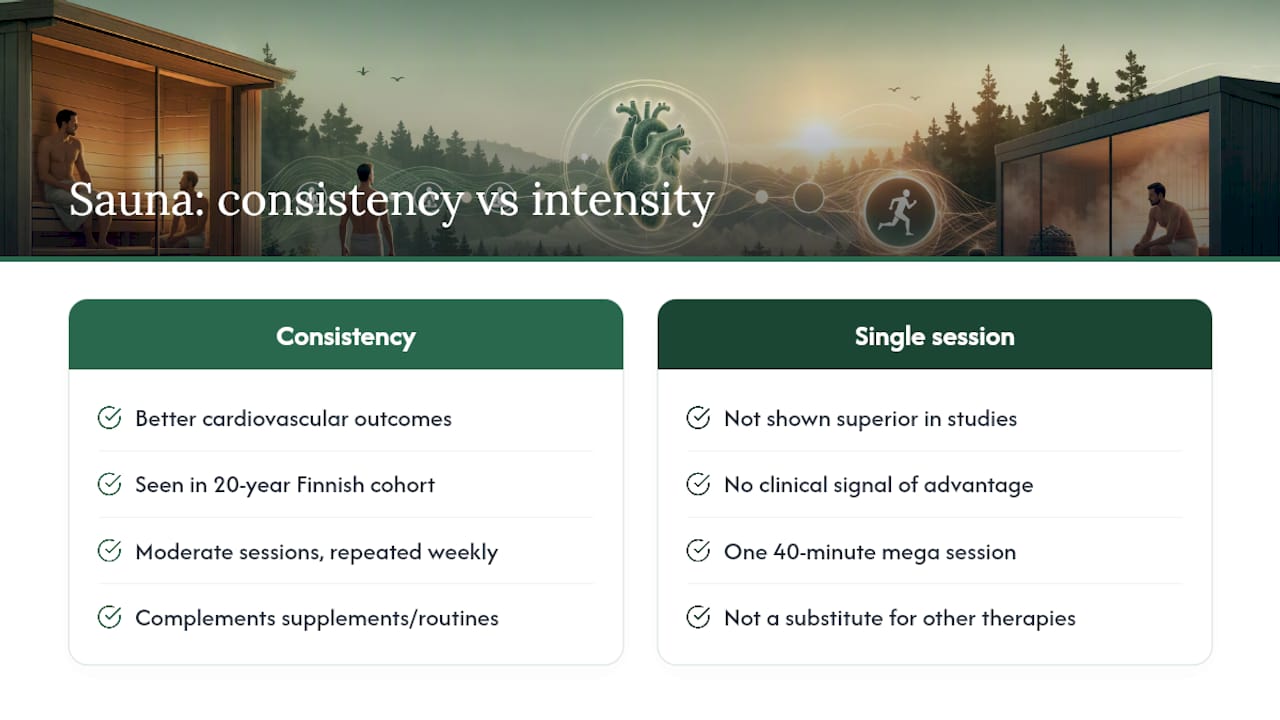
What’s underrated is how much of the sauna’s real value comes from consistency, not intensity. A single 40 minute mega session doesn’t beat four 15 minute sessions across a week, and there’s no clinical signal suggesting it should. The people who benefit most in the research weren’t chasing a dramatic single-session cleanse. They were repeating a moderate habit for years.
We’d also push back gently on the framing that sauna and supplementation compete for attention. They don’t operate on the same system. A sauna stresses your cardiovascular and thermoregulatory systems in a beneficial way. Something like a sleep-focused wellness routine or a well-tested NAD+ formula works on entirely different biological levers. Treating them as substitutes for one another misses the point of building a routine with more than one working part.
— Organic
Why Pureblue Fits Alongside Your Sauna Routine
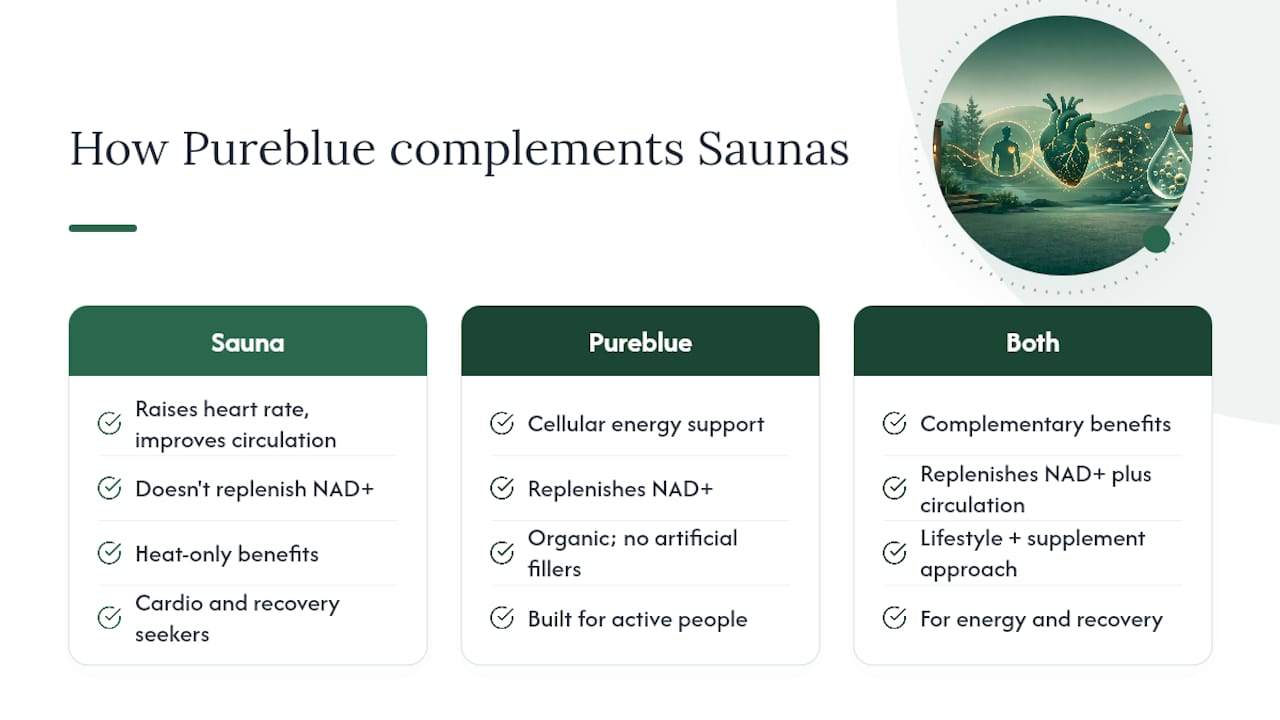
If you’re building a sauna habit for the cardiovascular and recovery benefits covered above, Pureblue fills a gap sauna heat alone can’t touch: cellular energy support. A sauna raises your heart rate and improves circulation, but it doesn’t replenish the NAD+ your body relies on for energy production, especially as that supply naturally declines with age.
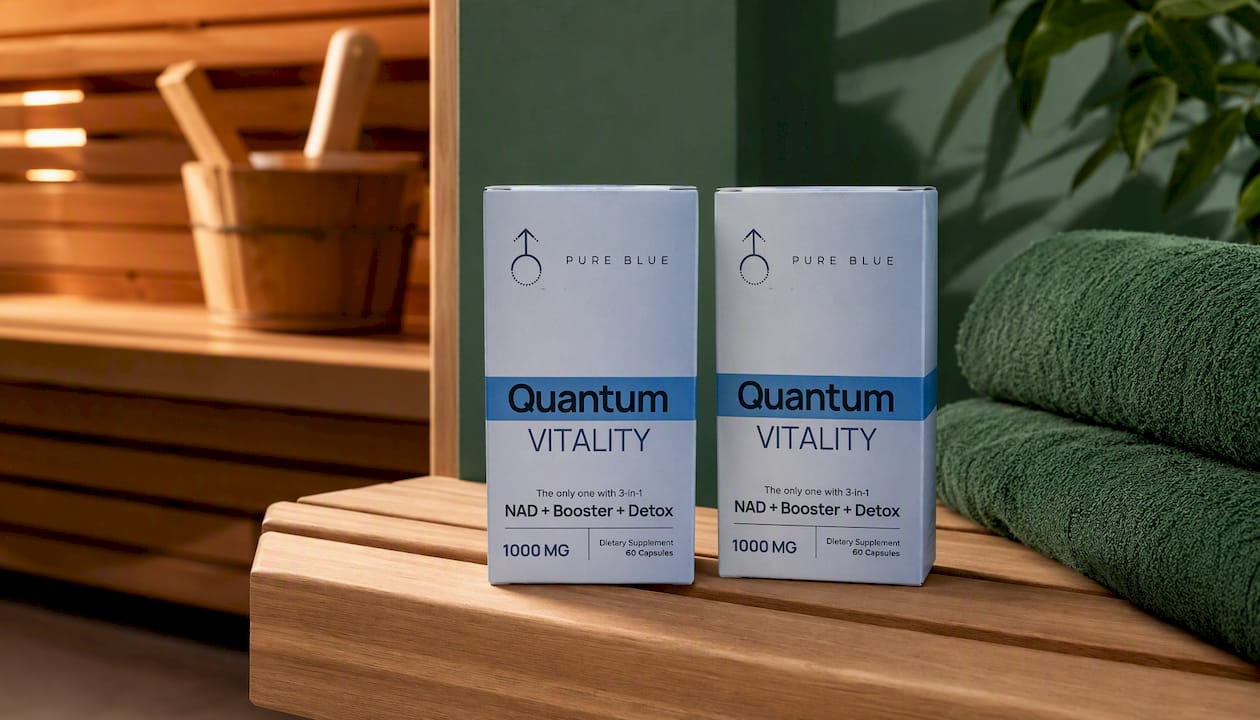
Pureblue’s organic supplement line, including the Quantum Vitality NAD+ Booster+ Detox, is built for active people who already invest in habits like sauna sessions, workouts, and sleep hygiene, and want their energy and recovery to keep pace. Every formula skips artificial fillers, gets third-party tested for purity, and comes out of an FDA-registered facility.
If you want to see how it fits into your own routine before committing, try the free sample and judge the results for yourself alongside whatever sauna schedule you’re already running.
This article is general information, not a substitute for advice from a qualified doctor. Consult a qualified healthcare professional about your own circumstances before acting on anything here.
Sources
- Sauna may benefit your cardiovascular health and more : NPR
- Systematic review of repeated dry sauna bathing effects (Evidence-Based Complementary and Alternative Medicine)
- Sauna benefits — Cleveland Clinic
- Repeat sauna therapy and detoxification (2018 review — Wiley/International Journal)