Cart
0
U.S. regulators currently allow titanium dioxide in supplements under a strict weight limit, while the EU has banned the same ingredient outright as of 2022. The gap comes down to how much genotoxicity uncertainty each side is willing to tolerate, not a disagreement about the underlying data. If you’d rather not weigh that uncertainty yourself, check the “Other Ingredients” line on your label or switch to a supplement that’s already TiO2-free.
TL;DR:
- U.S. supplements can contain up to 1% titanium dioxide by weight, but any amount above that violates federal law and indicates higher levels of additive.
- The EU banned titanium dioxide as a food additive in 2022 due to unresolved concerns about potential DNA damage, adopting a precautionary approach.
- Most supplement formulations use titanium dioxide below the 1% limit primarily for opacity and light protection, not potency or effectiveness.
- Scientific opinions differ: the FDA finds no clear evidence of harm at typical exposure levels, while EFSA highlights genotoxicity risks based on animal and laboratory studies.
- Consumers can verify TiO2 on labels by checking “Other Ingredients” for terms like “titanium dioxide” or “E171,” and should consider brands that avoid artificial colors for safer options.
Table of Contents
- What Regulators Say About Titanium Dioxide in Supplements
- Why Manufacturers Put Titanium Dioxide in Your Supplements
- Is Titanium Dioxide Safe in Supplements? What the Research Shows
- Why the U.S. and EU Reached Different Conclusions
- How to Check Your Supplement Label for Titanium Dioxide
- A Clean-Label Option Already Built Without It
- Balancing Precaution and Evidence in Your Own Choices
- Try a TiO2-Free Supplement Built Around Organic Ingredients
- Sources
- FAQ
What Regulators Say About Titanium Dioxide in Supplements
The FDA and the EU looked at overlapping research and landed in opposite places, and that split is the single most important fact to understand before reading another headline about this ingredient.
- FDA (United States): Titanium dioxide is permitted as a color additive in foods and supplements, capped at 1% by total weight under 21 CFR 73.575. No supplement legally sold in the U.S. should exceed that threshold.
- EFSA / European Commission: In 2021, EFSA concluded titanium dioxide, listed as E171, could no longer be considered safe as a food additive, largely because genotoxicity, meaning potential DNA damage, couldn’t be ruled out. The EU banned it as a food and supplement additive shortly after.
- JECFA and other international reviews: Some reviews, summarized in FDA’s own color additive documentation, found no clear evidence of harm at typical dietary exposure levels, putting them closer to the U.S. position than the EU’s.
The number that matters: 1% by weight is the FDA’s hard ceiling. Anything above that in a U.S. supplement would violate federal law, so the presence of TiO2 on a label doesn’t by itself signal an unusually high dose.
Why Manufacturers Put Titanium Dioxide in Your Supplements
Titanium dioxide isn’t filler for filler’s sake. It does a specific job, and understanding that job helps you judge whether its presence in a product actually matters to you.
- Opacity and color uniformity: It makes capsules and tablets look consistent batch to batch, which matters more to quality control than to your health.
- Protective coating: It shields light-sensitive nutrients, like certain B vitamins and probiotics, from UV degradation, helping preserve potency over shelf life.
- Low inclusion rate: Most formulations use well under the FDA’s 1% ceiling because the optical effect works at very small doses.
TiO2 is also cheap and abundant. Global pigment production remains large enough that industry reports track it as a standard commodity, which partly explains why it became a default choice for decades.
Pro Tip: If a supplement looks unusually white or opaque compared to similar products, TiO2 or a comparable opacifier is almost certainly the reason. It’s cosmetic, not a sign of higher potency.
Is Titanium Dioxide Safe in Supplements? What the Research Shows
Here’s where the debate actually lives. EFSA’s 2021 review flagged genotoxicity concerns based on a mix of animal and in vitro studies, meaning lab and animal data raised the possibility that TiO2 particles could damage genetic material under certain conditions. The agency couldn’t rule that risk out with the data available, which is a different, more cautious standard than proving actual harm.
JECFA and the FDA read overlapping evidence differently and haven’t reached the same conclusion. That divergence isn’t a case of one side ignoring data. It reflects a real disagreement over how much weight to give animal and cell-culture findings when human dietary exposure data remains limited.
Oral absorption of titanium dioxide is low. Most of what you swallow passes through without being taken up into tissue. But some animal studies report particle accumulation over time, particularly in the gut lining and lymphatic tissue, and researchers haven’t fully resolved what that means for long-term human exposure. This is genuinely an open question, not a settled one in either direction.
It’s worth separating two very different exposure routes. Inhalation, mostly an occupational hazard in industries like paint and pigment manufacturing, has a clearer and more established risk profile for lung tissue. Swallowing a capsule with TiO2 in its coating is not the same exposure pathway, and conflating the two overstates the risk to supplement users specifically.

The honest summary: low oral absorption, real but unresolved questions about particle accumulation, and a scientific community that hasn’t reached consensus. That’s not the same as proof of harm, and it’s not the same as a clean bill of health either.
Why the U.S. and EU Reached Different Conclusions
The FDA generally requires evidence of actual harm before restricting an ingredient. EFSA and EU policy lean on the precautionary principle: if you can’t rule out a risk, you act as though it might exist. Same data, different threshold for “safe enough.”
- The EU ban forced widespread reformulation across European food and supplement brands within a short window.
- The U.S. market still permits TiO2 within the 21 CFR 73.575 limit, so it remains legal and common in American products.
- Brands selling in both markets often maintain two formulas, or reformulate globally to avoid running dual product lines.
If you buy from a company that sells internationally, don’t assume its U.S. formula matches what’s sold in Europe. The label is the only reliable way to know.
How to Check Your Supplement Label for Titanium Dioxide
Reading a supplement label for this ingredient takes about thirty seconds once you know what to look for.
- Scan the “Other Ingredients” list, not the Supplement Facts panel. TiO2 is almost always disclosed there, sometimes listed as “titanium dioxide” and sometimes, on European-labeled products, as “E171.”
- Watch for vague language like “artificial color” or “color added,” which can be a stand-in for TiO2 or a similar opacifier.
- Look for third-party testing seals and explicit “no artificial colors” claims, which usually signal a brand has already reformulated.
- Check for alternative opacifiers like zinc oxide or plant-based pigments; these typically cost more per unit, which is why cheaper supplements skip them.
Pro Tip: If two ingredient lists look nearly identical except that one includes titanium dioxide, that’s usually the cheaper formulation, not a more effective one.
A Clean-Label Option Already Built Without It
If you’d rather skip the guesswork entirely, formulation choice matters more than reading every label twice. Some supplement brands build their products around organic ingredients with no titanium dioxide and no artificial fillers, sidestepping the debate rather than asking you to referee it.
- Some products are third-party tested for purity and potency before reaching customers, manufactured in FDA-registered facilities with attention to safety standards detailed in U.S. patient safety considerations.
- Manufacturing in FDA-registered facilities adds a layer of oversight beyond the formula itself.
- Organic sourcing and clean-label formulation matter most to consumers who are risk-averse by default, not just to those with a specific TiO2 concern.
This approach fits people who’d rather not track ingredient reclassifications across two continents every time a regulator issues a new opinion.
Balancing Precaution and Evidence in Your Own Choices
Genuine uncertainty doesn’t mean you should panic, and it doesn’t mean you should ignore it either. If you’re risk-averse, the EU’s precautionary stance and the growing wave of voluntary reformulation give you real, legal, widely available TiO2-free options now. If you’re comfortable relying on the FDA’s regulated limit and JECFA’s more permissive reading, current products remain within the bounds regulators consider acceptable. Either way, check primary sources yourself rather than trusting marketing copy, and look for actual third-party test certificates rather than a logo that just claims one exists.
— Organic
Try a TiO2-Free Supplement Built Around Organic Ingredients
If you’ve decided you’d rather avoid titanium dioxide altogether, Pureblue’s Quantum Vitality NAD+ Booster+ Detox gives you a 3-in-1 formula built from organic ingredients with no artificial fillers and no titanium dioxide anywhere in the coating or capsule.
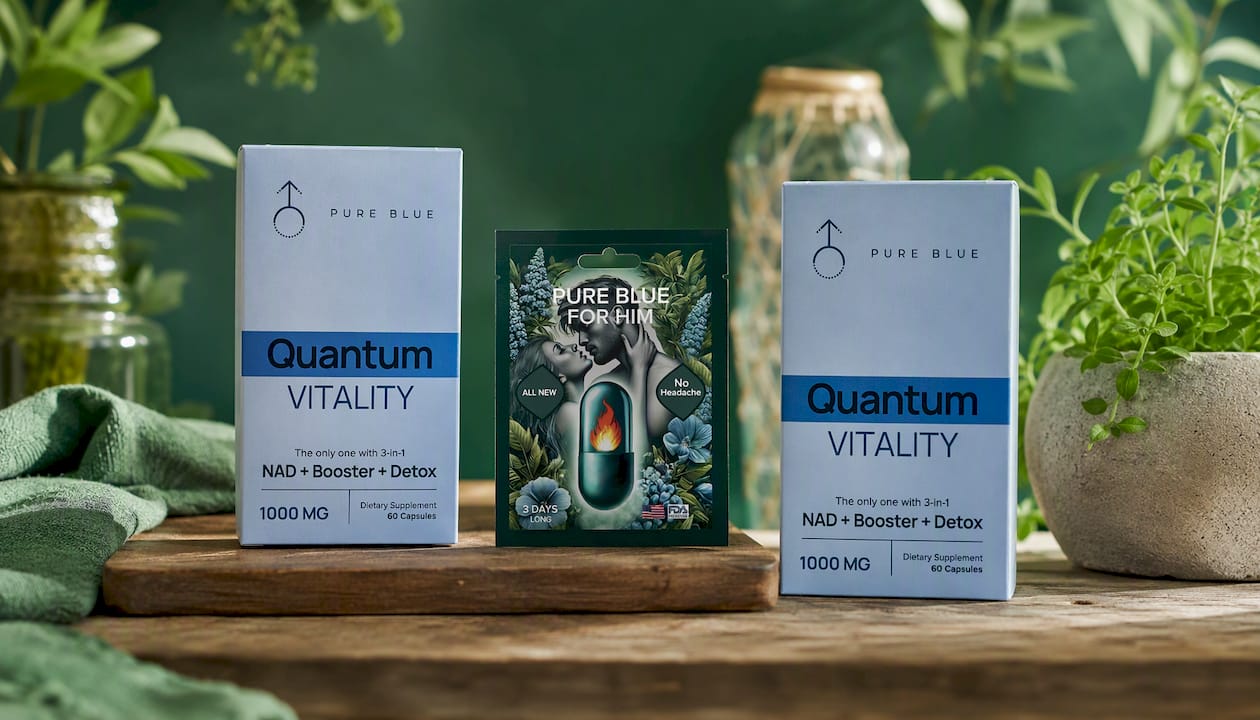
Some supplement batches are third-party tested for purity and potency, and production in FDA-registered facilities adds a layer of oversight beyond the label claim. The formula targets energy, mental clarity, and detox support in one product rather than three separate bottles, which matters if you’re already juggling a supplement routine. New customers can try the free Quantum Vitality sample to see how it fits before committing to a full order, and the Pure Blue product line outlines the full range if you want to compare formulas. If clean-label sourcing matters to you as much as the regulatory debate itself, start with the sample and judge the formula on its own terms.
This article is general information, not a substitute for advice from a qualified doctor. Consult a qualified healthcare professional about your own circumstances before acting on anything here.
Sources
- Titanium Dioxide as a Color Additive in Foods | FDA
- EU action on titanium dioxide (E171) — European Commission newsroom
- USGS Mineral Commodity Summary, Titanium (2026)
FAQ
Is titanium dioxide in pills safe?
regulation treats it as safe, but EFSA’s 2021 review found it couldn’t rule out genotoxicity risk, so the honest answer is “regulator-dependent” rather than a flat yes or no.
What ingredients should I avoid in supplements?
There’s no single universal list, but ingredients to scrutinize include artificial colors like titanium dioxide, unnecessary synthetic fillers, and anything vaguely labeled “color added” without further detail. Choosing organic, third-party tested formulas like Pureblue’s sidesteps most of these concerns at once.
Should I avoid titanium dioxide?
If you’re risk-averse or prefer to follow the EU’s precautionary stance, yes, and TiO2-free alternatives are now widely available. If you’re comfortable with the FDA’s regulated limit, current products remain within legally permitted safety margins.
Why did Europe ban titanium dioxide?
EFSA concluded in 2021 that titanium dioxide could no longer be considered safe as a food additive because genotoxicity couldn’t be ruled out based on animal and in vitro studies, and the EU banned it as a food and supplement ingredient shortly after.