Cart
0

For most health-conscious adults, a well-formulated oral NMN or NR regimen is the sensible default for raising NAD+, backed by multiple randomized trials showing real blood NAD+ increases. IV NAD+ belongs in a narrower lane: acute depletion states or supervised clinical protocols, not routine wellness maintenance. Neither route has strong long-term outcome data yet, so treat any claim of “proven” clinical benefit from either method with caution.
TL;DR:
- Oral NAD+ precursors like NMN and NR reliably increase blood NAD+ levels over several weeks with a strong safety profile and lower cost.
- IV NAD+ provides rapid plasma spikes but lacks extensive, high-quality clinical trial evidence proving it delivers long-term or cell-level benefits.
- The effectiveness of NAD+ supplementation depends on intracellular absorption, which involves complex transport mechanisms and metabolic activity, making plasma levels alone insufficient.
- IV NAD+ carries more risks during administration, including infusion reactions, while oral supplements tend to cause mild gastrointestinal discomfort at higher doses.
- Initiating a consistent oral NAD+ routine with doses around 250 to 500 mg daily for at least eight weeks is recommended before considering more invasive or expensive options like IV therapy.
Table of Contents
- NAD IV vs Oral: Comparing Bioavailability, Speed, and Evidence
- What Do Human Trials Actually Show About Each Route?
- How Does NAD+ Actually Get Into Your Cells?
- Are There Safety Risks With IV or Oral NAD+?
- How Should You Start With NAD+ Supplementation?
- Where Does Quantum Vitality Fit Into an Oral NAD+ Routine?
- What This Comparison Really Comes Down To
- Ready to Build a Consistent NAD+ Routine?
- Sources
NAD IV vs Oral: Comparing Bioavailability, Speed, and Evidence
The core tradeoff comes down to this: IV NAD+ gets more of the molecule into your bloodstream, fast. Oral precursors get less into your blood at any one moment but build steadily, and they’re what the clinical literature actually supports with repeated, controlled human trials.
Here’s the pharmacokinetic reality. An IV infusion pushes NAD+ directly into plasma, bypassing digestion entirely, so blood levels spike within the session. Oral NMN and NR don’t work that way. Your gut can’t absorb intact NAD+ efficiently, so these supplements deliver precursor molecules that your cells convert into NAD+ through their own enzymatic machinery, primarily the salvage pathway. That’s a slower process, but it’s one your body evolved to run continuously.
Speed of effect diverges sharply between the two. IV infusions can raise plasma NAD+ within hours, sometimes during the drip itself, which is why acute-care and hangover-recovery clinics lean on it. Oral precursors take longer. Steady, meaningful increases in whole-blood NAD+ from NMN or NR typically show up over one to six weeks of consistent dosing, based on the trial timelines researchers have used.
Evidence quality is where oral supplementation pulls ahead. A randomized controlled trial found that nicotinamide riboside raised whole-blood NAD+ by roughly 60% over six weeks, with good tolerability. A separate placebo-controlled trial of oral NMN at doses between 250 and 500 mg daily produced dose-dependent NAD+ increases in healthy middle-aged adults, again without serious adverse events. IV NAD+ has case series and clinic-reported outcomes, but it lacks that same density of controlled, published trials.
Safety profiles differ too, and not just in degree. Oral precursors cause mild gastrointestinal complaints in some people at higher doses. IV infusions carry a different risk category entirely, including infusion reactions like flushing and chest tightness that require a trained clinician to manage in real time.
Cost and convenience tilt heavily toward oral. A month of NMN or NR capsules runs in the range other analyses put between $40 and $120, taken at home with breakfast. A single IV session can be quite expensive, and a loading series adds up to a high annual cost, before counting the time spent sitting in a chair with a needle in your arm.
So who should pick which? Consider these use cases:
- Daily energy and cellular maintenance: oral NMN/NR, taken consistently over months.
- Post-illness or severe fatigue recovery under medical supervision: IV NAD+ as a short-term, clinician-directed intervention.
- Budget-conscious, long-term supplementation: oral precursors, given the monthly cost gap.
- Documented mitochondrial dysfunction being managed by a specialist: IV NAD+ as part of a broader supervised protocol, not a standalone fix.
- Curiosity about NAD+ without a specific medical need: start oral, track results, and reassess before considering IV.
What Do Human Trials Actually Show About Each Route?
The most rigorous systematic review of NAD-raising interventions reaches a measured conclusion: these therapies show promise and appear relatively safe, but direct, well-powered comparisons between oral and IV routes for clinical outcomes simply don’t exist yet. The review covered 36 human trials, and most of the oral precursor studies reported blood NAD+ increases. Few trials were adequately powered to detect outcome differences, and how the body metabolizes infused NAD or NADH remains unclear.
Interventions that raise NAD+ levels show promise and appear relatively safe, but direct comparisons of oral versus IV NAD+ are limited, and larger, better-designed trials are needed before firm clinical conclusions can be drawn.
That’s not a hedge. It’s the honest state of the science, and it should shape how you weigh marketing claims from either side of this debate.
On the oral side, the trial record is more substantial than most people assume. The Martens et al. trial randomized healthy middle-aged and older adults to nicotinamide riboside or placebo and measured a roughly 60% increase in whole-blood NAD+ after six weeks, with no serious adverse events reported. The Yi et al. trial tested oral NMN across a 250 to 500 mg daily range in healthy middle-aged adults and found dose-dependent NAD+ increases over a period of weeks, again with a clean tolerability profile. These aren’t isolated findings. Multiple independent research groups have replicated the basic pharmacokinetic result: oral precursors reliably raise measurable blood NAD+.
What they haven’t done, at least not yet in large published trials, is prove that raising blood NAD+ translates into dramatic improvements in energy, cognition, or longevity outcomes. The pharmacokinetic proof is solid. The downstream clinical proof is still being built.
IV NAD+ sits on thinner ground, evidence-wise. Clinic-reported outcomes and smaller case series suggest people feel effects, sometimes within the infusion itself, but Clinicaltrials lists multiple active and completed trials investigating NAD+ therapies without a single large, published head-to-head RCT comparing IV against oral precursors on clinical endpoints. That gap matters. It means nobody has run the trial that would actually settle “which one works better,” and anyone claiming otherwise is overstating what the data shows.
The endpoints researchers typically measure add another layer of nuance. Most trials track whole-blood NAD+ or NAD+ inside peripheral blood mononuclear cells (PBMCs), sometimes alongside secondary metabolic markers like insulin sensitivity or blood pressure. Sample sizes tend to run small, often a few dozen participants, and study durations rarely exceed twelve weeks. That’s enough to establish safety and short-term pharmacokinetics. It’s not enough to make sweeping claims about reversing aging or curing chronic fatigue, no matter what a clinic brochure implies.
How Does NAD+ Actually Get Into Your Cells?
Your gut cannot absorb intact NAD+ in any meaningful amount. The molecule is too large and too unstable to survive digestion intact, which is exactly why oral supplements use precursor molecules like NMN and NR instead of NAD+ itself. Your cells take up these smaller precursors and convert them into NAD+ using their own salvage pathway enzymes.
The uptake routes for NMN and NR aren’t identical, and researchers are still mapping the details. In animal studies, a transporter called Slc12a8 appears to move NMN directly into cells. NR takes a different path, entering cells through nucleoside transporters before enzymes called nicotinamide riboside kinases (NRKs) convert it into NMN and then NAD+. Human confirmation of these exact mechanisms is still incomplete, which is a fair caveat to keep in mind whenever a supplement label makes a confident mechanistic claim.
IV NAD+ faces a different obstacle entirely, one that bioavailability numbers alone don’t reveal. Plasma NAD+ can spike quickly during an infusion, but CD38-expressing cells in the bloodstream may cleave that NAD+ into metabolites like nicotinamide and ADP-ribose before much of it ever reaches tissue. In plain terms: a high number in your blood doesn’t guarantee a high number inside your cells, where NAD+ actually does its work.
- Oral precursors rely on your body’s own salvage pathway to build NAD+ from the inside out.
- NMN and NR likely use different cellular entry routes, and human-specific transporter data is still developing.
- CD38 activity in plasma may blunt how much infused NAD+ ever reaches intracellular pools.
- A dramatic plasma spike from IV administration is not the same thing as proven tissue-level repletion.
Pro Tip: Don’t judge an NAD+ product by its plasma numbers alone. Ask whether a study measured intracellular NAD+, not just what showed up in a blood draw right after dosing.
The practical takeaway: bioavailability headlines that tout “IV equals 100% absorption” are technically accurate and clinically incomplete. The real question, still not fully answered by current research, is how much of that plasma NAD+ actually gets used by your cells versus metabolized away before it matters.
Are There Safety Risks With IV or Oral NAD+?
IV NAD+ carries acute, in-session risks that oral supplements simply don’t. Infusion-related symptoms include flushing, chest tightness, nausea, and a distinctive crawling or tingling sensation (paresthesia) that many clinics warn patients about before starting a drip. These symptoms are usually dose- and rate-dependent, meaning a slower infusion tends to reduce their intensity, which is why trained clinicians typically titrate the drip speed rather than running it at a fixed rate for everyone.

Oral NMN and NR have a cleaner track record in the trials available. Both have been generally well tolerated across multiple RCTs, with mild gastrointestinal complaints, like nausea or stomach discomfort, showing up mainly at higher doses.
Here’s a practical checklist for either route:
- Get baseline labs first. Basic metabolic and liver panels help establish a reference point before starting either therapy.
- Disclose pregnancy or cancer history to any provider. Long-term repeated IV safety data doesn’t exist yet, and NAD+ metabolism intersects with pathways relevant to both conditions.
- Start low with oral precursors. Titrate up gradually to identify your personal tolerance threshold for GI effects.
- Choose IV clinics that monitor patients during infusion. Ask how they handle adverse reactions if they occur mid-session.
- Stop and seek care for severe reactions. Significant chest pain, breathing difficulty, or severe flushing during an IV session warrants immediate medical attention, not “waiting it out.”
The honest gap in the safety picture is longevity. Nobody has published long-term repeated-dosing safety data for either route stretching beyond a few months, so anyone claiming years-long safety certainty for either NAD+ IV or oral precursors is speaking beyond what the evidence supports.
How Should You Start With NAD+ Supplementation?
Start with oral NMN or NR in the ranges actual trials have studied, typically 250 to 500 mg daily, and commit to eight to twelve weeks before judging results. That timeline matches the duration used in the Yi et al. NMN trial and gives your body enough time to reflect steady-state changes in NAD+ rather than a temporary blip.
Track how you feel using something concrete: morning energy, afternoon focus, recovery after exercise. Subjective tracking isn’t a clinical trial, but it’s the practical tool you actually have access to as a consumer.
IV NAD+ earns its place only in specific situations. If you’re managing documented mitochondrial dysfunction under a specialist’s care, recovering from acute depletion, or following a supervised clinical protocol where a physician is tracking your response, a short loading series makes more sense than open-ended, unsupervised infusions. Clinic protocols commonly run 250 to 1,000 mg per session over one to four hours, with slower infusion rates generally reducing the intra-session side effects discussed earlier.
If you do consider an IV clinic, ask these questions before booking:
- What’s the exact dose per session, and how is it calculated for my situation?
- What’s the infusion rate, and can it be slowed if I experience discomfort?
- What monitoring happens during the infusion, and who’s trained to respond if something goes wrong?
- Do you offer serial NAD+ measurements to actually track whether the protocol is working?
Pro Tip: If a clinic can’t answer the monitoring question clearly, that’s a signal to keep looking. A serious provider treats IV NAD+ as a medical intervention, not a walk-in wellness add-on.
Budget accordingly. Oral supplementation costs a fraction of an IV series over a year, and it’s the option you control entirely at home. Give it three months before deciding whether you need to escalate to anything more intensive.
Where Does Quantum Vitality Fit Into an Oral NAD+ Routine?
Pureblue built Quantum Vitality™ around the same oral-maintenance logic the clinical trials support: consistent, cell-driven NAD+ synthesis over time, not a temporary spike.
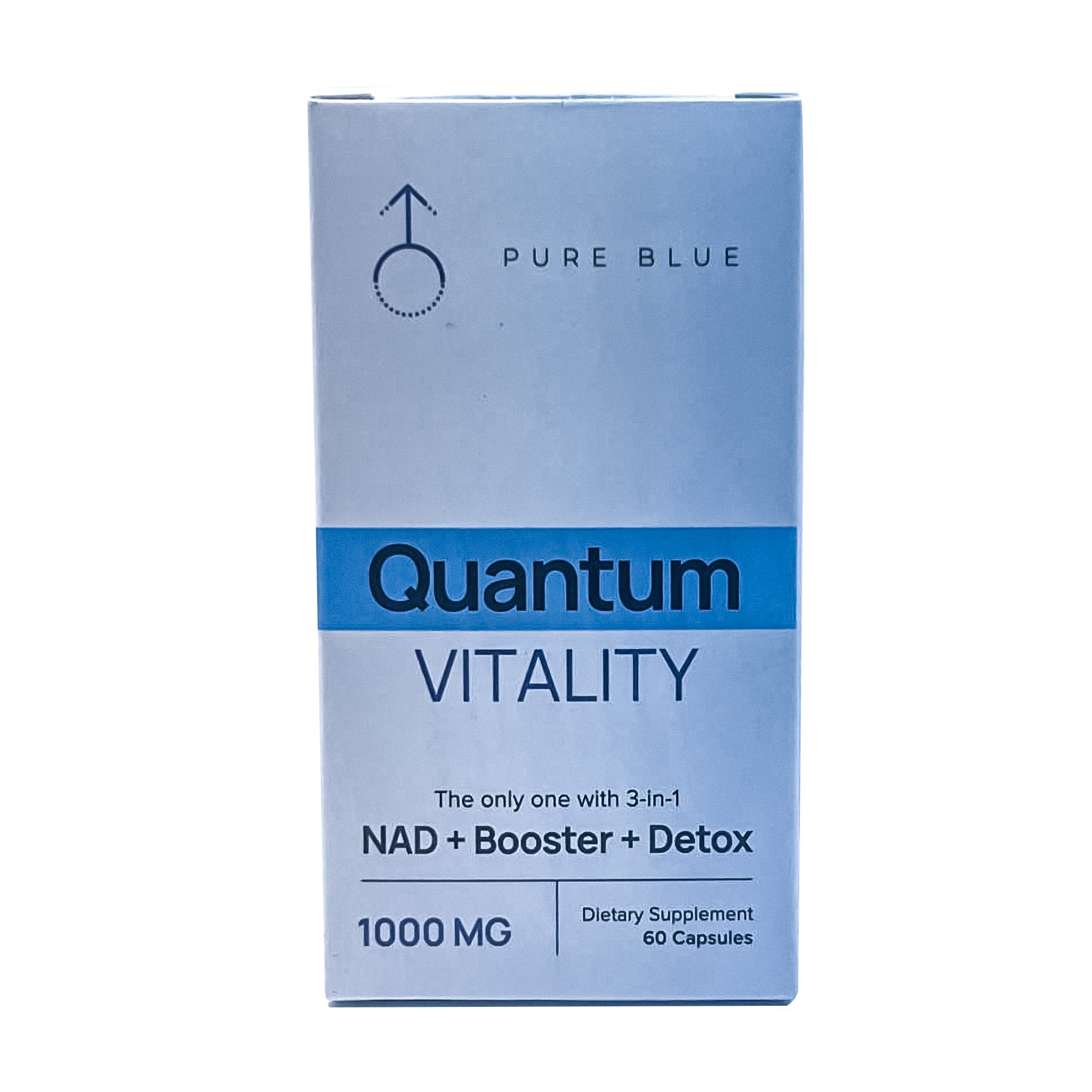
The proof points matter here, because supplement quality varies wildly across this category. Quantum Vitality is manufactured in an FDA-registered facility and third-party tested for purity and potency, meaning independent labs verify what’s actually in the bottle rather than just trusting the label. Pureblue reports a customer rating of 4.9 out of 5, reflecting consistent satisfaction among people using it as a daily routine rather than a one-time experiment.
Fitting it into the routine described earlier is straightforward:
- Take it daily as part of a consistent morning or evening habit, the same way the NMN and NR trials dosed their participants.
- Give it the same eight-to-twelve-week window before assessing whether you notice a difference in energy or mental clarity.
- Pair it with basic tracking, sleep quality, focus, workout recovery, rather than expecting an immediate dramatic shift.
- Treat it as a maintenance tool, not a substitute for medical care if you have a diagnosed condition affecting mitochondrial function.
Anyone managing a specific clinical condition should still loop in a physician, particularly before combining oral supplementation with any IV protocol.
What This Comparison Really Comes Down To
The clinical record here is clearer than the marketing around it suggests. Multiple independent RCTs show oral NMN and NR reliably raise blood NAD+ with a clean safety profile. IV NAD+ has plausibility and rapid plasma effects, but it doesn’t have the same weight of controlled trials behind it, and the CD38 metabolism problem raises real questions about how much of that plasma spike ever reaches your cells.
Where conventional advice falls short is in treating “bioavailability” as the whole story. A fast plasma spike sounds more dramatic than a slow oral build, but drama isn’t data. The trials we actually have favor the boring, consistent option.
If you’re healthy and exploring NAD+ support for energy or cellular maintenance, start with a quality oral precursor and give it real time before reaching for anything more invasive or expensive. Save IV NAD+ for the narrow cases where a clinician is actively managing your care, not as a default wellness upgrade.
— Organic
Ready to Build a Consistent NAD+ Routine?
If you’ve made it this far, you already know the trial data favors steady oral repletion over occasional IV spikes. Quantum Vitality™ gives you that consistency in one formula, organic ingredients, third-party tested, made in an FDA-registered facility, without the recurring clinic visits or four-figure annual cost of an IV series.
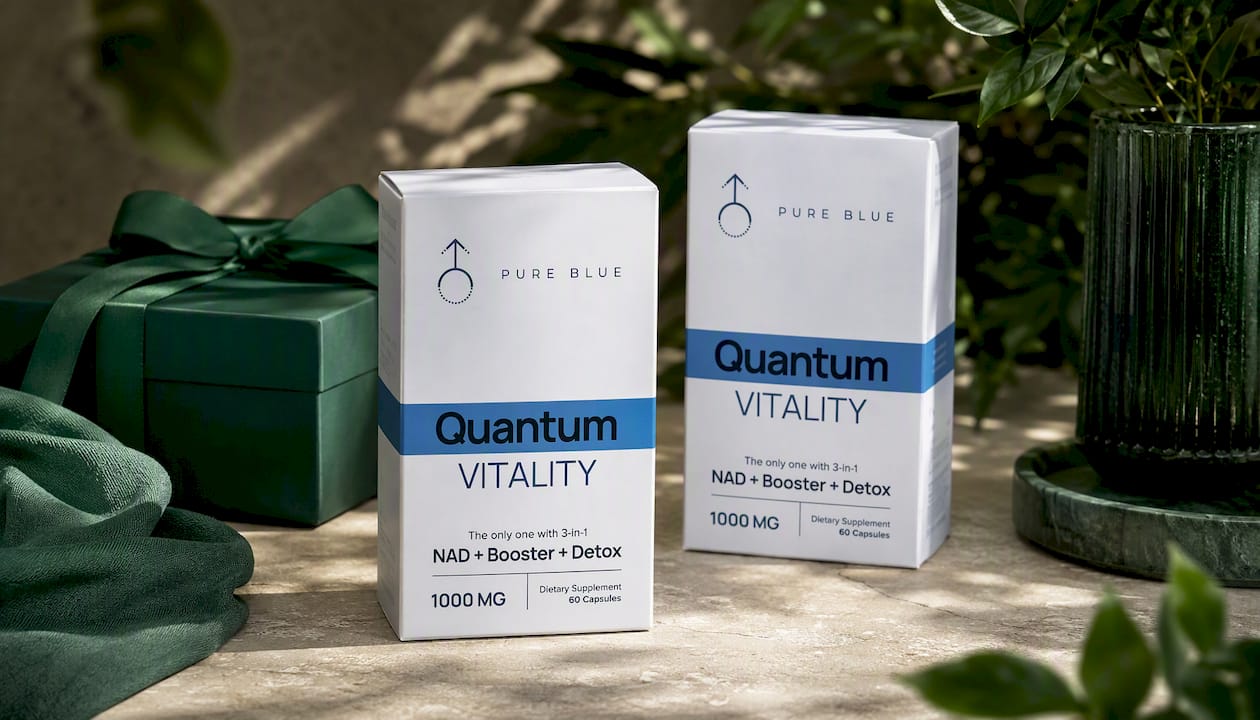
You can try the Quantum Vitality NAD+ Booster+ Detox as your daily oral maintenance routine, or start with the free sample offer if you want to test it before committing to a full bottle. If you’re managing a diagnosed condition or considering combining it with a supervised IV protocol, talk to your physician first. Otherwise, order today and give it the eight-to-twelve-week window the research suggests it needs to show results.
Sources
- Clinical Evidence for Targeting NAD Therapeutically
- Martens et al., nicotinamide riboside randomized trial
- Yi et al., NMN randomized trial
- Clinicaltrials