Cart
0
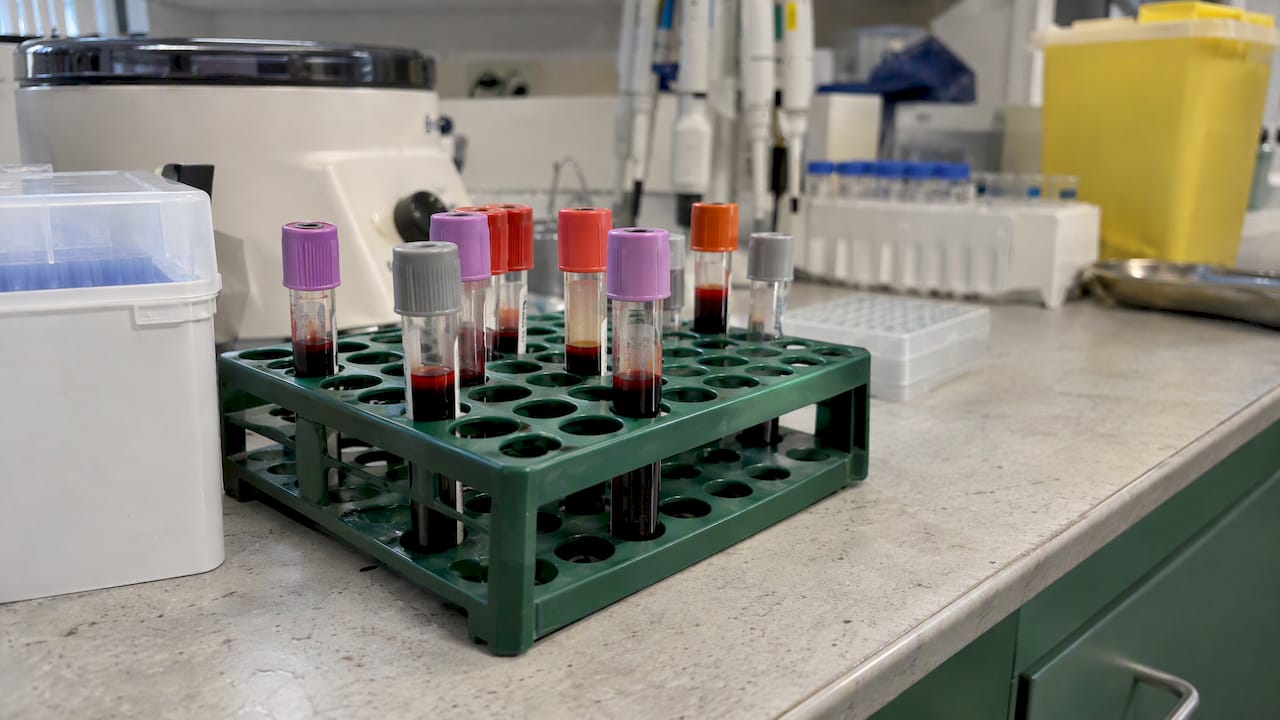
Oral NAD+ itself is a poor candidate for absorption. Most of what is sold to raise NAD+ is a precursor, such as nicotinamide riboside (NR) or nicotinamide mononucleotide (NMN), and human studies show those precursors can raise NAD+ in blood. Whether that rise reaches muscle or other tissues, and whether it does anything you can feel, is far less settled. This guide separates what is known about ingredients from what you can claim about any finished product, so you can read a label with clear eyes.
TL;DR
- Bioavailability for NAD+ products is not one number. It depends on the form (NAD+ itself, NR, NMN, niacin forms), the gut, the liver and the gut microbiome.
- Human trials of NR and NMN show reliable increases in blood NAD+ levels. Muscle NAD+ often stays unchanged, so a blood rise is not proof of a tissue benefit.
- No large head-to-head human trial shows that sublingual, liposomal or other delivery forms beat a plain oral dose.
- Ingredient studies do not tell you how a finished product performs. Check the label, the dose per serving and the current listing before you buy.
Table of Contents
- What “bioavailability” means for NAD+
- Why measuring it is hard
- First-pass metabolism and the gut microbiome
- NR, NMN and niacin forms compared
- Do delivery forms change the picture?
- Safety signals worth knowing
- How to read a NAD+ supplement label
- Our perspective at Pure Blue
- If you are ready to shop
- Practical ways to support NAD+ without a pill
- FAQ
- Sources
What “bioavailability” means for NAD+
Bioavailability is the share of a compound that reaches the bloodstream in a usable form, and how fast. For most vitamins that question has a tidy answer. For NAD+ it does not, because the molecule you want inside your cells is not the molecule you swallow.
NAD+ is a coenzyme your cells use constantly. Your body does not absorb it intact from a capsule and drop it into cells. A 2021 paper on nicotinamide timing is only one of many that start from this premise, and the broader literature repeats it: supplements aim to raise NAD+ indirectly by feeding the pathways that build it. The NIH Office of Dietary Supplements notes that when NAD and NADP are consumed in food, they are converted to nicotinamide in the gut and then absorbed. That is a useful picture of what happens to a swallowed NAD+ capsule too: the label says NAD+, but the body mostly sees its breakdown products.
So when someone asks for the most bioavailable form of NAD+, the honest answer starts with a question back: bioavailable as what, and measured where?

Why measuring it is hard
Three problems make the headline percentages you see online unreliable.

The measurement site matters. Blood is easy to sample. Muscle, liver and brain are not. A 2025 Nature Metabolism review by Vinten and colleagues describes a pattern in clinical studies: blood NAD+ levels go up while skeletal muscle NAD+ often remains unchanged.
A higher level is not the same as higher production. Researchers have pointed out that the field lacks isotope tracer studies, which are needed to tell an elevated steady-state level apart from increased NAD+ synthesis. The 2023 review in The Journals of Gerontology discusses oral bioavailability of precursors and notes that many trials do not show that oral supplementation raises NAD+ in tissues. A registered human tracer study on ClinicalTrials.gov was set up to address this gap, and it describes the need for human tracer data directly.
Percentages circulate without a source. You may see claims that oral NAD+ has a bioavailability of just a few percent. We could not find a primary human study behind such a figure, so we do not repeat it. Treat any exact percentage without a cited trial as marketing.
First-pass metabolism and the gut microbiome
Anything you swallow goes through the gut wall and then the liver before it reaches the rest of the body. This is first-pass metabolism, and NAD+ precursors are heavily affected by it.
The microbiome adds another layer. According to the Vinten review, a meaningful portion of orally ingested NR and NMN can be broken down by gut bacteria into nicotinamide and nicotinic acid before reaching circulation. A 2024 Nature Reviews Molecular Cell Biology article also highlights the microbiome’s role in shaping how available these precursors are. One consequence, argued by some experts, is that part of the NAD+ rise seen in trials may be driven by these metabolites rather than by the intact precursor.
This does not mean precursors are useless. It means the route from capsule to cell is indirect, and anyone claiming a clean, direct delivery is simplifying.
NR, NMN and niacin forms compared
The table below summarizes what the sources above support. It is about ingredients in studies, not about any specific product.
| Form | What human data shows | Main caveat |
|---|---|---|
| NAD+ itself | Little human evidence for oral use as a way to raise tissue NAD+ | Broken down in the gut before absorption |
| NR | A pilot study in humans saw blood NAD+ rise up to 2.7-fold after a single oral dose | That pilot included one person; later trials are larger but muscle results are mixed |
| NMN | A 2022 trial in healthy adults reported that oral NMN was safe and raised blood NAD+ | Blood increase, not proof of tissue or performance effect |
| Niacin and nicotinamide | Established vitamin forms, absorbed in the gut | Different side-effect profile at higher doses |
On stability, the Vinten review reports that NR degrades quickly in human plasma while NMN looked more stable in preclinical plasma work. Because both go through heavy first-pass metabolism, and because no side-by-side human pharmacokinetic trial exists, nobody can honestly say one is objectively better absorbed. If you want a deeper look at the two, our guide on NR versus NMN and the human data walks through the trials.
One regulatory note for US readers. NMN’s status as a dietary ingredient has changed more than once in recent years, following an earlier FDA position that tied it to its prior status as an investigational drug. Because this can shift again, check the FDA’s current position before relying on a seller’s statement.
Do delivery forms change the picture?
Capsules are the standard. Gummies, powders, sublingual sprays, liposomal liquids and injections are the alternatives, and each makes a different promise.
- Sublingual and liposomal forms aim to bypass some gut and liver processing. The idea is plausible. According to the Vinten review, however, large head-to-head clinical comparisons against standard oral dosing are lacking, so no one can show these forms are better absorbed in people. If you are weighing a spray, an article on timing a sublingual performance spray covers how delivery method and timing are discussed, and the same limit on head-to-head human research applies there.
- Gummies trade potency and stability for convenience. A gummy has limited room for active ingredient, and heat and moisture can affect some compounds. Whether a specific gummy delivers its labeled amount is a question for that product’s label and its maker, not for the ingredient literature.
- Injections and IV raise their own safety, cost and evidence questions. We compare them with oral dosing in NAD IV versus oral supplements.
The fair summary: the delivery form is a reasonable thing to ask about, and a poor thing to pay extra for on the strength of absorption claims alone.
Safety signals worth knowing
In the 2022 NMN trial linked above, the authors reported that oral NMN was safe in healthy adults over the study period. Across the clinical studies summarized in our research, NMN at 250 mg to 900 mg daily and NR at 1,000 mg daily were generally well tolerated in healthy adults over 6 to 12 weeks, with no significant adverse events reported in several randomized trials. Those are short studies in healthy people. They do not cover long-term use, pregnancy, children or people with medical conditions or on medications.
If you are pregnant, nursing, managing a health condition or taking prescription drugs, ask your physician or pharmacist before starting a NAD+ precursor. Our overview of NAD supplement side effects covers what the research does and does not show.
How to read a NAD+ supplement label
Use this short checklist when you compare products, including ours.
- Find the actual ingredient. Is it NAD+, NR, NMN, niacin, nicotinamide or a blend? The front of the package may use “NAD+” as a category.
- Check the amount per serving. Compare it to the doses studied. Trials used 250 mg to 1,000 mg per day, but a trial dose is not a recommendation.
- Look at the serving size. Gummies often need several pieces to reach a stated amount.
- Read the other ingredients. Fillers, sweeteners and allergens appear under the supplement facts panel.
- Look for a verifiable quality claim. A certification or testing claim should name the testing body and be backed by a report you can ask for.
- Separate ingredient evidence from product evidence. A trial on pure NMN says little about a multi-ingredient blend with different amounts.
- Confirm everything against the current listing and the package you receive. Formulas change.
Our perspective at Pure Blue
We sell supplements, so you should weigh what we say with that in mind. Here is how we think about this topic.
The ingredient research on NAD+ precursors is real and still developing. Blood NAD+ goes up in human trials. Whether that translates into energy, clarity or performance in a given person is a separate question that blood numbers cannot answer, and we do not claim it does. We would rather you understand the limits than buy on a percentage.
We also keep two things apart on this site: what studies found about an ingredient, and what we can say about a finished product. When we cover a formula, we send you to the current listing and the package for the exact ingredients and amounts, because that is where the facts live. And we do not assert certifications, testing, ratings or results that we cannot show you.
If you are comparing options, give more weight to a clear label, a stated amount per serving and a seller who is open about what is and is not known than to the boldest absorption claim.
— Pure Blue
If you are ready to shop
If you want to see a NAD+ formula from our catalog, start with the Quantum Vitality NAD+ Booster+ Detox listing. Read the supplement facts and ingredient list on that page, and confirm them against the package when it arrives, before you decide whether it fits what you are looking for. If you prefer gummies, our Blue Bear and Pure Blue collection lists the current options.

Practical ways to support NAD+ without a pill
Supplements are one lever among several. Exercise, sleep and overall diet all influence NAD+ metabolism, and we cover them in increasing NAD naturally. None of these replaces medical care, and the research on them has its own limits.
FAQ
What is the most bioavailable form of NAD+?
No human study has shown which form is best. NR and NMN both raise blood NAD+ in trials, and both are heavily metabolized in the gut and liver. Without head-to-head human pharmacokinetic trials, claims that one is clearly better absorbed go beyond the evidence.
Does NAD+ have oral bioavailability?
Intact NAD+ is not well absorbed as a molecule, because the gut breaks it down into smaller components such as nicotinamide. Precursors like NR and NMN are used instead to raise NAD+ indirectly. Blood levels respond in human studies, while muscle levels often do not change.
Are sublingual or liposomal NAD+ products absorbed better?
They are designed to bypass some first-pass metabolism, but large head-to-head human trials against standard oral dosing are missing. Treat better absorption as a hypothesis, not a result, and compare products on label clarity and dose.
Is a rise in blood NAD+ proof the supplement works?
No. A higher blood level shows the precursor entered metabolism. It does not show increased NAD+ production in tissues or any change in energy or performance. Researchers say isotope tracer studies are needed to answer that.
Sources
- NAD+ precursor supplementation in human ageing: clinical evidence and challenges (Vinten et al., 2025)
- Dietary Supplementation With NAD±Boosting Compounds in Humans (Journals of Gerontology, 2023)
- Tracing the Metabolic Flux of Orally Administered NAD+ Precursors (ClinicalTrials.gov)
- Oral Administration of Nicotinamide Mononucleotide Is Safe and Efficiently Increases Blood NAD Levels (PubMed)
- Chronic nicotinamide mononucleotide supplementation in healthy older men (PubMed)
- Nicotinamide riboside is uniquely and orally bioavailable in mice and humans (PMC)
- Regulation of and challenges in targeting NAD+ metabolism (Nature Reviews Molecular Cell Biology)
- Niacin: Health Professional Fact Sheet (NIH Office of Dietary Supplements)